
NASA SPLASH · OSDR hardware registry · OpenFOAM v2606
A metadata audit of NASA's space-biology hardware catalogues, a minimum-information checklist for computational fluid dynamics (CFD) of specimen environments, and verified three-dimensional transient OpenFOAM models, in flight (0 g) and ground control (1 g), of the hardware whose parameters can be sourced.
The specimen environment inside flight hardware is rarely documented well enough to model.
Spaceflight biology results are interpreted against the hardware the specimens lived in, yet the physical environment inside that hardware (airflow, gas composition, temperature, humidity, light and nutrient delivery) is rarely documented well enough to be modelled. We joined the three public NASA hardware sources (the SPLASH instrument catalogue, the OSDR hardware registry and the experiment-platform field of every OSDR study), scored every specimen-housing item against a 15-item checklist of what a CFD model needs, curated the literature for the most-used hardware, and built verified OpenFOAM models of the hardware that reached CFD readiness.
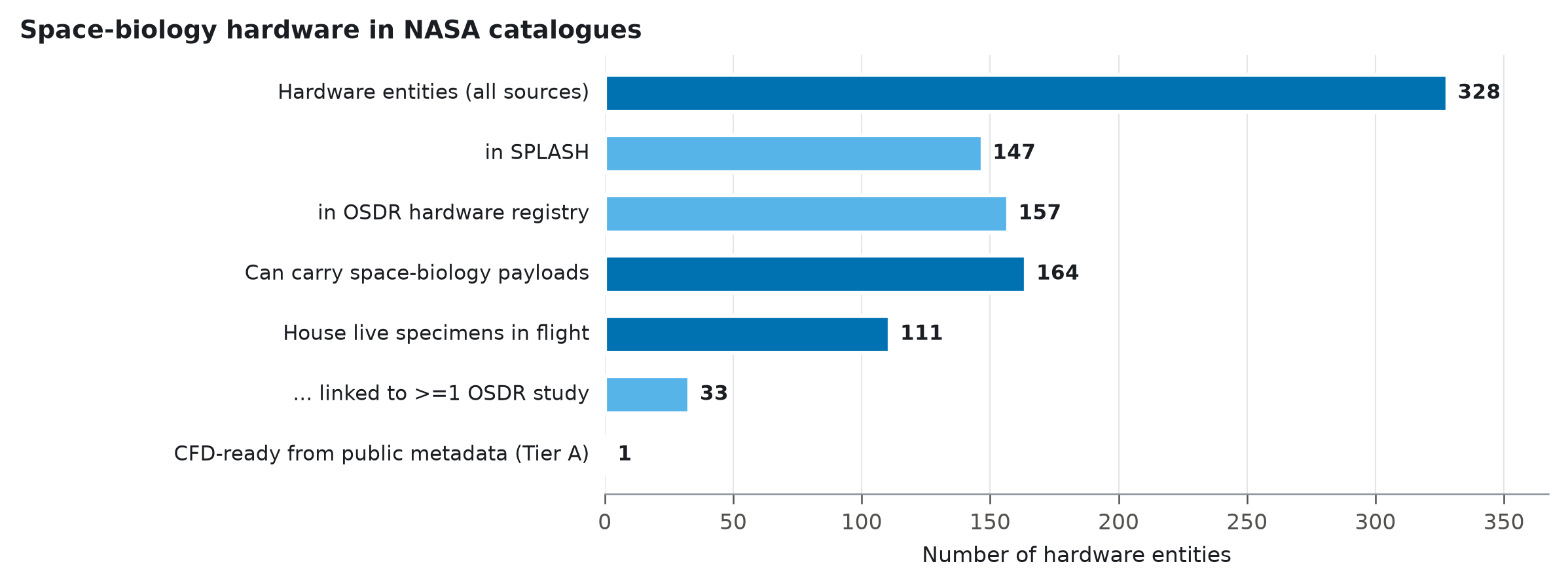
147 SPLASH records and 157 registry entries, joined with the OSDR study platform field. 164 can carry space-biology payloads.
Of the 111 items that house live specimens in flight. SPLASH alone supports 0.
Literature curation with a verbatim quotation for every value: 592 of 1,081 parameters found.
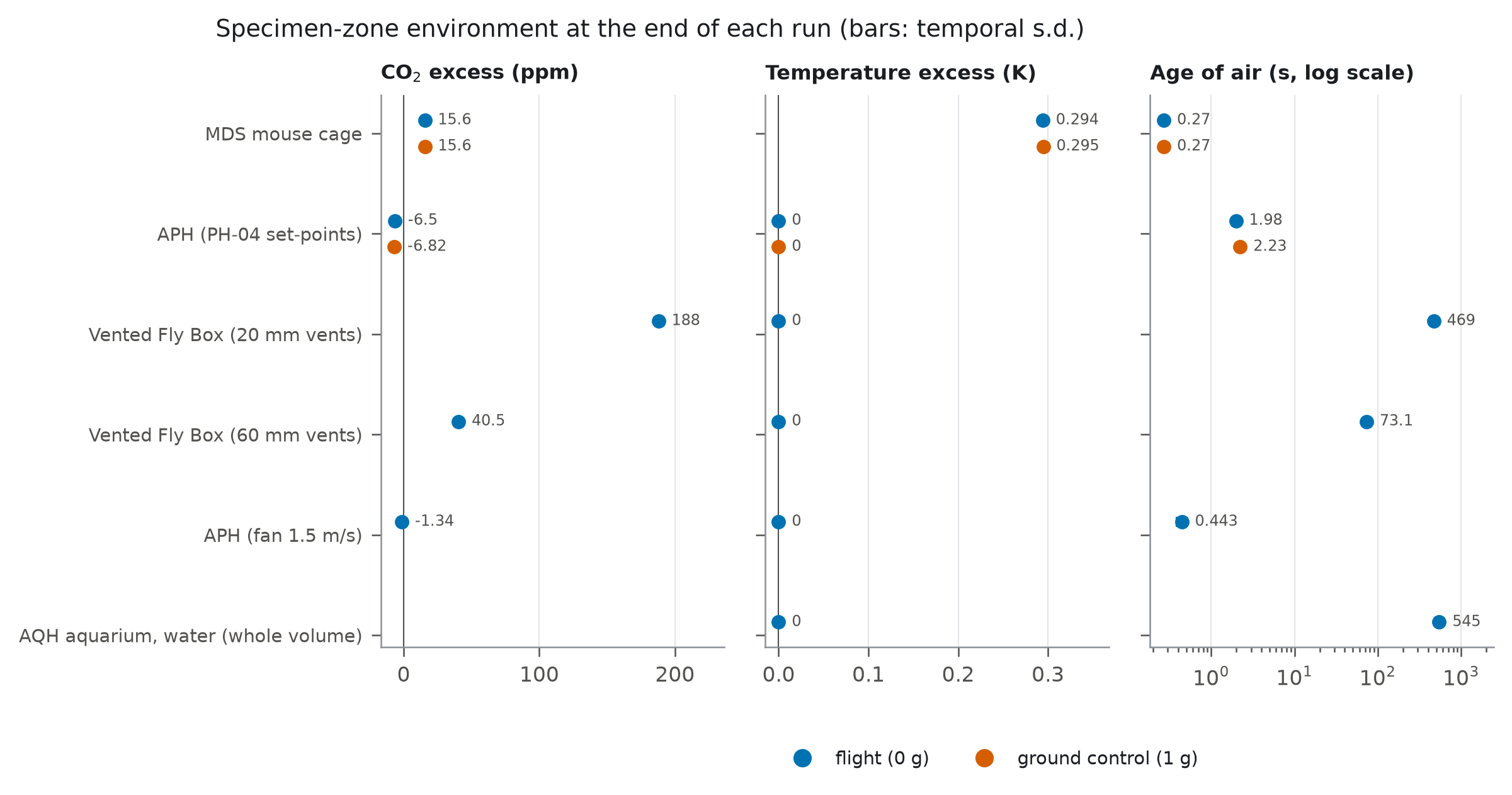
The unpublished vent size of a fly box changed specimen CO₂ 4.64-fold; gravity changed mouse-cage CO₂ by 0.19%.
From all catalogued hardware to the items whose public metadata support a CFD model.
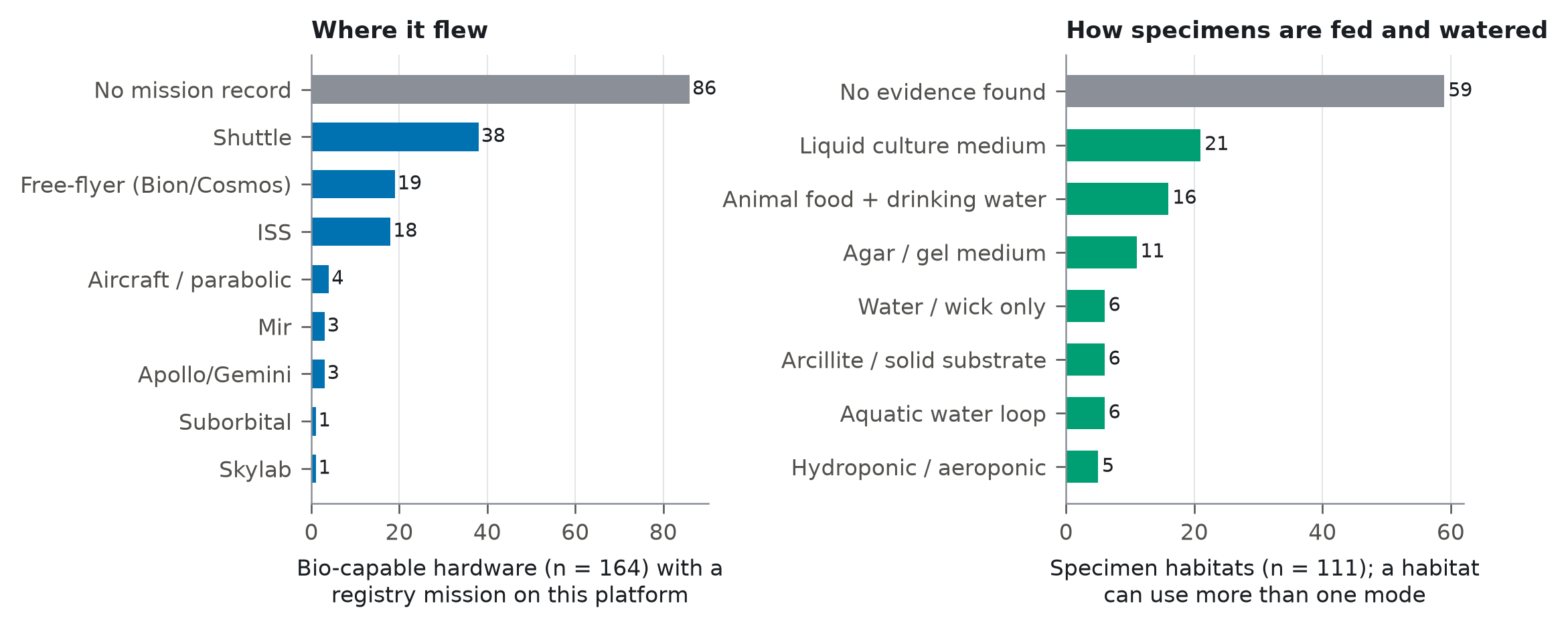
The crosswalk produced 328 entities. 164 can carry space-biology payloads and 111 house live specimens during flight; only 33 of these are linked to at least one OSDR study. Mission records place bio-capable hardware on the Space Shuttle (38), on free-flying biosatellites (19) and on the ISS (18). Nutrient delivery was evidenced for fewer than half of the habitats (59 with no evidence); where evidenced, animal food and water (16), culture medium (21) and agar (11) were the commonest modes. Every assigned mode is backed by a verbatim quotation.
Errors that propagate silently into any automated reuse of the catalogues.
27 SPLASH records (#121–#147) carry descriptive fields displaced from neighbouring rows:
29 fields were confirmed as misattributed on review. For example, a Plant Growth
Unit record's specimen field describes an RNA thermal cycler, and a BRIC-Opti canister record carries the
crop list and the CO₂, humidity and temperature control ranges of the Advanced Plant Habitat. The
sources, schematics and study_links fields are empty in every
record. 310 of 641 OSDR datasets have no experiment-platform entry; the
rest use 116 free-text strings, with 9 spellings of Veggie alone.
data/curated/splash_block_rule.yaml, with a reviewed verdict for each flagged field in
data/curated/splash_field_review.csv). Anyone reusing SPLASH records #121–#147 should
check name, background and descriptive fields against each other first.Fifteen items a CFD model of a specimen environment needs; six are critical.
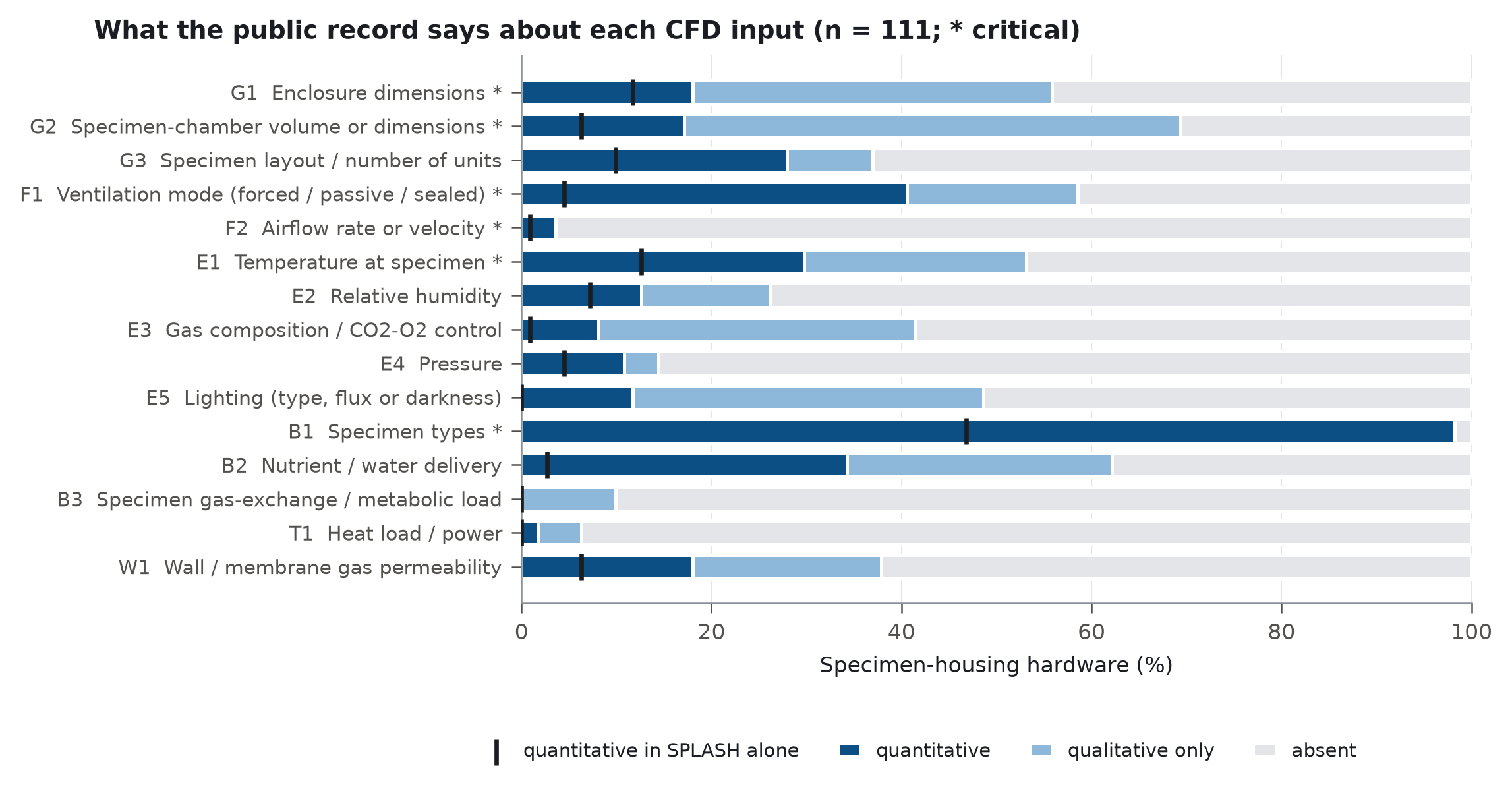
An item is Tier A (CFD-ready) when every critical item is sourced; the airflow requirement is waived for sealed or passive hardware. Specimen type is almost always stated (98.20% quantitative), but airflow rate (3.60%), specimen metabolic load (0.00%) and heat load (1.80%) are almost never given. Median completeness was 0.30 using all public sources and 0.07 using SPLASH alone.
| Item | What the CFD model needs | Quantitative, all public sources | Quantitative, SPLASH alone | Absent |
|---|---|---|---|---|
G1 | Enclosure dimensions critical | 18% | 12% | 44% |
G2 | Specimen-chamber volume or dimensions critical | 17% | 6% | 31% |
G3 | Specimen layout / number of units | 28% | 10% | 63% |
F1 | Ventilation mode (forced / passive / sealed) critical | 41% | 5% | 41% |
F2 | Airflow rate or velocity critical | 4% | 1% | 96% |
E1 | Temperature at specimen critical | 30% | 13% | 47% |
E2 | Relative humidity | 13% | 7% | 74% |
E3 | Gas composition / CO2-O2 control | 8% | 1% | 59% |
E4 | Pressure | 11% | 5% | 86% |
E5 | Lighting (type, flux or darkness) | 12% | 0% | 51% |
B1 | Specimen types critical | 98% | 47% | 2% |
B2 | Nutrient / water delivery | 34% | 3% | 38% |
B3 | Specimen gas-exchange / metabolic load | 0% | 0% | 90% |
T1 | Heat load / power | 2% | 0% | 94% |
W1 | Wall / membrane gas permeability | 18% | 6% | 62% |
Percentages of the 111 specimen-housing items. Source:
results/tables/T4c_item_missingness.csv.
Documentation tracks use, platform and hardware class, not era.
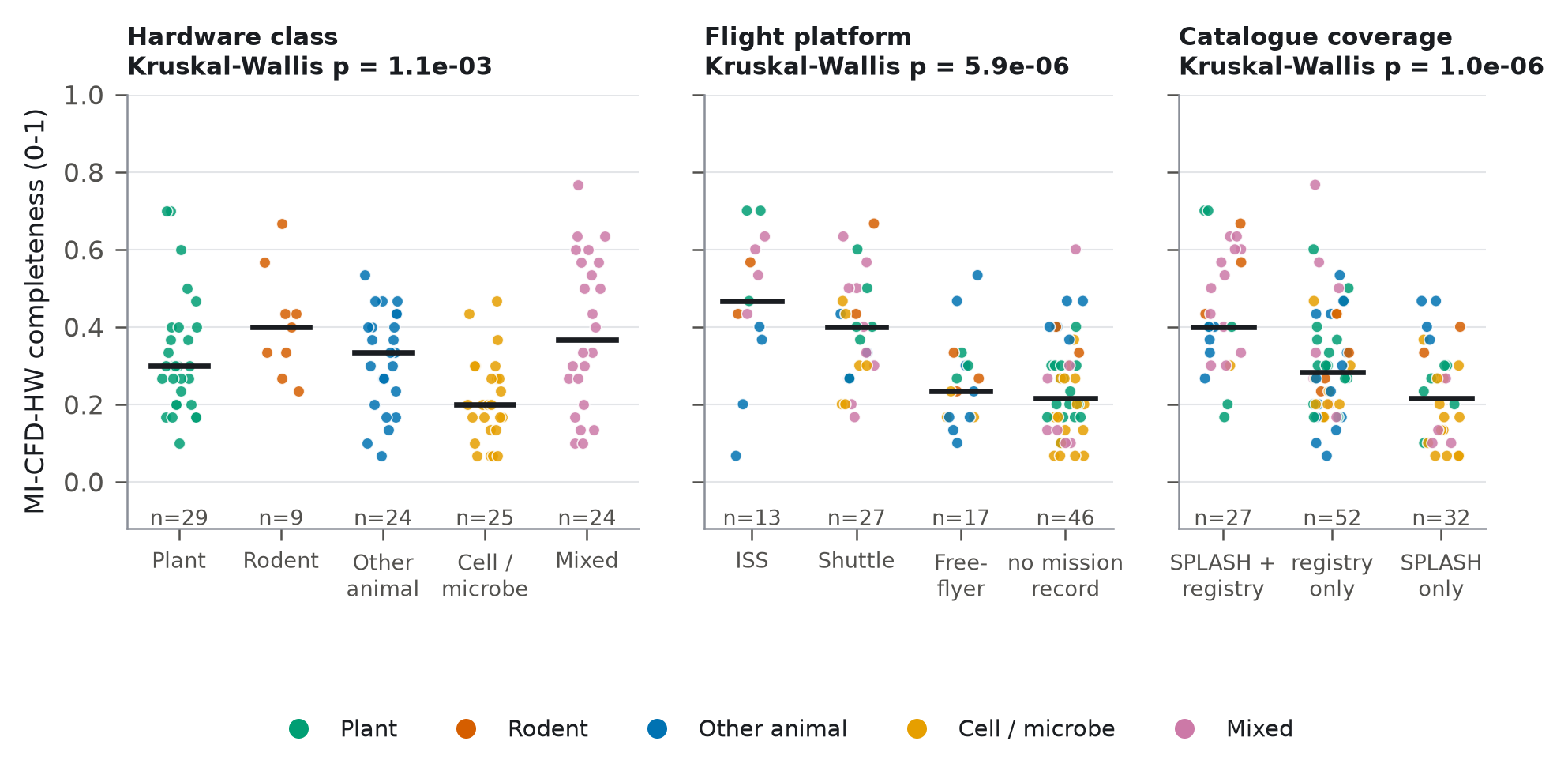
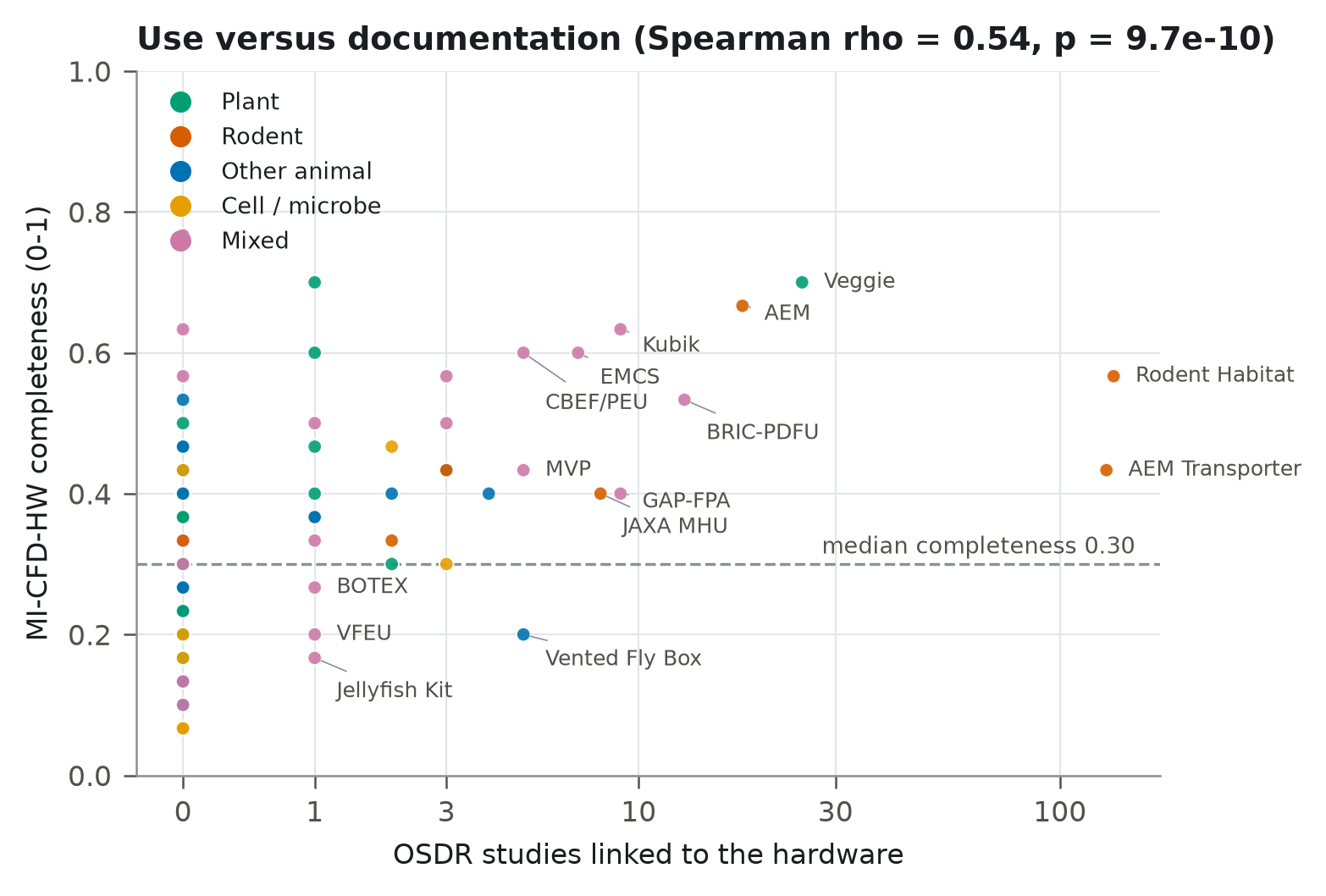
Completeness differed by hardware class (Kruskal–Wallis p = 0.00), flight platform (p = 5.9 × 10⁻⁶) and catalogue coverage (p = 1.0 × 10⁻⁶), but not by era (p = 0.27) or SPLASH status (p = 0.17). Cell and microbe culture hardware was least documented and ISS hardware best. Hardware used in OSDR studies was better documented than unused hardware (p = 5.3 × 10⁻⁸; Spearman ρ = 0.54 with the number of studies), but several used items remain below the median, and some of the most-used hardware cannot be modelled: the ISS Rodent Habitat, linked to 133 OSDR studies, has no published internal cage dimensions in any source we could open, and BRIC-PDFU, linked to 13 studies, has no published internal dimensions.
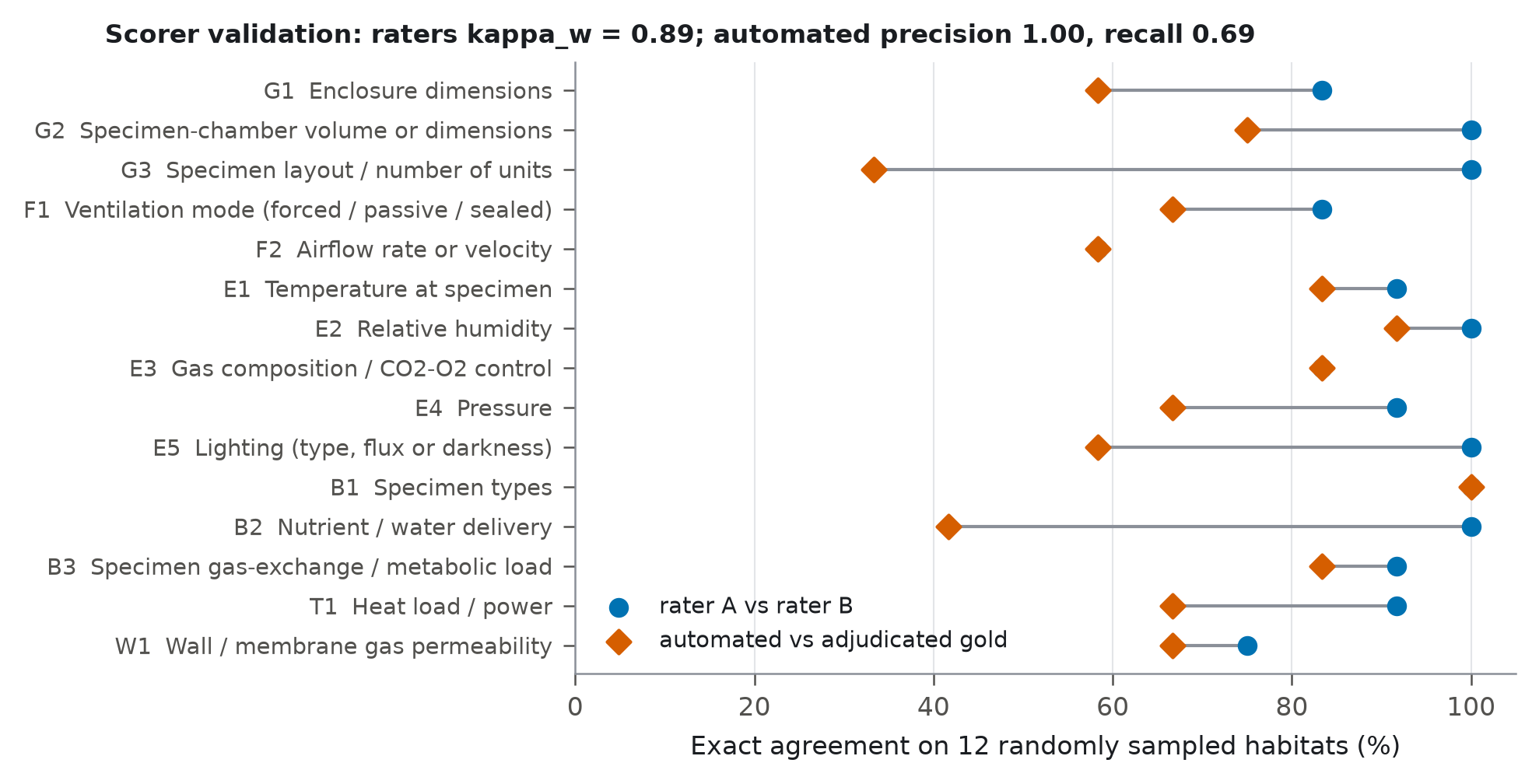
Two blind raters, an adjudicated gold standard, and a conservative automated scorer.
Two raters scored a random sample of 12 habitats blind; they agreed on 90% of 180 cells (weighted κ = 0.89). Against the adjudicated gold standard the automated scorer never credited absent information (precision 1.00) but missed some (recall 0.69; mean completeness 0.36 versus 0.53 gold), so automated completeness is a conservative lower bound. No sampled entity was Tier A on the gold scores either.
All 111 specimen-housing items, scored from public metadata.
| Organisms | Platforms named | Feeding |
|---|
Completeness is the share of the 15 checklist items found in SPLASH, the OSDR registry and linked study metadata (0–1); the bar marks it visually. Platforms are those named in the hardware's catalogue and registry text, not a flight log; feeding modes are shown only where a verbatim quotation supports them. Missing critical items are listed under each tier. Download: habitats.json.
Papers, technical reports and mission documentation, one verbatim quotation per value.
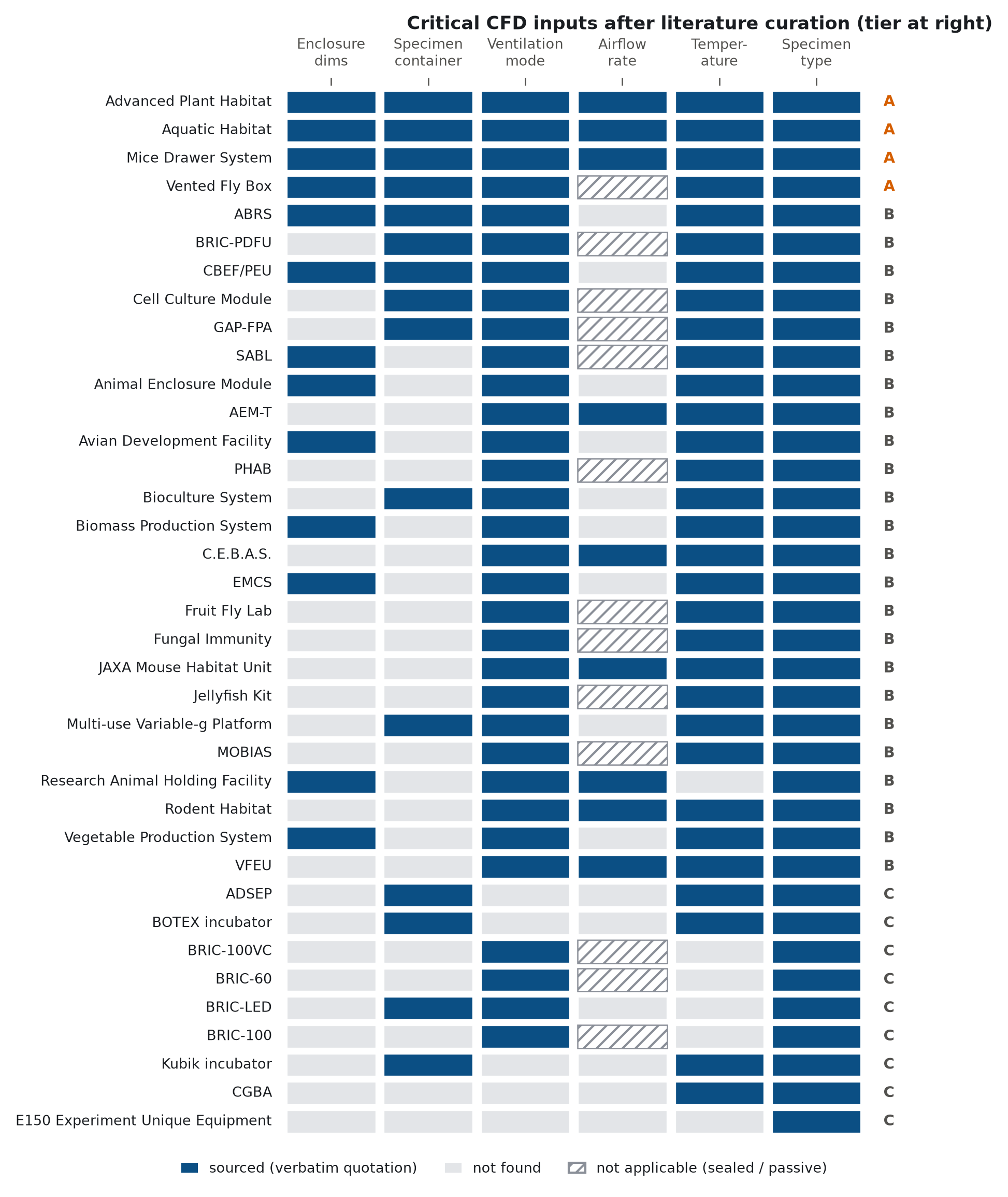
Curation of 37 hardware items yielded 592 sourced parameters out of 1,081 sought (54.76%). 4 items reached Tier A (the Advanced Plant Habitat, the JAXA Aquatic Habitat, the Mice Drawer System and the Vented Fly Box), 24 remained Tier B and 9 Tier C. The commonest gap is the airflow that ventilates the specimens, missing for 15 curated items. An independent audit found all 40 of 40 sampled quotations in their sources.
| Hardware | Tier | Missing critical items | Sourced / sought |
|---|---|---|---|
| Advanced Plant Habitat (APH) | A | none | 26/34 |
| Aquatic Habitat (AQH) | A | none | 16/30 |
| Mice Drawer System (MDS, ASI / Thales Alenia Space Italia) | A | none | 23/29 |
| Vented Fly Box (VFB) | A | none | 16/28 |
| Advanced Biological Research System (ABRS) | B | F2 | 18/28 |
| Animal Enclosure Module (AEM, Space Shuttle middeck) | B | G2; F2 | 21/27 |
| Animal Enclosure Module Transporter (AEM-T) with AEM-E life-support companion | B | G1; G2 | 21/27 |
| Avian Development Facility (ADF) | B | G2; F2 | 19/29 |
| BioCell Cell Culture and Plate Habitats (PHAB) | B | G1; G2 | 15/28 |
| Bioculture System (Bioculture System Facility) | B | G1; F2 | 17/32 |
| Biological Research in Canisters - Petri Dish Fixation Unit (BRIC-PDFU) | B | G1 | 19/33 |
| Biomass Production System (BPS) | B | G2; F2 | 18/30 |
| Cell Biology Experiment Facility / Plant Experiment Unit (CBEF/PEU) | B | F2 | 16/28 |
| Cell Culture Module (CCM) / Space Tissue Loss (STL) modules | B | G1 | 12/29 |
| Closed Equilibrated Biological Aquatic System (C.E.B.A.S.) Minimodule | B | G1; G2 | 16/30 |
| European Modular Cultivation System (EMCS) | B | G2; F2 | 17/28 |
| Fruit Fly Lab (FFL) / Fruit Fly Lab Experiment Hardware (Phase I, FFL-01) | B | G1; G2 | 16/30 |
| Fungal Immunity (FIT) Fly Kit (STS-121) | B | G1; G2 | 16/29 |
| Group Activation Pack - Fluid Processing Apparatus (GAP-FPA) | B | G1 | 13/29 |
| JAXA Mouse Habitat Unit (MHU) - Habitat Cage Units (HCU) in CBEF / CBEF-L (MARS centrifuge) | B | G1; G2 | 21/27 |
| Jellyfish Kit (SLS-1) | B | G1; G2 | 11/29 |
| Multi-use Variable-g Platform (MVP) | B | G1; F2 | 20/35 |
| Multiple Orbital Bioreactor with Instrumentation and Automated Sampling (MOBIAS) | B | G1; G2 | 10/29 |
| Research Animal Holding Facility (RAHF, Spacelab) - rodent configuration | B | G2; E1 | 22/27 |
| Rodent Habitat (AEM-X) / Rodent Research Facility (ISS) | B | G1; G2 | 19/27 |
| Space Automated Bioproduct Laboratory (SABL) | B | G2 | 18/31 |
| Vegetable Production System (Veggie) | B | G2; F2 | 19/29 |
| Vestibular Function Experiment Unit (VFEU) - Neurolab/STS-95 marine-fish version | B | G1; G2 | 16/33 |
| ADvanced Space Experiment Processor (ADSEP) | C | G1; F1; F2 | 12/29 |
| BOTEX incubator (BOTany EXperiments; DLR/DARA) | C | G1; F1; F2 | 9/28 |
| BRIC-100VC (Biological Research in Canisters, 100 mm Petri dish vacuum containment unit) | C | G1; G2; E1 | 11/28 |
| BRIC-60 (Biological Research in Canisters, 60 mm Petri dish canister) | C | G1; G2; E1 | 13/29 |
| BRIC-LED (Biological Research in Canisters - Light Emitting Diode) | C | G1; F2; E1 | 16/30 |
| Biological Research In Canisters - BRIC-100 (100 mm Petri dish canister) | C | G1; G2; E1 | 11/27 |
| Commercial Generic Bioprocessing Apparatus (CGBA) | C | G1; G2; F1; F2 | 11/29 |
| E150 Experiment Unique Equipment (EUE) - Animal Walking Apparatus suite (Neurolab) | C | G1; G2; F1; F2; E1 | 6/27 |
| Kubik incubator (ESA; Bioreactor Express) | C | G1; F1; F2 | 12/29 |
G1 enclosure dimensions · G2 specimen container · F1 ventilation mode · F2 airflow rate ·
E1 temperature · B1 specimen. Every value, source and quotation is in hardware/*.yaml.
OpenFOAM v2606 (buoyantBoussinesqPimpleFoam) against benchmark and analytic solutions.
The solver reproduced the reference heated-cavity Nusselt numbers with second-order convergence (observed order 2.05 and 2.15 at Ra = 105 and 106); Richardson-extrapolated values were within 0.07% of Hortmann et al. (1990). One-dimensional diffusion matched the analytic solution to 4.6 × 10⁻⁵ (concentration scale 0–1), and the transient CO₂ balance closed to within 0.68% in every hardware run. Grid convergence indices were computed for 26 quantities on three-mesh ladders (17 converging monotonically; median fine-mesh GCI 1.50%, maximum 14.36%; full table in the supplement).
| Ra | Nu 64² | Nu 96² | Nu 128² | Nu extrapolated | Hortmann et al. 1990 | Error (%) | Observed order p | Convergence |
|---|---|---|---|---|---|---|---|---|
| 104 | 2.245 | 2.245 | 2.243 | 2.243 | 2.245 | −0.07 | 15.84 | oscillatory |
| 105 | 4.529 | 4.525 | 4.524 | 4.522 | 4.522 | −0.01 | 2.05 | monotonic |
| 106 | 8.883 | 8.850 | 8.839 | 8.826 | 8.825 | 0.01 | 2.15 | monotonic |
De Vahl Davis heated cavity on 64², 96² and 128² meshes. Source:
results/tables/T8_verification_cavity.csv.
Three-dimensional transient models of the four CFD-ready items, at 0 g and 1 g.
| Hardware | g | Medium | Zone | CO₂ excess (ppm) | ΔT (K) | Age (s) | Re inlet | CO₂ balance error |
|---|---|---|---|---|---|---|---|---|
| MDS mouse cage | 0 g | air | mouse | 15.58 ± 0.00 | 0.29 | 0.27 ± 0.00 | 1,680 | 0.00% |
| MDS mouse cage | 1 g | air | mouse | 15.61 ± 0.00 | 0.29 | 0.27 ± 0.00 | 1,680 | 0.00% |
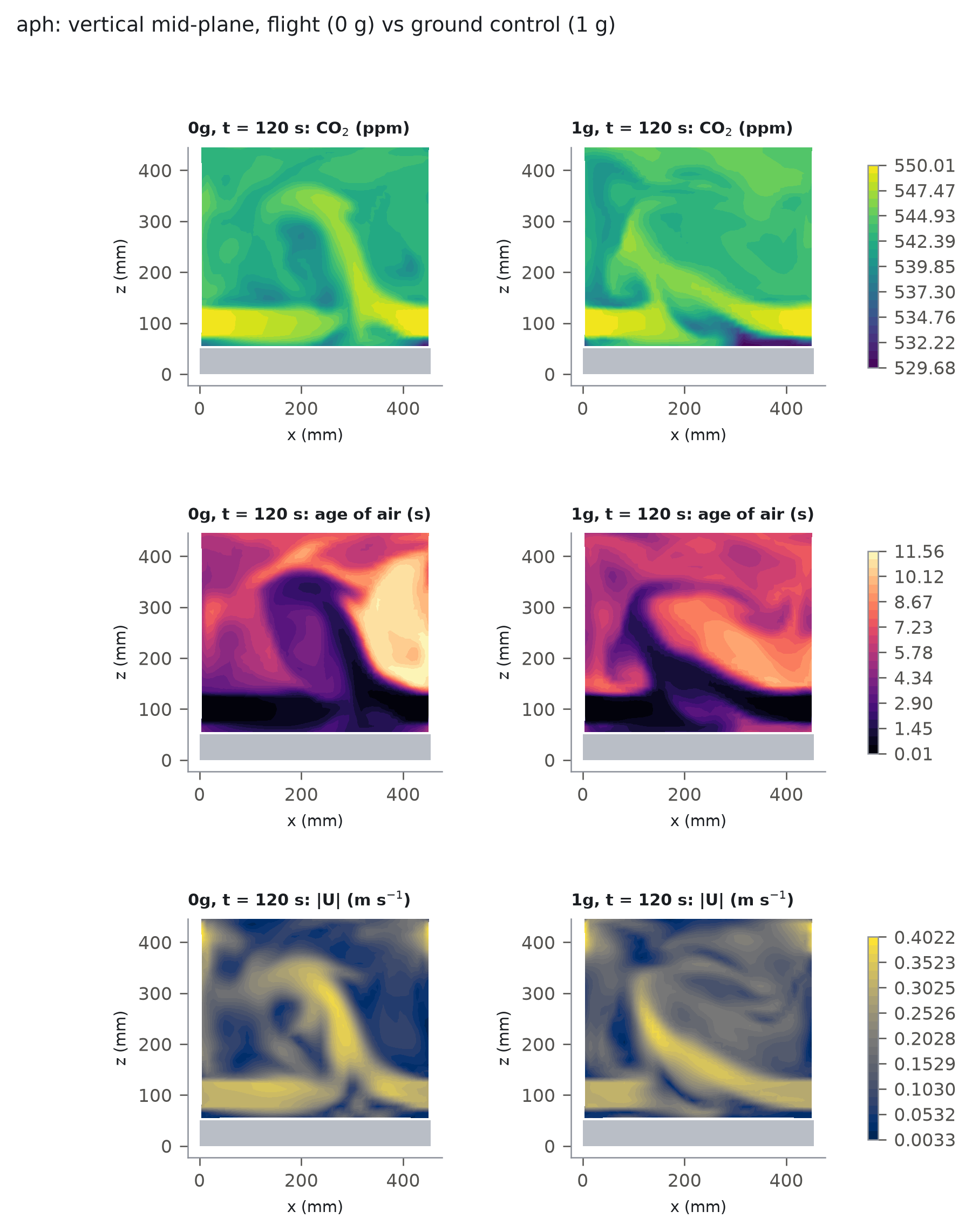
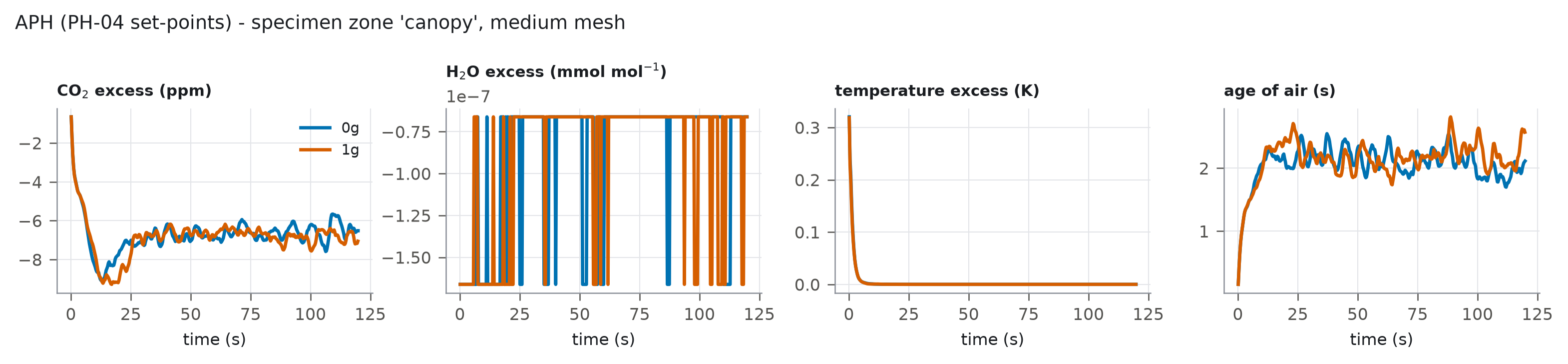
| APH (PH-04 set-points) | 0 g | air | canopy | −6.50 ± 0.46 | 0.00 | 1.98 ± 0.15 | 1,949 | 0.42% |
| APH (PH-04 set-points) | 1 g | air | canopy | −6.82 ± 0.28 | 0.00 | 2.23 ± 0.19 | 1,949 | 0.68% |
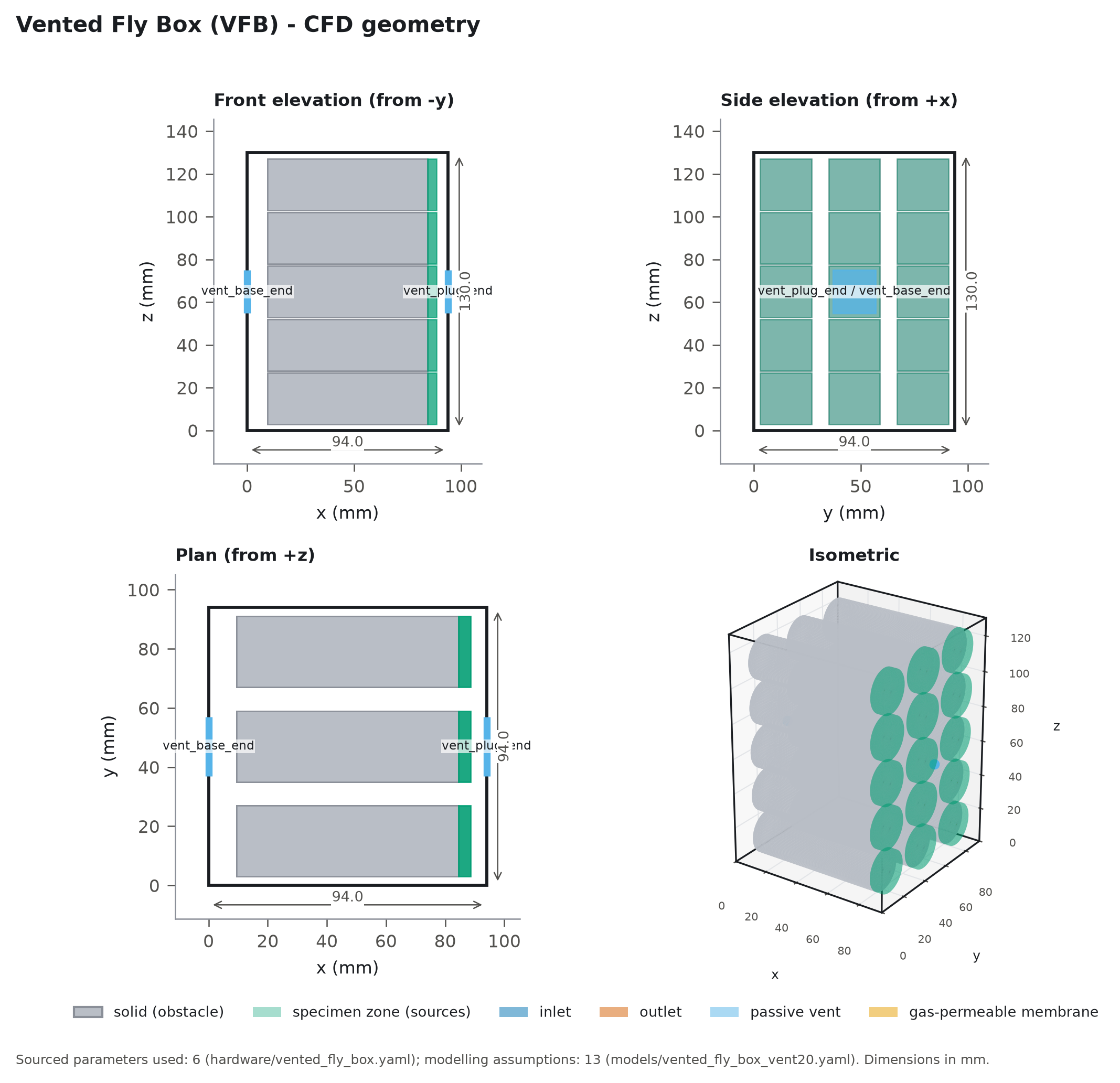
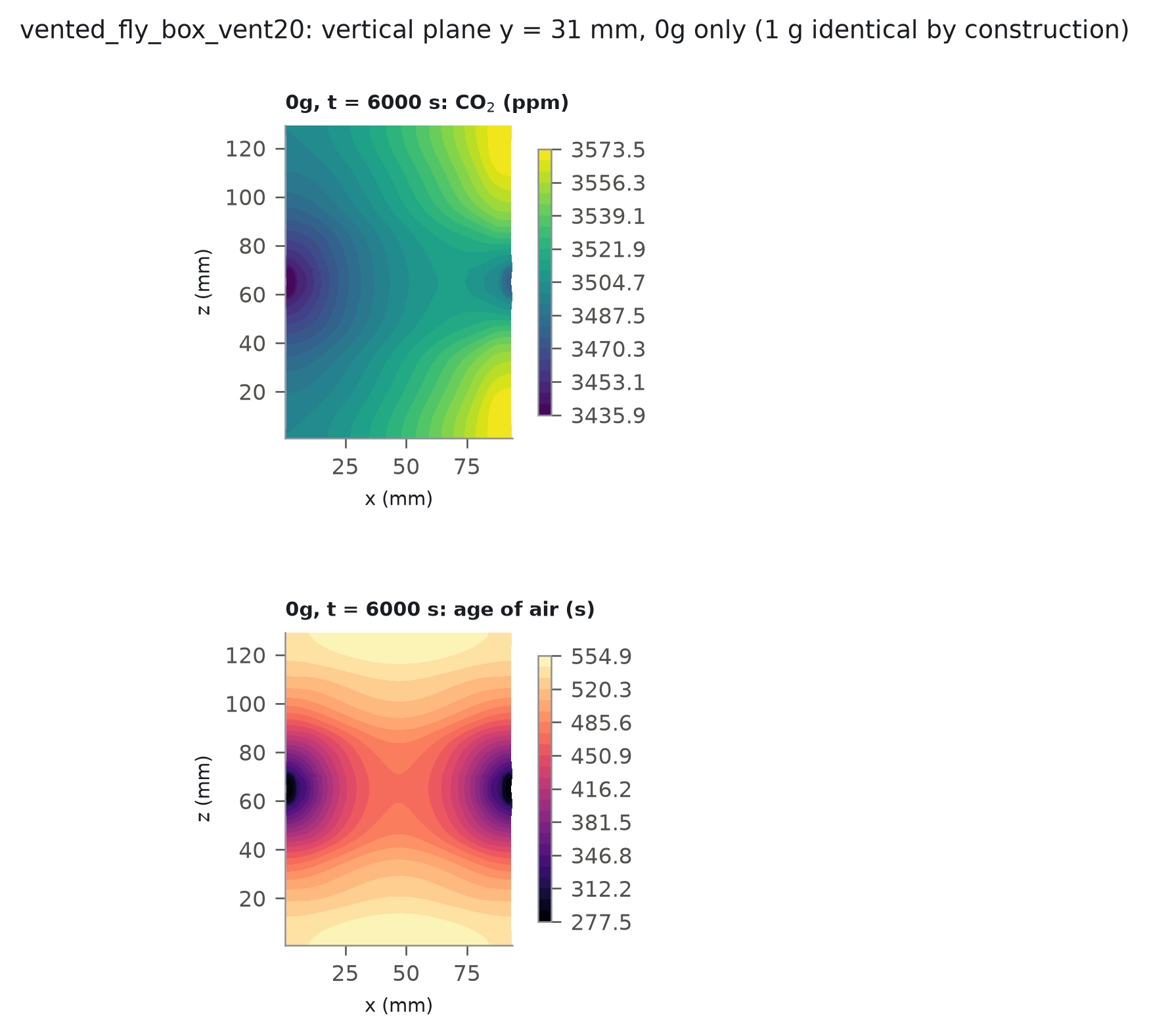
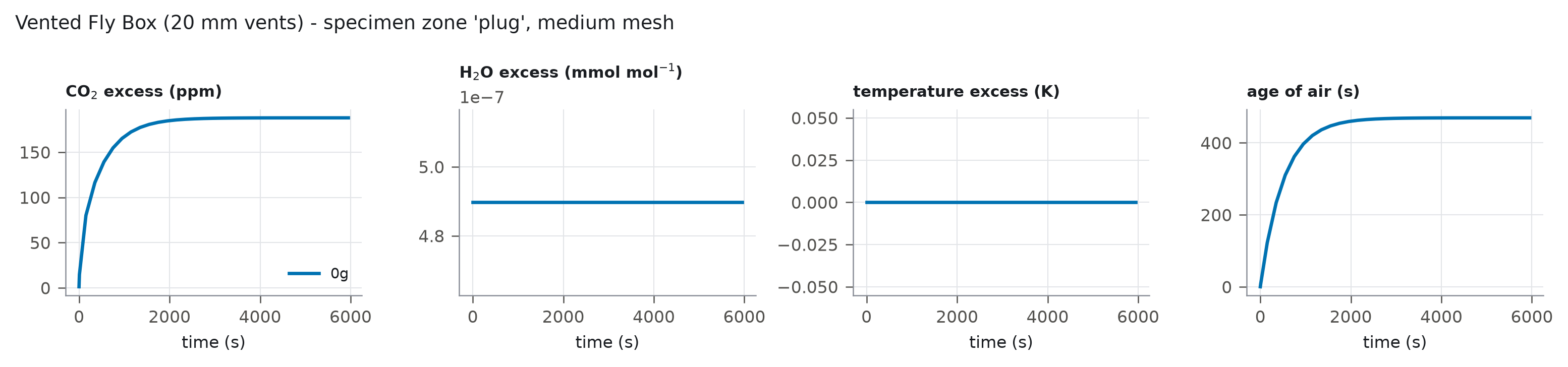
| Vented Fly Box (20 mm vents) | 0 g | air | plug | 187.94 ± 0.01 | 0.00 | 469.19 ± 0.02 | – | 0.19% |
| Vented Fly Box (60 mm vents) | 0 g | air | plug | 40.51 ± 0.00 | 0.00 | 73.07 ± 0.00 | – | 0.19% |
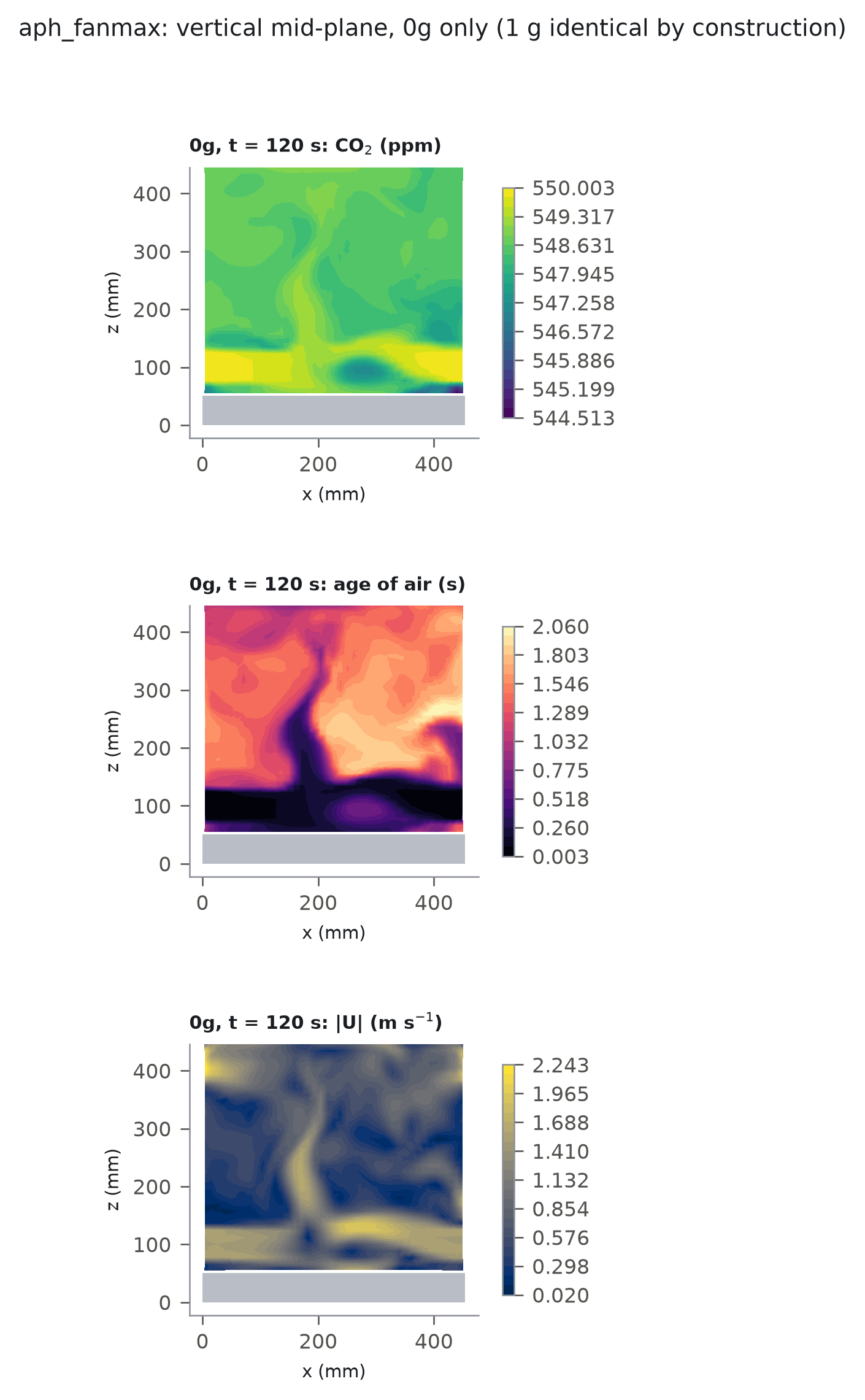
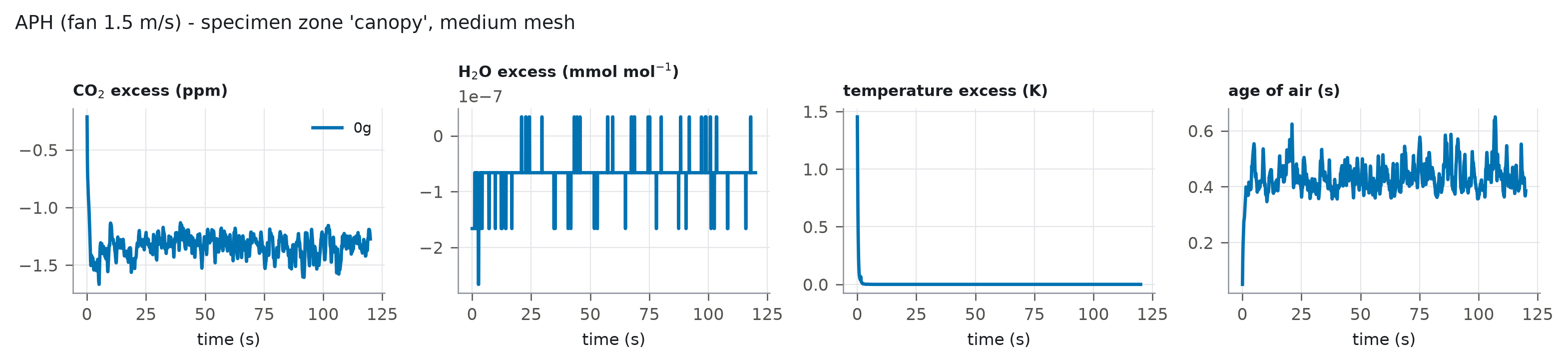
| APH (fan 1.5 m/s) | 0 g | air | canopy | −1.34 ± 0.10 | 0.00 | 0.44 ± 0.06 | 9,746 | 0.10% |
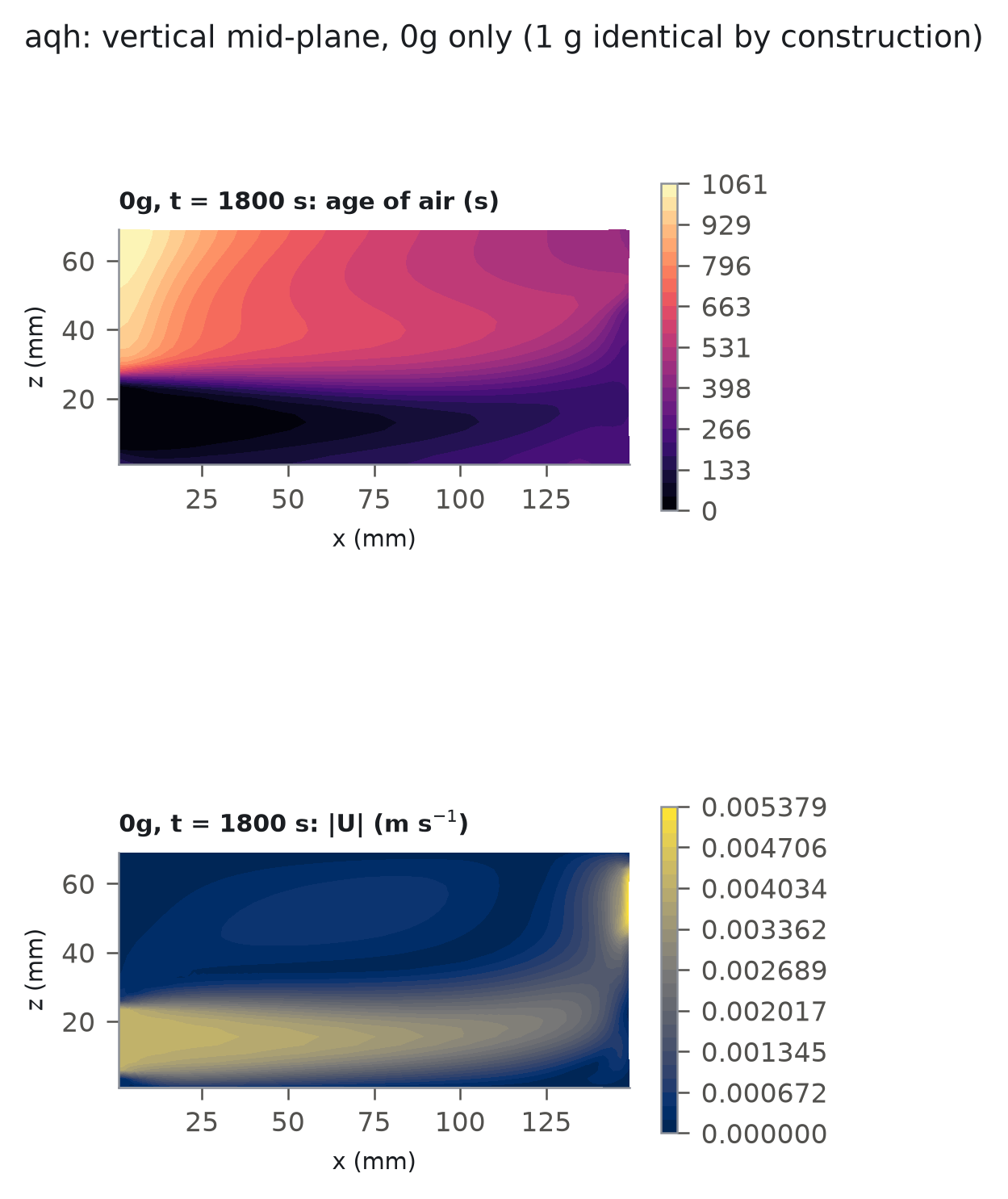
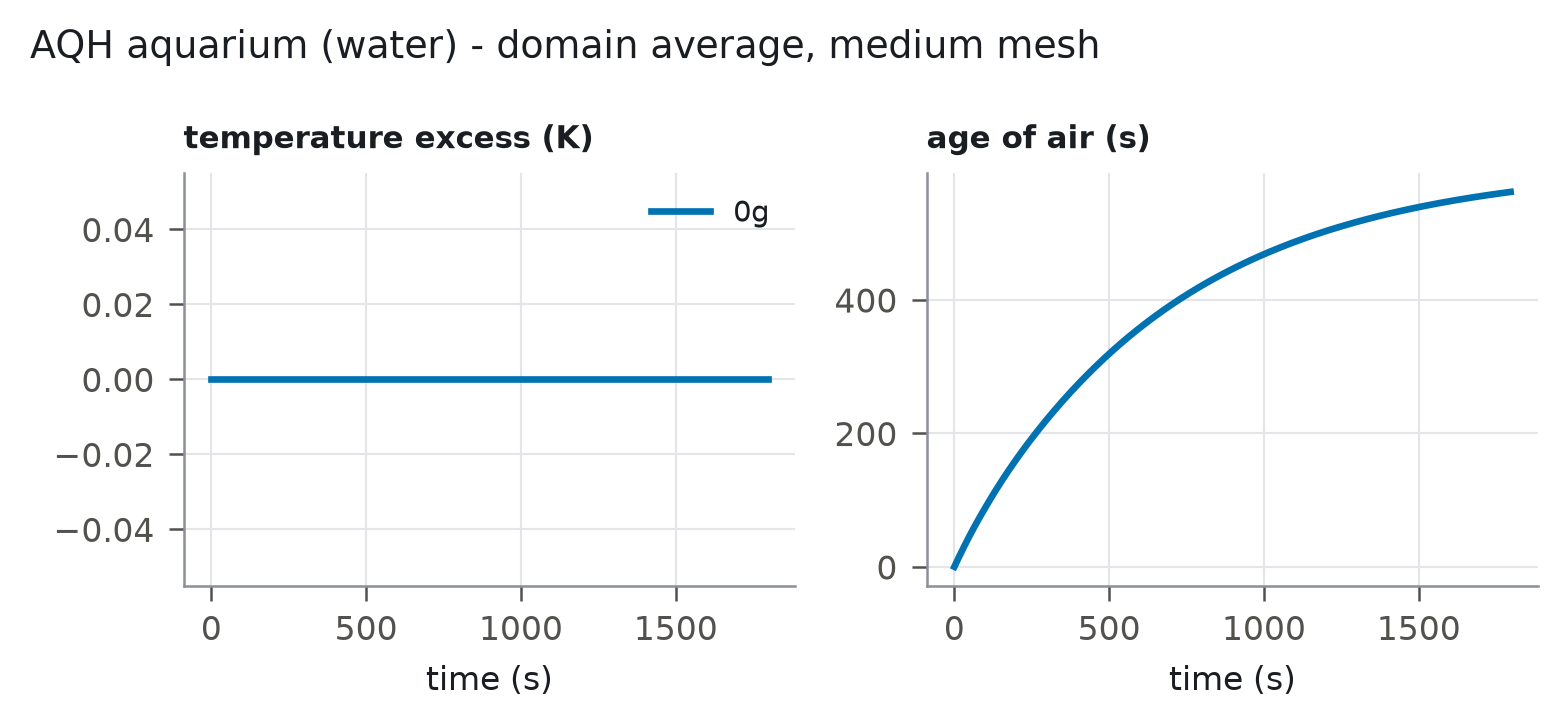
| AQH aquarium (water) | 0 g | water | domain | – | 0.00 | 544.50 ± 11.41 | 95 | – |
End-of-run specimen-zone values on the medium mesh; ± is the temporal s.d. over the last
quarter of the run. Hardware without a sourced heat load is run at 0 g only, because 1 g is
identical by construction. Source: results/tables/T9_cfd_results_medium.csv.
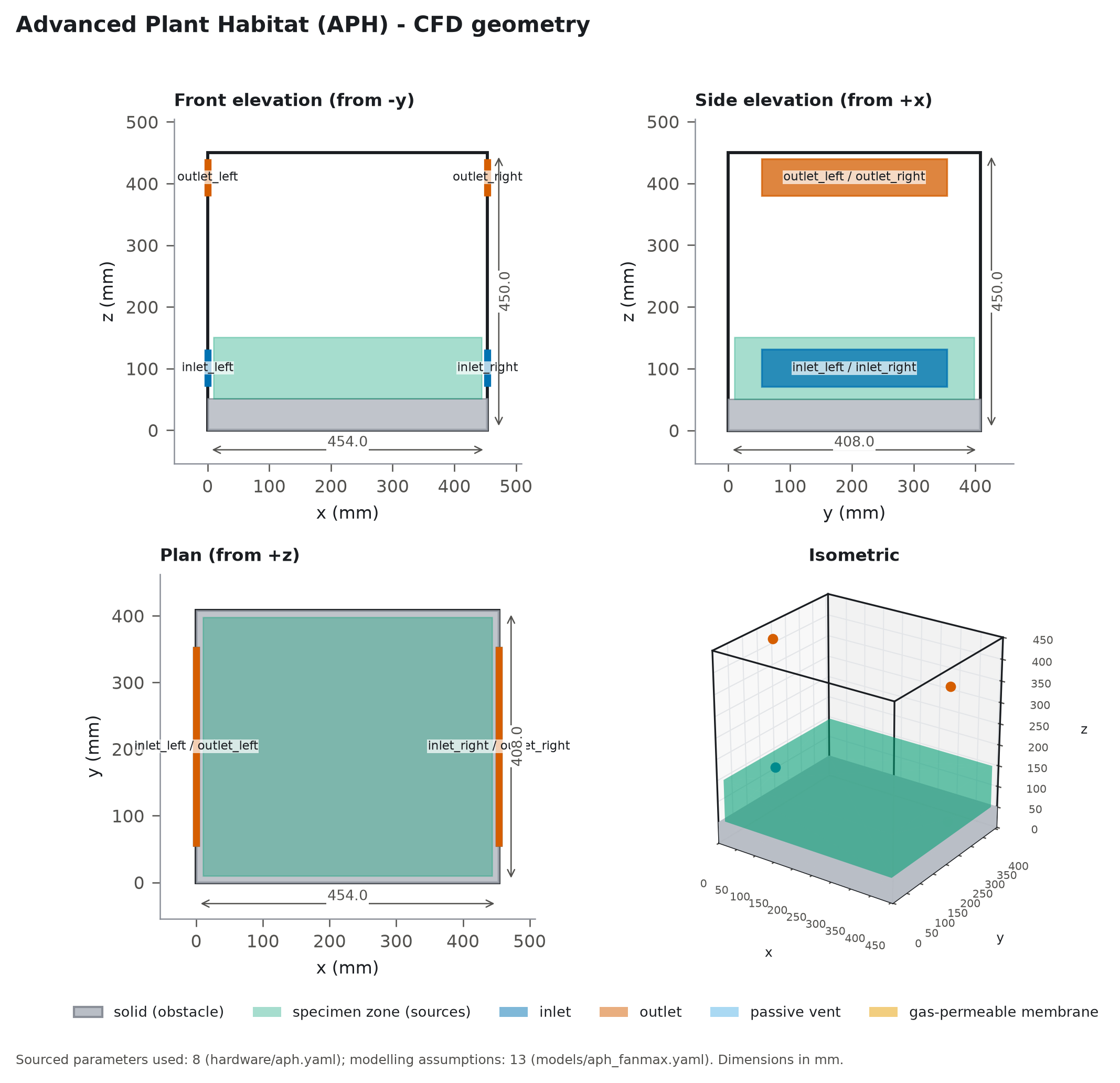
Engineering drawing, animated mid-plane record, end-of-run field slices and specimen-zone time series for each run. The animations play while they are on screen (use the controls to pause or step); full VTK time series will be in the Zenodo deposit.
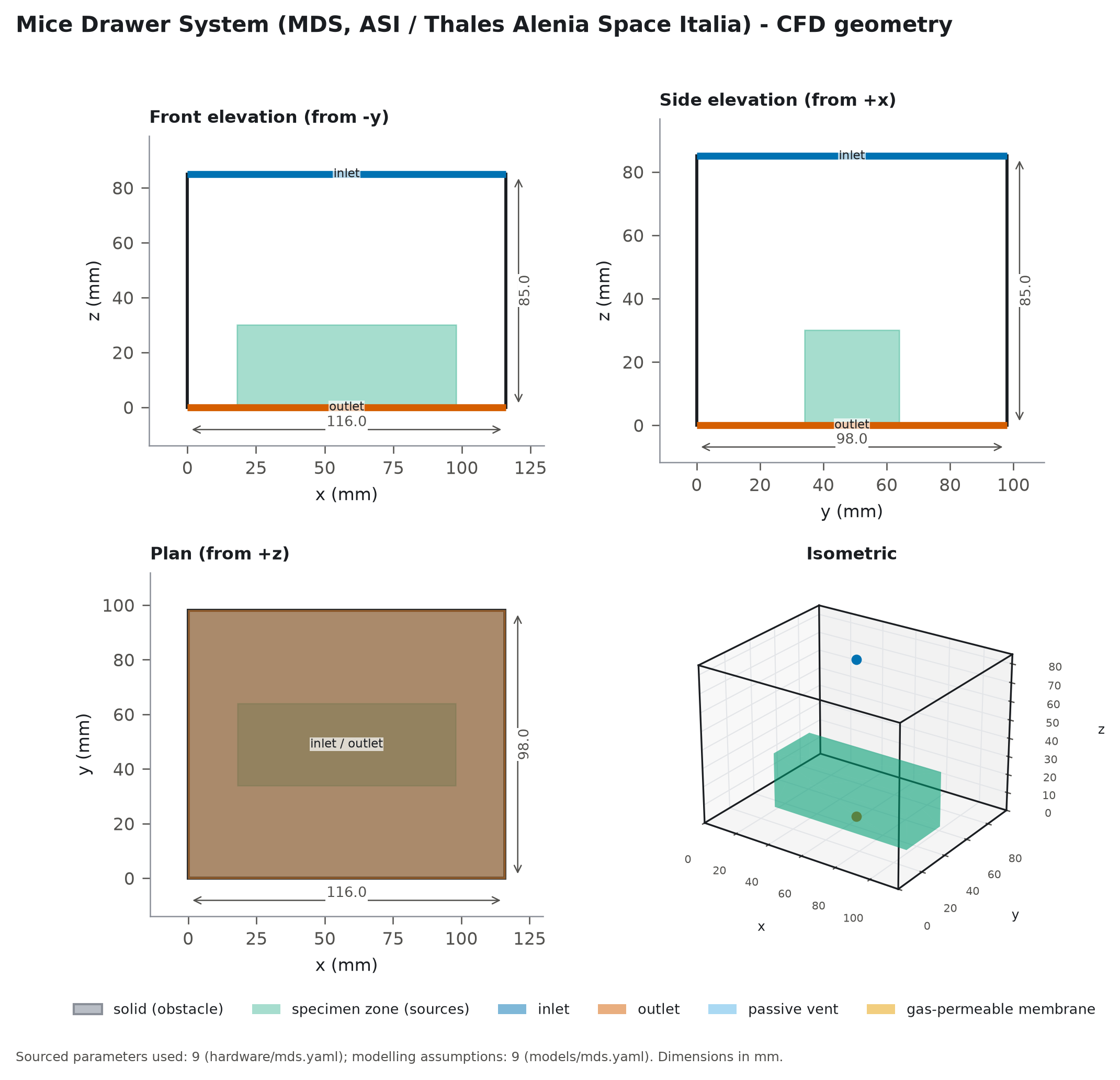
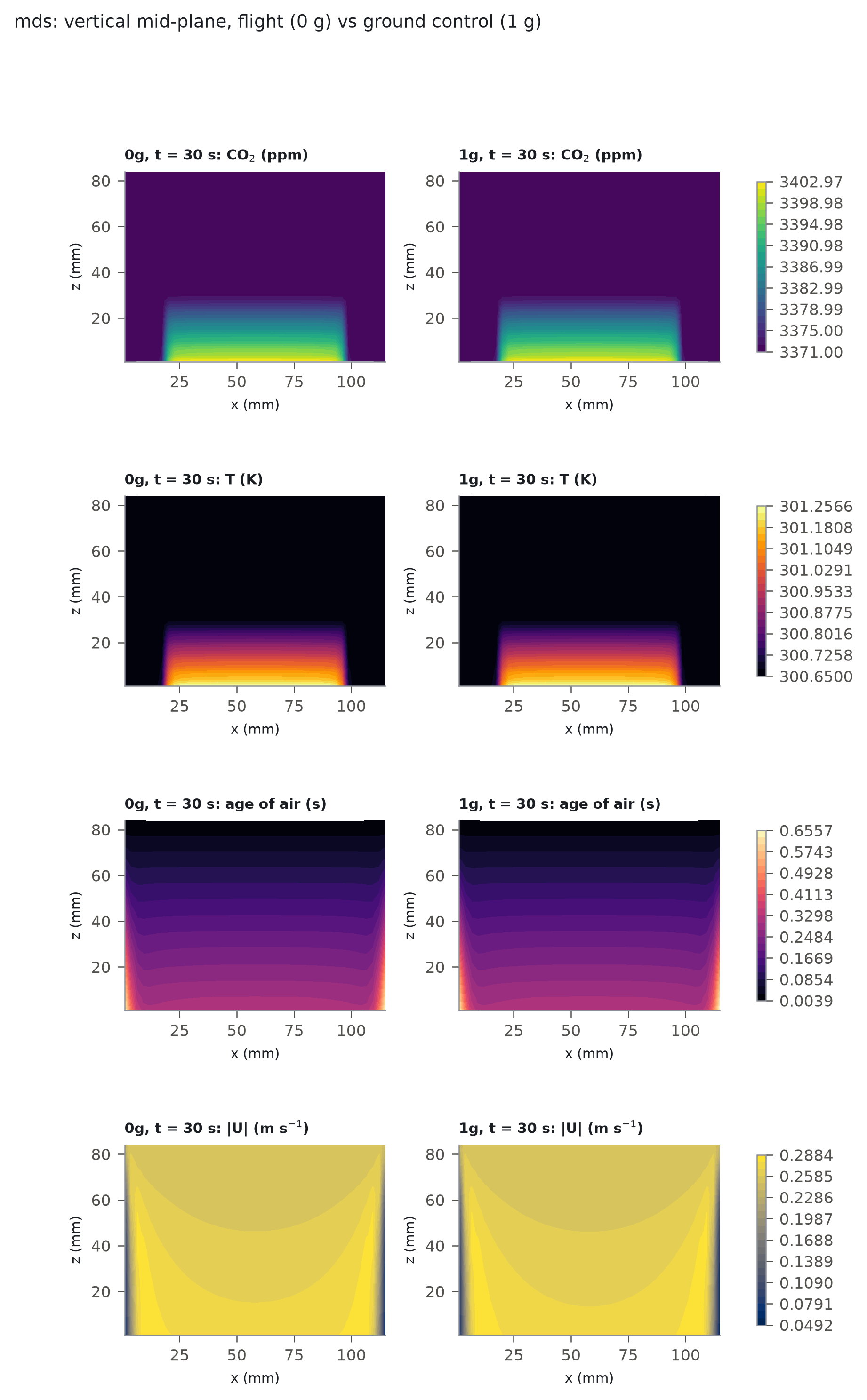
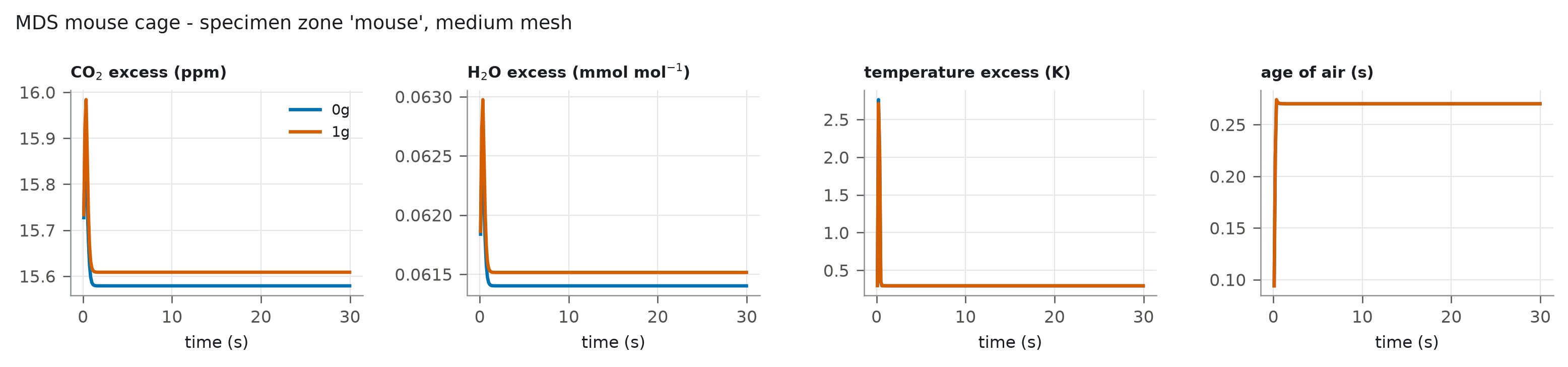
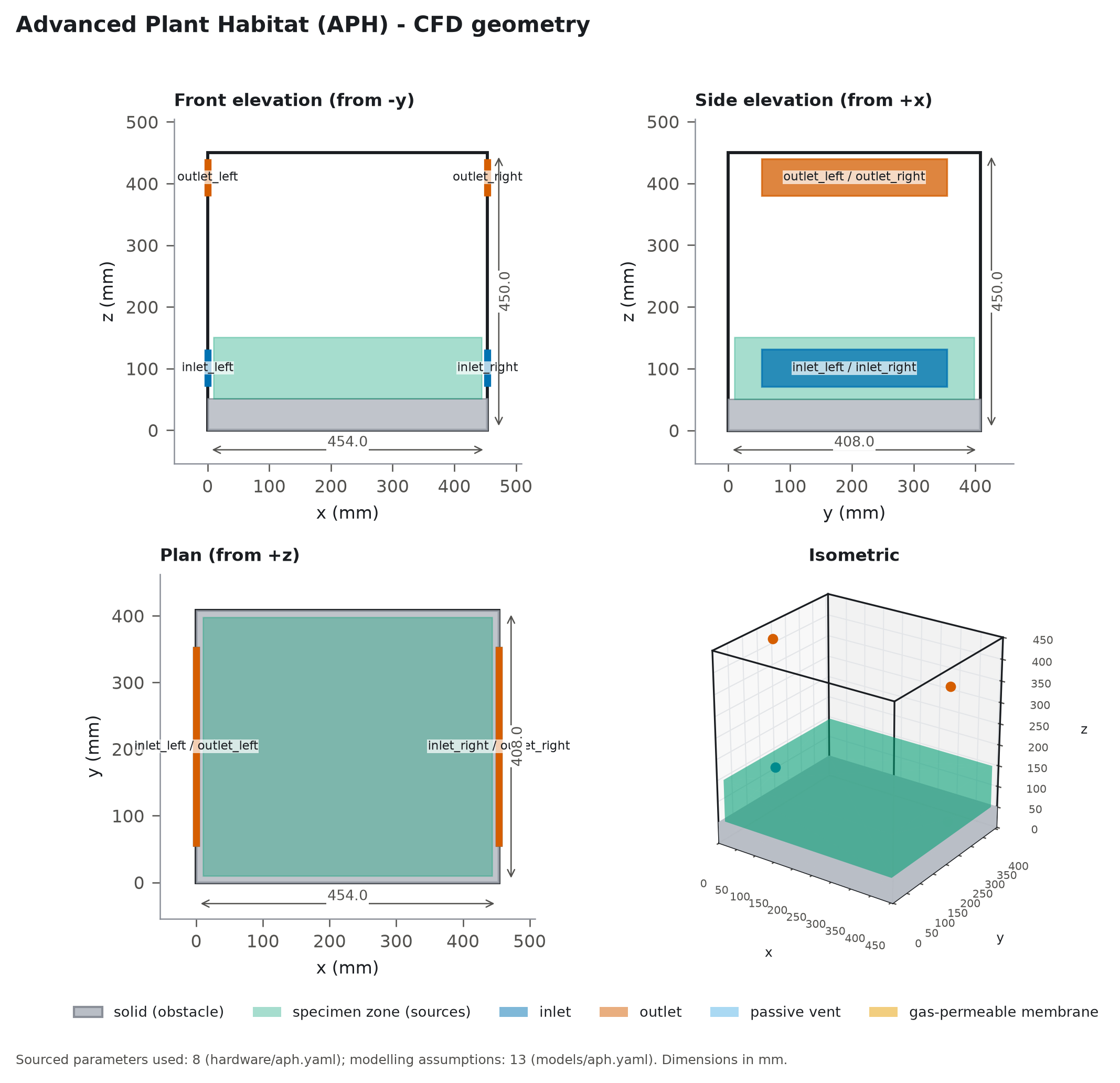
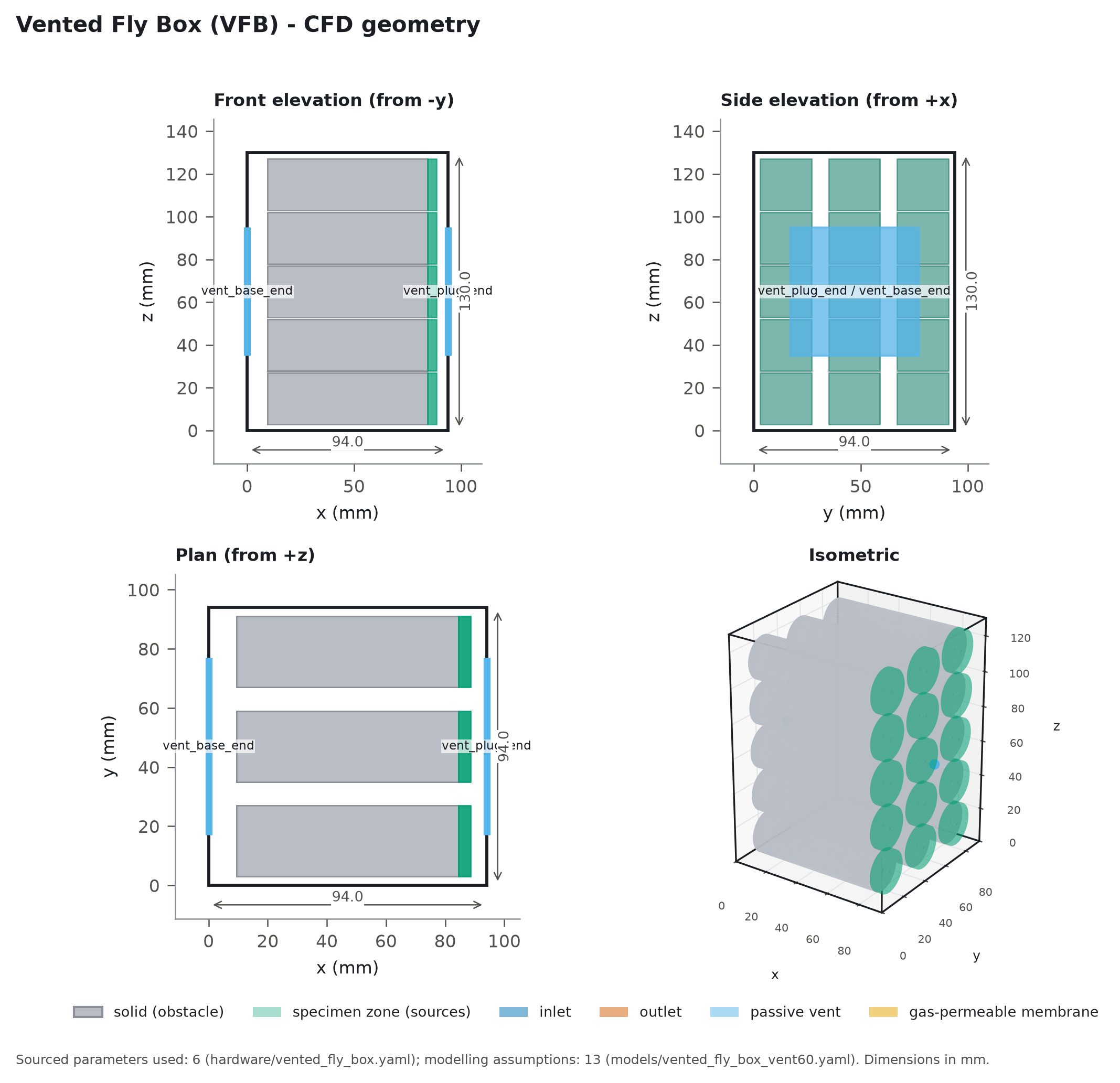
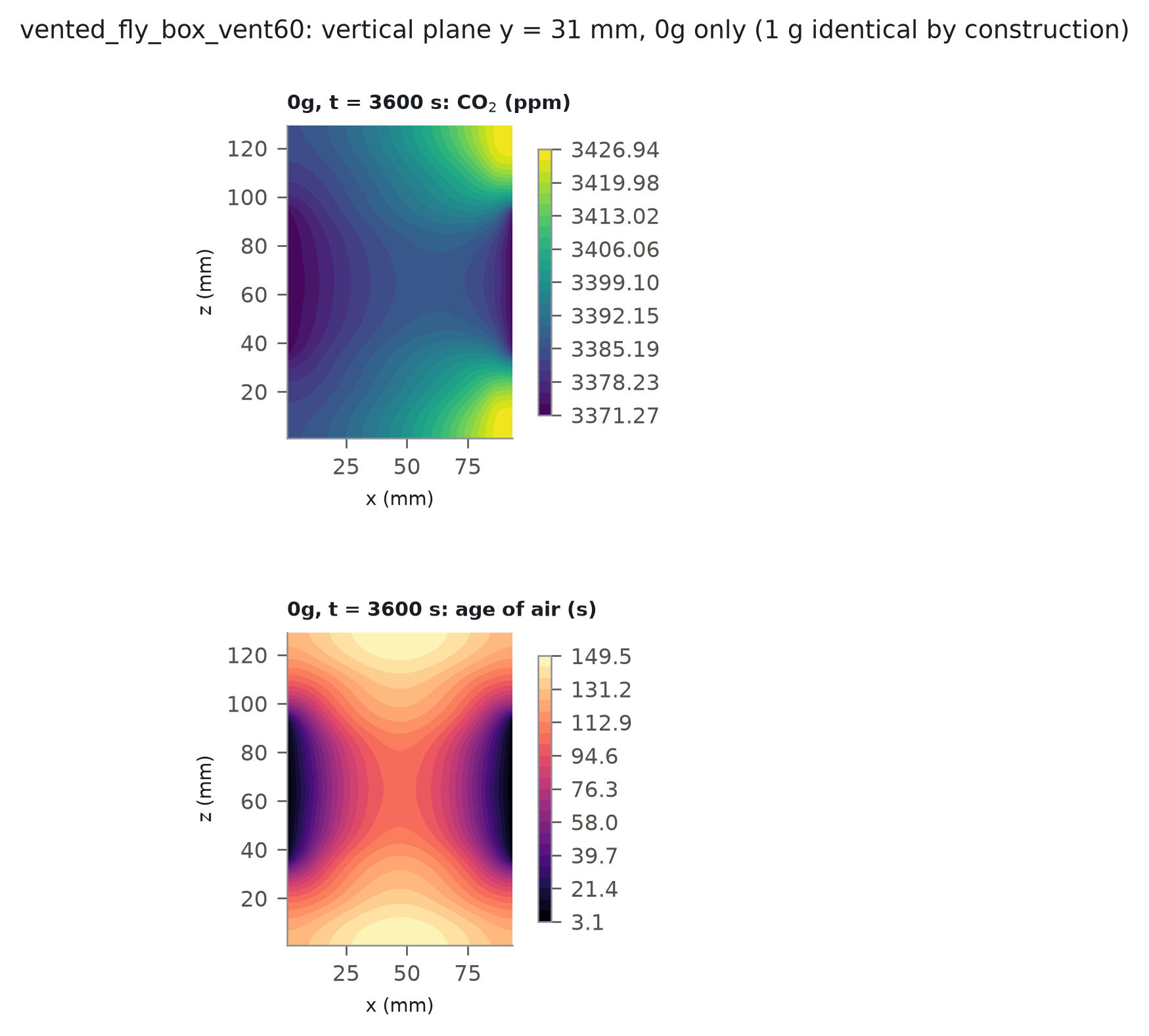
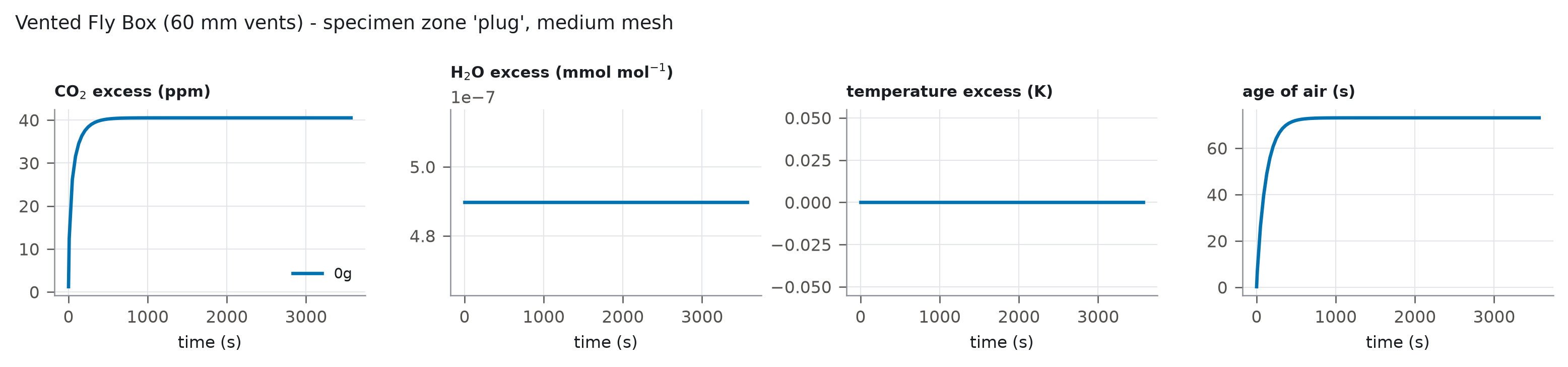
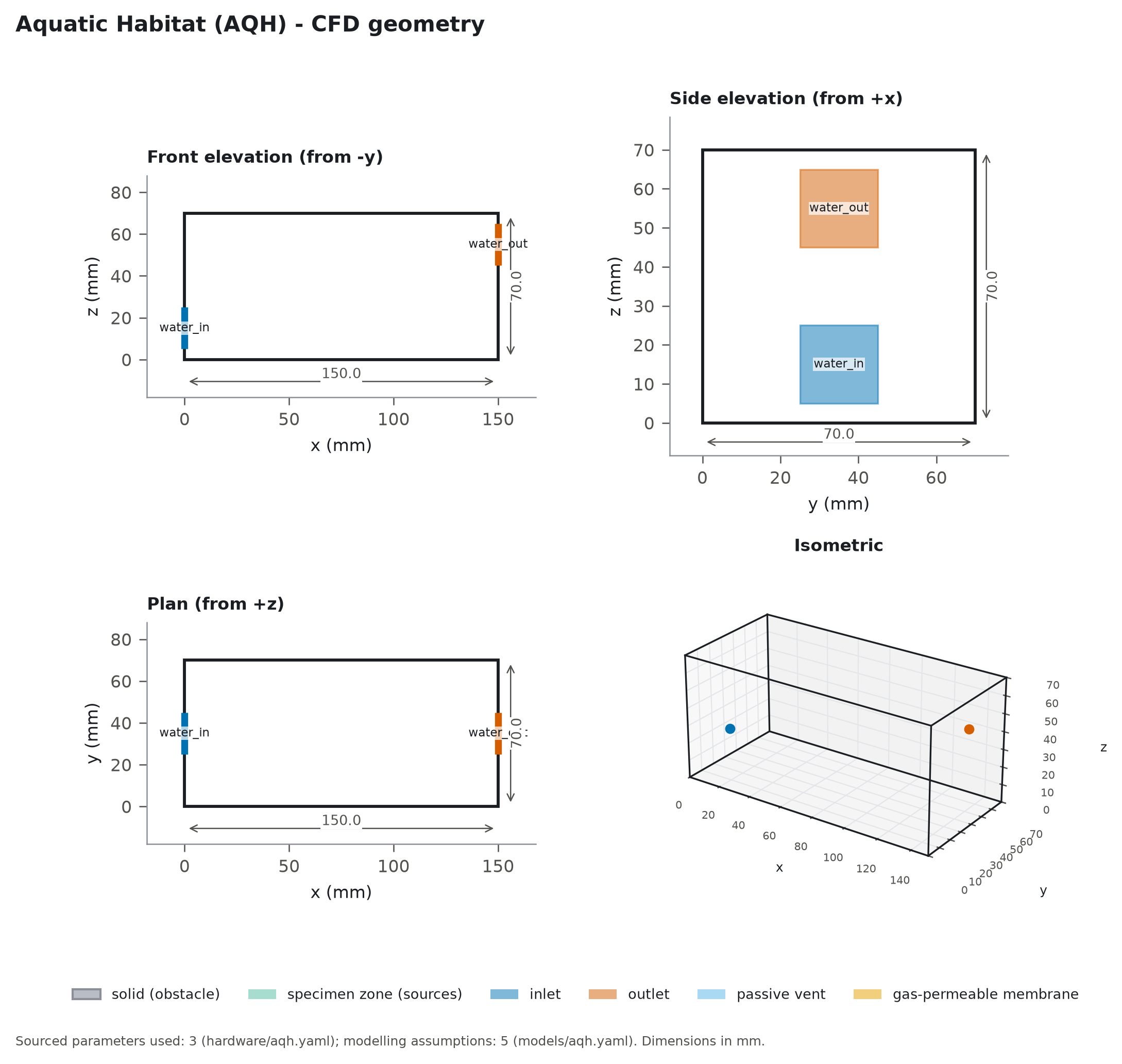
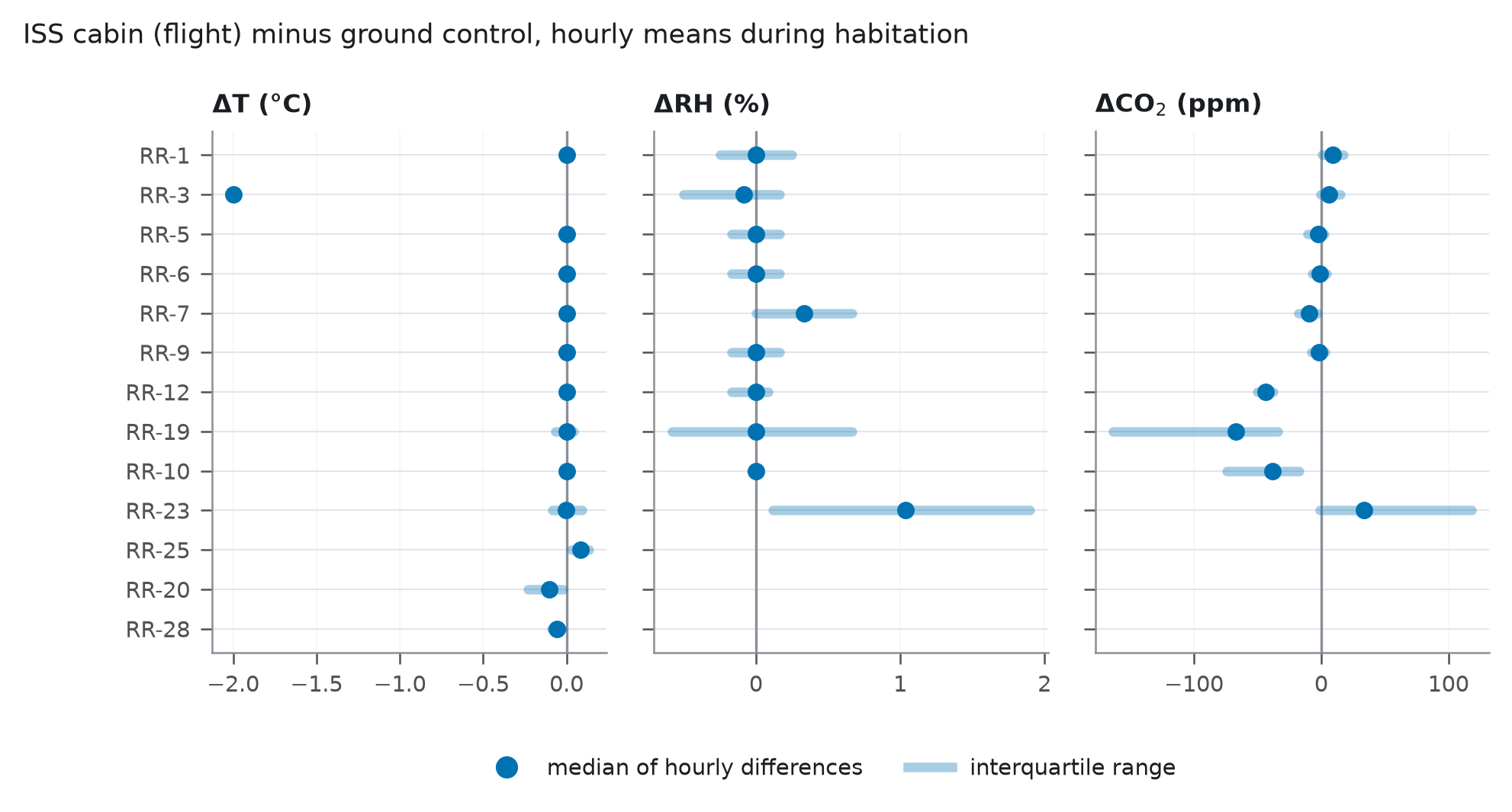
ISS-cabin and ground-control temperature, humidity and CO₂ from the OSDR Environmental Data App.
Of the 24 missions in the OSDR Environmental Data App, 13 Rodent Research missions have flight and ground-control series of the same variables during habitation (10 with CO₂). All of them describe cabin or ground-chamber air; none measures the interior of the hardware. The ground-control series tracked the cabin with a lag of at most 1 h, and median flight − ground differences were within 0.10 °C, 1.03% relative humidity and 67.33 ppm CO₂, except in RR-3, whose ground controls were 2.00 °C warmer than the cabin (23.88 versus 21.88 °C).
| Mission | Habitation on ISS | ΔT (°C) | ΔRH (%) | ΔCO₂ (ppm) |
|---|---|---|---|---|
| RR-1 | 2014-09-25 – 2014-10-25 | 0.00 [−0.02, 0.02] | 0.0 [−0.2, 0.2] | 9 [0, 17] |
| RR-3 | 2016-04-12 – 2016-05-20 | −2.00 [−2.02, −1.97] | −0.1 [−0.5, 0.2] | 6 [−1, 15] |
| RR-5 | 2017-06-07 – 2017-08-02 | 0.00 [−0.02, 0.03] | 0.0 [−0.2, 0.2] | −2 [−11, 3] |
| RR-6 | 2017-12-19 – 2018-02-06 | 0.00 [−0.02, 0.02] | 0.0 [−0.2, 0.2] | −1 [−7, 4] |
| RR-7 | 2018-07-04 – 2018-09-13 | 0.00 [−0.02, 0.02] | 0.3 [0.0, 0.7] | −9 [−18, −3] |
| RR-9 | 2018-08-18 – 2018-09-16 | 0.00 [−0.03, 0.02] | 0.0 [−0.2, 0.2] | −2 [−8, 3] |
| RR-12 | 2019-04-21 – 2019-05-22 | 0.00 [−0.01, 0.02] | 0.0 [−0.2, 0.1] | −44 [−50, −38] |
| RR-19 | 2019-12-10 – 2020-01-08 | 0.00 [−0.07, 0.04] | 0.0 [−0.6, 0.7] | −67 [−163, −34] |
| RR-10 | 2020-12-09 – 2021-01-03 | 0.00 [0.00, 0.01] | 0.0 [0.0, 0.0] | −38 [−74, −17] |
| RR-23 | 2020-12-09 – 2021-01-15 | 0.00 [−0.08, 0.09] | 1.0 [0.1, 1.9] | 33 [−1, 118] |
| RR-18 | 2021-12-23 – 2022-01-24 | – | – | – |
| RR-25 | 2022-11-29 – 2023-01-25 | 0.08 [0.03, 0.13] | – | – |
| RR-20 | 2023-11-10 – 2023-12-22 | −0.10 [−0.23, −0.02] | – | – |
| RR-28 | 2024-03-24 – 2024-04-30 | −0.06 [−0.09, −0.03] | – | – |
Median [interquartile range] of hourly flight − ground differences. Source:
results/tables/T11_flight_ground.csv; habitation windows in
data/curated/eda_mission_windows.csv.
Undocumented inputs can matter more than gravity.
In the four hardware items that could be modelled, the gravity contrast was small: forced ventilation dominated the mouse-cage environment, and in the plant growth chamber the flight–ground difference was within the fluctuation of the flow. This is not evidence that gravity does not matter to these environments, because the loads that would let it act (canopy and lamp heat, fly metabolic heat, the solutal buoyancy of exhaled CO₂) are exactly the inputs the public record does not provide. For hardware of this kind, interpreting a flight–ground difference as a gravity effect requires the hardware environment to be measured or modelled, and modelling requires metadata that do not yet exist publicly.
sources, schematics and
study_links fields.Every number is generated from the repository; every hardware value carries its source.
| Component | Location |
|---|---|
| Frozen snapshot of SPLASH, the OSDR registry and OSDR study metadata, with SHA-256 sums | data/raw/2026-10-12/ |
| OSDR Environmental Data App telemetry and daily dose, all missions (verbatim, with checksums) | data/raw/2026-10-12/eda/ |
| Reviewed decisions: SPLASH field verdicts, crosswalk and role overrides, blind-rater set, quote audit | data/curated/ |
| Curated hardware specifications (value, unit, source, URL, quotation) | hardware/ |
| CFD model definitions for the Tier-A hardware | models/ |
| Pipeline (fetch, crosswalk, classify, sufficiency, meta-analysis, geometry, cases, post-processing) | src/hwreview/ |
| Tables, figures, drawings, animations, run time series | results/ |
| Manuscript and supplement sources; PDF, DOCX and HTML builds | latex/ |
| Pinned OpenFOAM v2606 Docker image | openfoam/docker/IMAGE.md |
make setup      # Python venv with pinned requirements
make analysis   # catalogue → crosswalk → classification → sufficiency → meta-analysis → validation → figures
make verify     # CFD verification (Docker + OpenFOAM v2606)
make cfd        # Tier-A campaign, 0 g and 1 g, mesh ladders
make post       # drawings, results, GCI
make paper      # manuscript PDF / DOCX / HTML
make site       # this page