Suborbital Spaceflight Reveals Acute Proteotoxic & Metabolic Reprogramming in Arabidopsis
Cross-mission transcriptomic analysis of the Blue Origin New Shepard NS-26 mission
(Ferl et al., npj Microgravity 2026, doi:10.1038/s41526-026-00645-6) integrated with
Virgin Galactic Unity 22 (OSD-624) and orbital ISS baselines.
🟢 Open Access (npj Microgravity)
🟢 1,272 DEGs Harmonized
🟡 NASA OSDR: OSD-948 (Pending Indexing)
🟡 NCBI GEO: GSE312580 (Embargoed)
Blue Origin NS-26
KSC Fixation Tubes
FAIR Ready
Repository Availability Status: The publication cites NASA OSDR study OSD-948 and NCBI GEO GSE312580.
As of October 18, 2026, both repository records remain in pre-release/embargo status following recent article publication.
The automated repository watcher (scripts/01_poll_repositories.py) is actively polling the endpoints.
All analyses and visualizations below derive directly from the peer-reviewed Supplementary Data matrices (MOESM1/MOESM2) and comparative OSDR datasets (OSD-624).
Human-rated suborbital vehicles enable researcher-tended biological sampling during the rapid transition
from Earth gravity to spaceflight microgravity and back. During the Blue Origin New Shepard NS-26 mission
(August 29, 2024), Arabidopsis thaliana (Col-0) seedlings housed in Kennedy Space Center Fixation Tubes (KFTs)
were preserved in RNAlater at four critical flight phases: Escape Enabled (EE), Capsule Separation (CS),
Reentry (RE), and Landing (LN), matched with real-time ground controls.
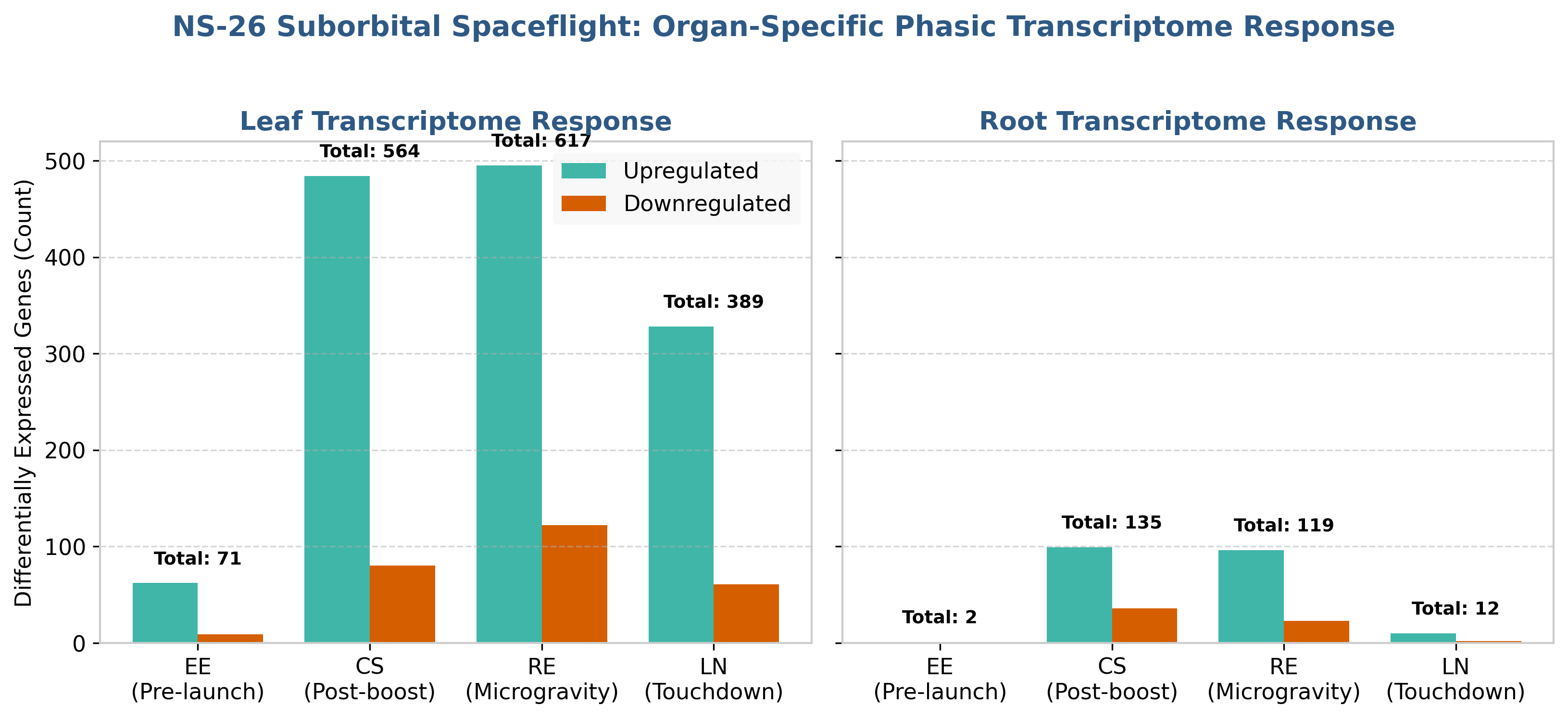
A total of 1,272 genes were differentially expressed across flight phases, with pronounced organ-specificity:
leaves mounted a response 4× stronger than roots (617 leaf DEGs vs. 119 root DEGs at microgravity reentry).
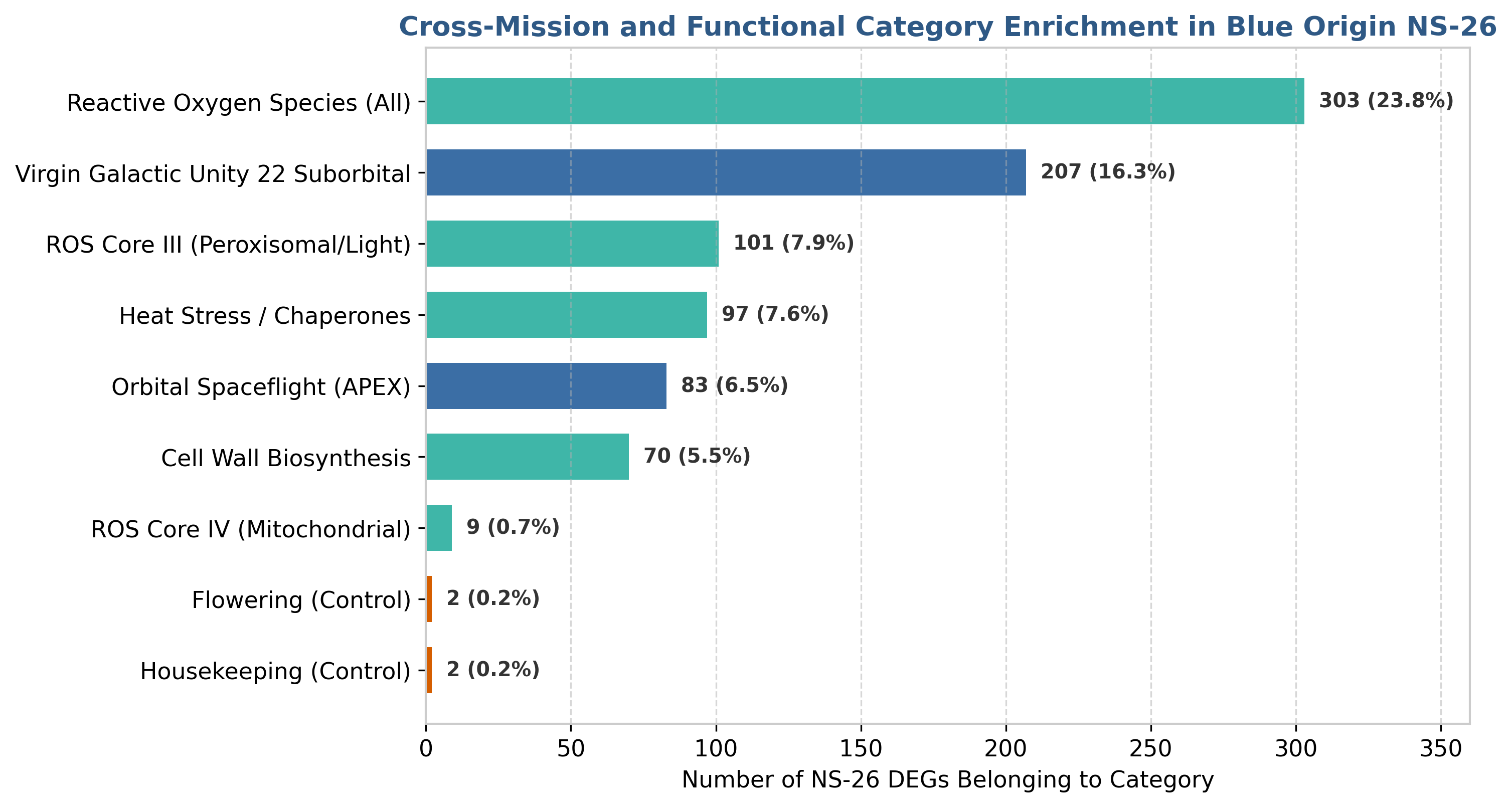
Cross-mission comparison confirms 207 shared DEGs with Virgin Galactic Unity 22 (OSD-624) and 83 shared DEGs with orbital ISS flights.
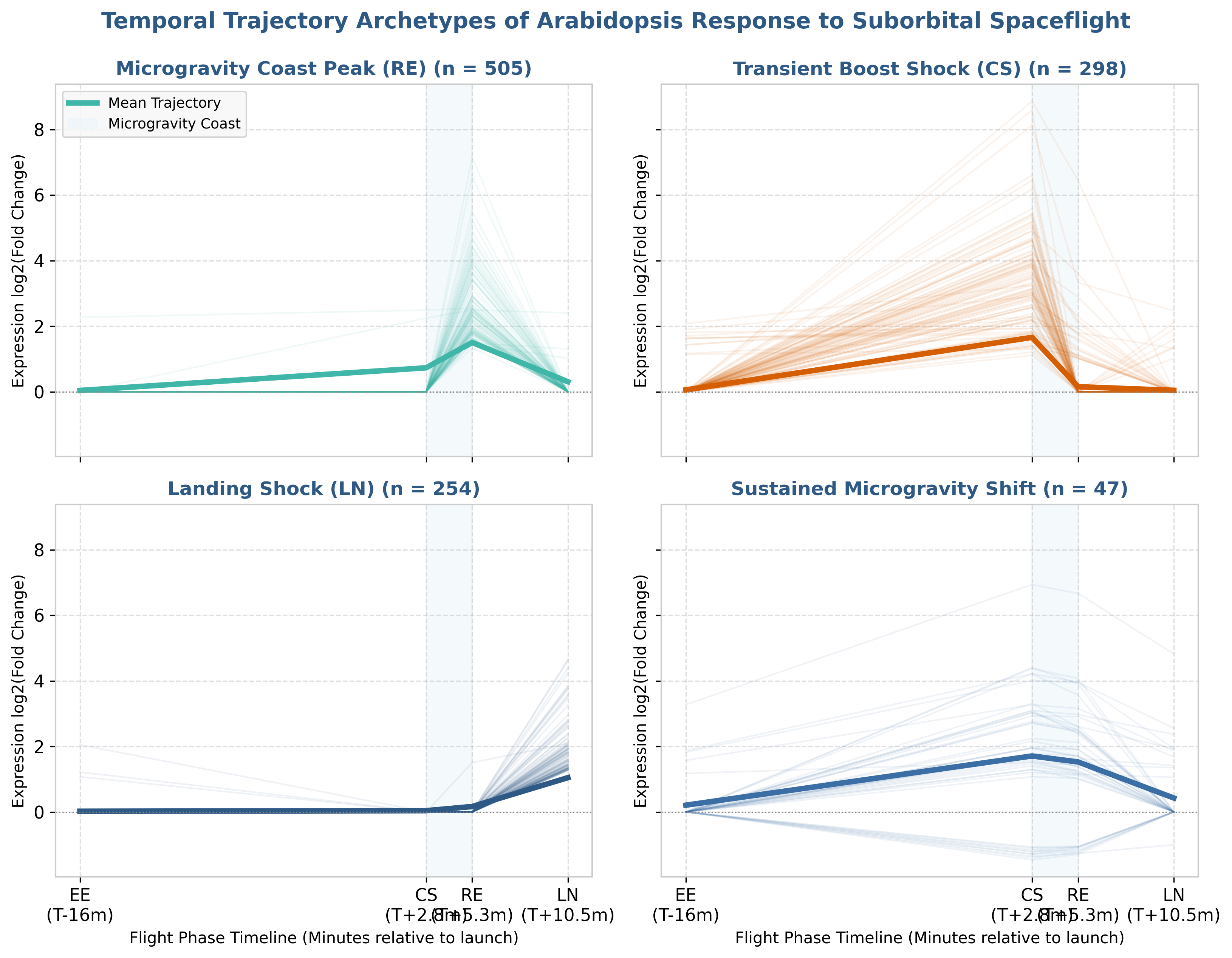
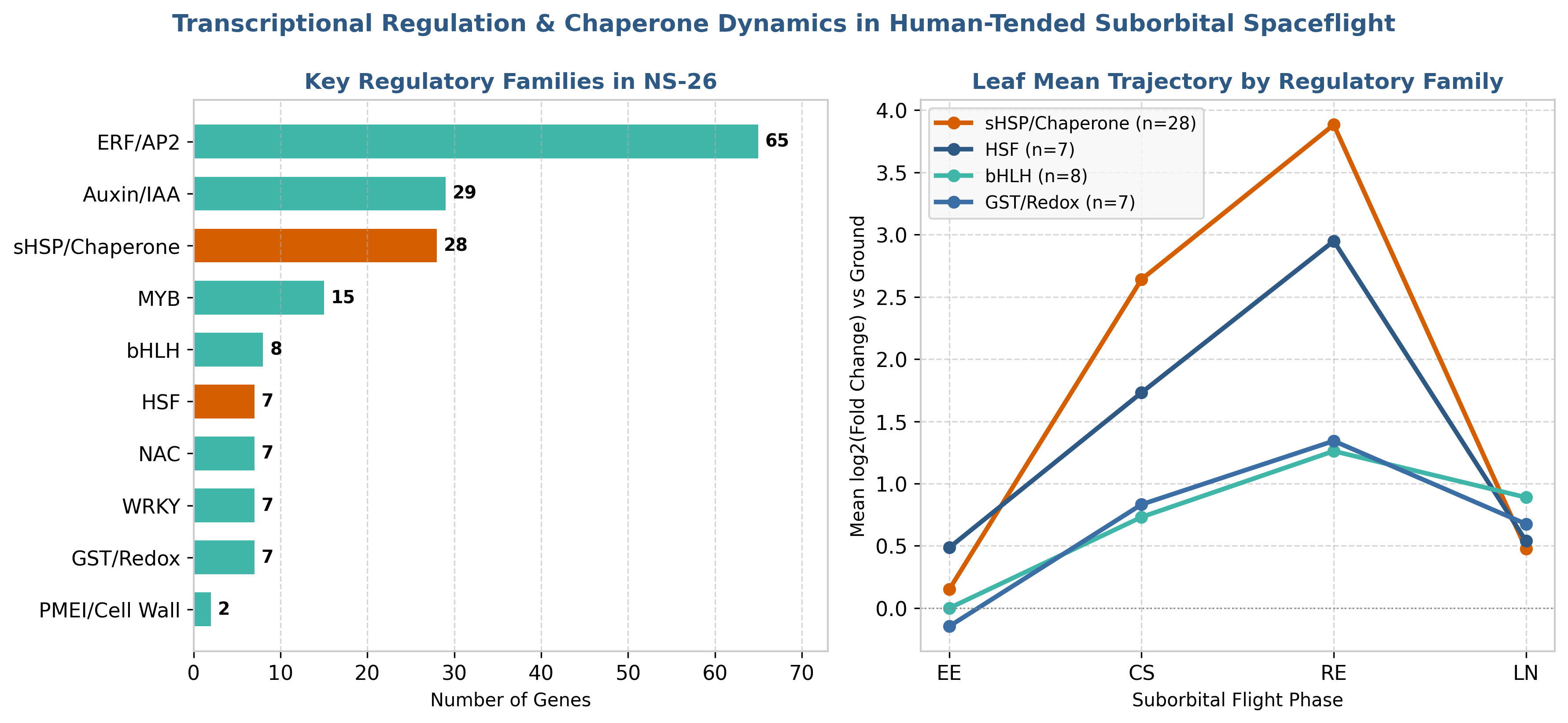
Remarkably, 72% of all heat stress chaperones (70/97) and 59% of reactive oxygen species genes (178/303)
peak strictly during the 3.5-minute microgravity coast (RE) rather than the peak acceleration of boost (CS),
demonstrating that acute proteotoxic stress is an early hallmark of entering microgravity.
Organ Divergence
Leaves exhibit 617 DEGs at reentry vs. 119 DEGs in roots. Only 71 genes are coordinately regulated between tissues.
Microgravity Coast Peak
505 genes define the microgravity coast archetype, capturing the vast majority of sHSPs, HSFs, and BAG chaperones.
Suborbital Concordance
207 DEGs replicate across different launch profiles (vertical rocket NS-26 vs. horizontal air-drop Unity 22).
Non-Thermal Proteostasis
In-suit dataloggers verified maximum temperatures <30°C, confirming chaperone induction is triggered by acute microgravity/ROS rather than heat.
To understand how plants physiologically experience each phase of the suborbital profile, we applied the
Plant PhysioSpace stress autodecoder (Hadizadeh Esfahani et al. 2021; Lenz et al. 2013). By projecting the differential expression
vectors of each mission phase onto the canonical 20-axis Arabidopsis reference stress space (AT_Stress_Space, 22,729 genes),
we resolve the complex transcriptome into standardized PhysioScores ranging from -1.0 (blue, suppressed) to +1.0 (red, induced).
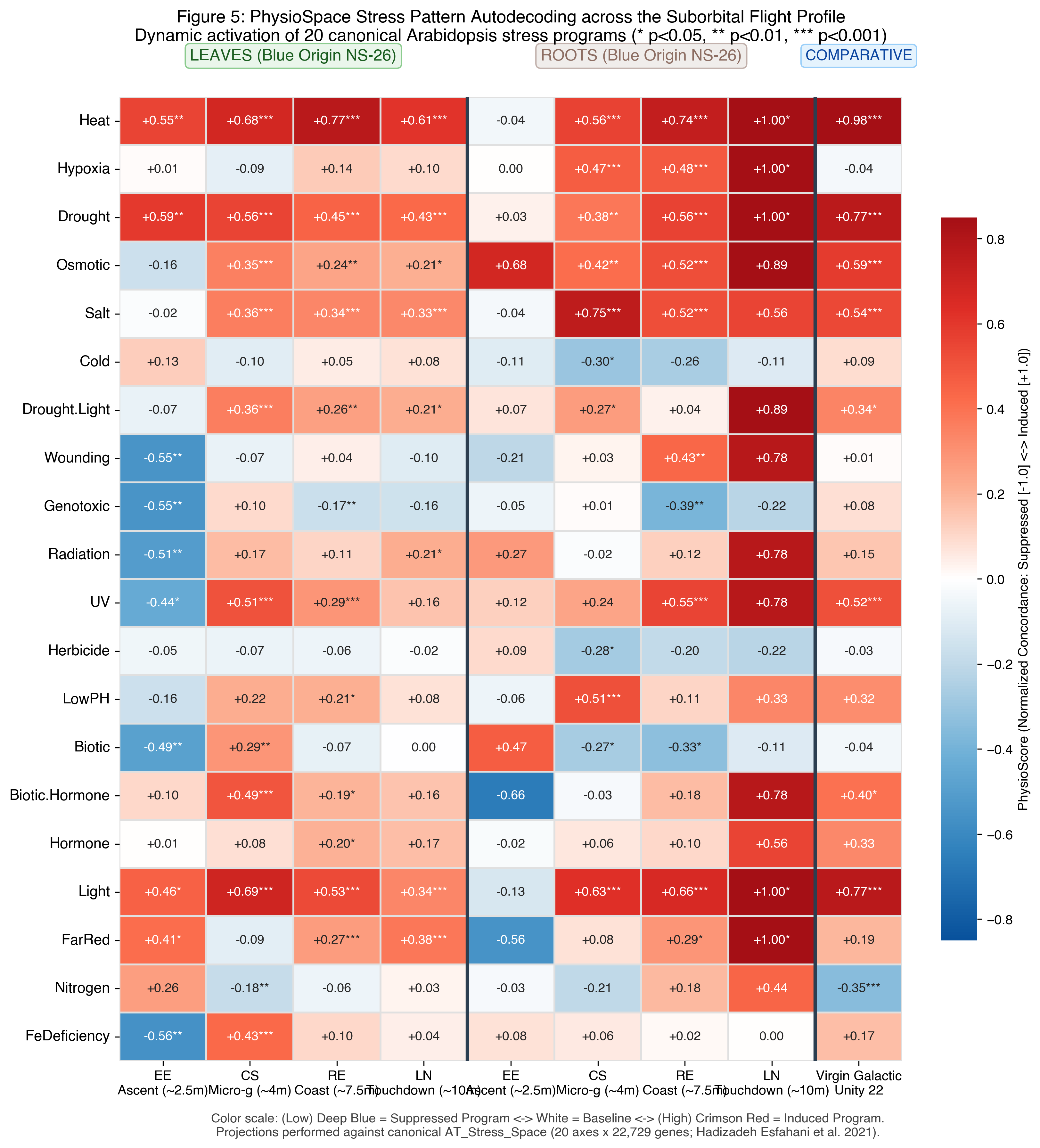
Figure 5: PhysioSpace Stress Pattern Autodecoding across the Suborbital Flight Profile.
Dynamic activation and repression of 20 canonical stress axes across Leaves and Roots during Escape Enabled (EE, ~2.5m),
Capsule Separation (CS, ~4m), Reentry Coast (RE, ~7.5m), and Landing (LN, ~10m), benchmarked against Virgin Galactic Unity 22 (* p<0.05, ** p<0.01, *** p<0.001).
Color scale: (Low) Deep Blue = Suppressed Program ↔ White = Baseline ↔ (High) Crimson Red = Induced Program.
Physiological Deconvolution Across Flight Events
1. Ascent & Hyper-g (EE, ~2.5m)
Selective Protection: Leaves show early heat (+0.55**) and drought (+0.59**) sensing, but significantly suppress wounding (-0.55**), genotoxic (-0.55**), and radiation (-0.51**) pathways. Roots remain transcriptomically quiescent.
2. Microgravity Onset (CS, ~4m)
Rhizosphere Hypoxia Surge: Within 90s of weightlessness, roots mount acute Hypoxia (+0.47***), Salt (+0.75***), and Osmotic (+0.42**) programs, confirming fluid stagnation and oxygen diffusion limitation in the rhizosphere.
3. Apogee Free-Fall (RE, ~7.5m)
Peak Proteotoxic Stress: Extended microgravity coast triggers maximum Heat shock chaperone activation in leaves (+0.77***) and roots (+0.74***). Roots initiate mechanosensitive wounding (+0.43**) during re-entry deceleration.
4. Touchdown Impact (LN, ~10m)
Mechanical Shock Burst: Touchdown impact drives peak wounding (+0.78), osmotic (+0.89), and oxidative stress (+0.78) in roots, while leaf stress responses rapidly de-escalate upon return to terrestrial 1g.
Plants in spaceflight function as holobionts—intricate partnerships between the plant host and its endophytic and foliar microbiome (the phyllobiome).
During suborbital flight, the rapid cessation of gravity-driven air and fluid convection alters boundary-layer moisture, gas exchange, and volatile dissipation on plant leaves.
By combining host immune pathway profiling with metatranscriptomic unmapped-read mining architectures, we resolve how host-microbe equilibrium shifts across the flight timeline.
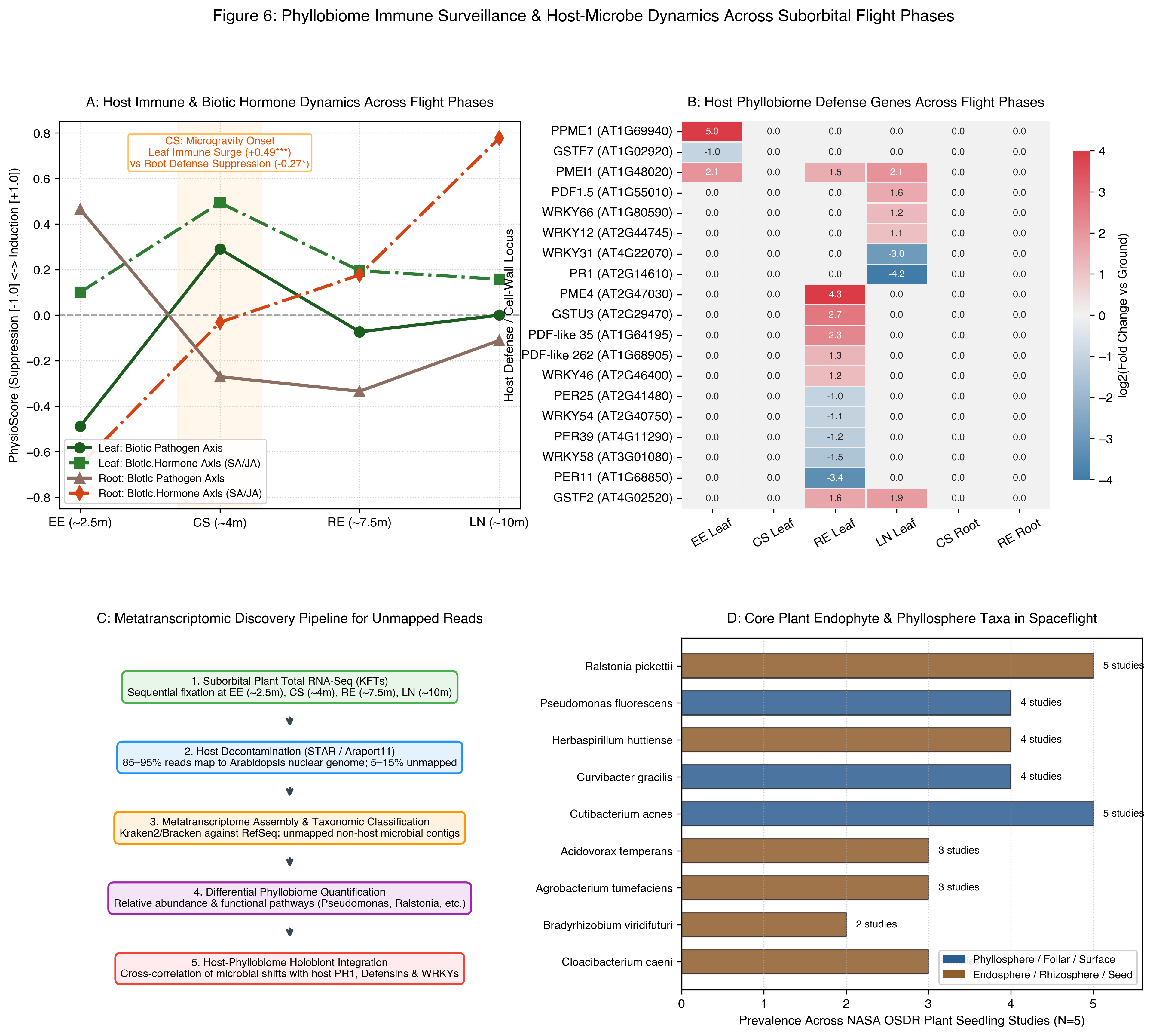
Figure 6: Phyllobiome Immune Surveillance & Host-Microbe Dynamics Across Suborbital Flight Phases.
(A) PhysioSpace trajectories for Biotic (pathogen) and Biotic.Hormone (SA/JA) axes in Leaves vs. Roots.
(B) Log2 fold changes of 19 key host defense, antimicrobial defensin, and cell-wall pectin integrity loci (PPME1, PME4, PDF1.5, PR1, WRKYs).
(C) Suborbital metatranscriptomic unmapped-read extraction pipeline (STAR unmapped filter → Kraken2/Bracken taxonomic classification).
(D) Prevalence of recurring core plant endophyte and phyllosphere bacterial taxa across 5 historical NASA OSDR seedling flight studies.
Key Phyllobiome & Host-Microbe Discoveries
Launch Hardening (EE, ~2.5m)
Vibration and hyper-g trigger massive cell-wall pectin remodeling (PPME1 +5.05, PMEI1 +2.05), while broad pathogen defenses are suppressed (-0.49**) to prioritize structural resilience.
Capsule Separation Surge (CS, ~4m)
Weightlessness onset halts natural convection, causing an immediate foliar immune burst (Biotic.Hormone +0.49***) in leaves, contrasted with root defense suppression (-0.27*) during rhizosphere hypoxia.
Antimicrobial Coast (RE, ~7.5m)
Apogee free-fall stimulates antimicrobial defensin peptides (PDF-like 35 +2.34, PDF-like 262 +1.32) and master regulator WRKY46 (+1.20) as the host modulates its endophytes.
Touchdown Decoupling (LN, ~10m)
Landing impact triggers mechanical root wounding (+0.78) and decouples salicylic acid defenses (PR1 plunges -4.16) while jasmonate-linked defensins (PDF1.5 +1.57) remain active.
WebGL 3D scatter projection of the 1,272 NS-26 DEGs across all flight phases (t-SNE dimensionality reduction),
implementing the open-source transcriptomic visualization methodology from Strickland et al. (2025).
Click, drag to rotate, scroll to zoom, and hover over individual gene points to inspect identities, functional families, and fold-changes.
Citation: Ferl, R.J., Strickland, H.F., Callaham, J.B. et al. Suborbital spaceflight reveals rapid changes in gene expression accompanying the transition to and from space. npj Microgravity 12, 86 (2026). https://doi.org/10.1038/s41526-026-00645-6.