Correction, 14 October 2026
Earlier versions of this site reported a 15-accession gravitropism survey, a genome-wide association study (GWAS), gene-level spaceflight fold changes for OSD-375, a cross-species meta-analysis with Arabidopsis, and synteny, promoter-motif and alternative-splicing results. These have been withdrawn. The gravitropism measurements were generated by the pipeline's demonstration mode from seeded random numbers, no genotype data or association test existed, and the other values were typed into the code rather than computed. The Brachypodium gene identifiers previously listed for the candidate genes were also withdrawn and replaced by Ensembl Compara orthologs, and the typed-in expression values by the values Su et al. (2023) published. The Plans page lists what was withdrawn and what is planned.
🌾 What the OSD-375 Experiment Found
Few plant spaceflight experiments have used monocots, although monocots include most of the crops grown on Earth. In the APEX-06 experiment, seedlings of the Brachypodium distachyon accessions Bd21, Bd21-3 and Gaz8 were germinated and grown for five days in APEX Growth Units in VEGGIE on the ISS, with a ground control at Kennedy Space Center.
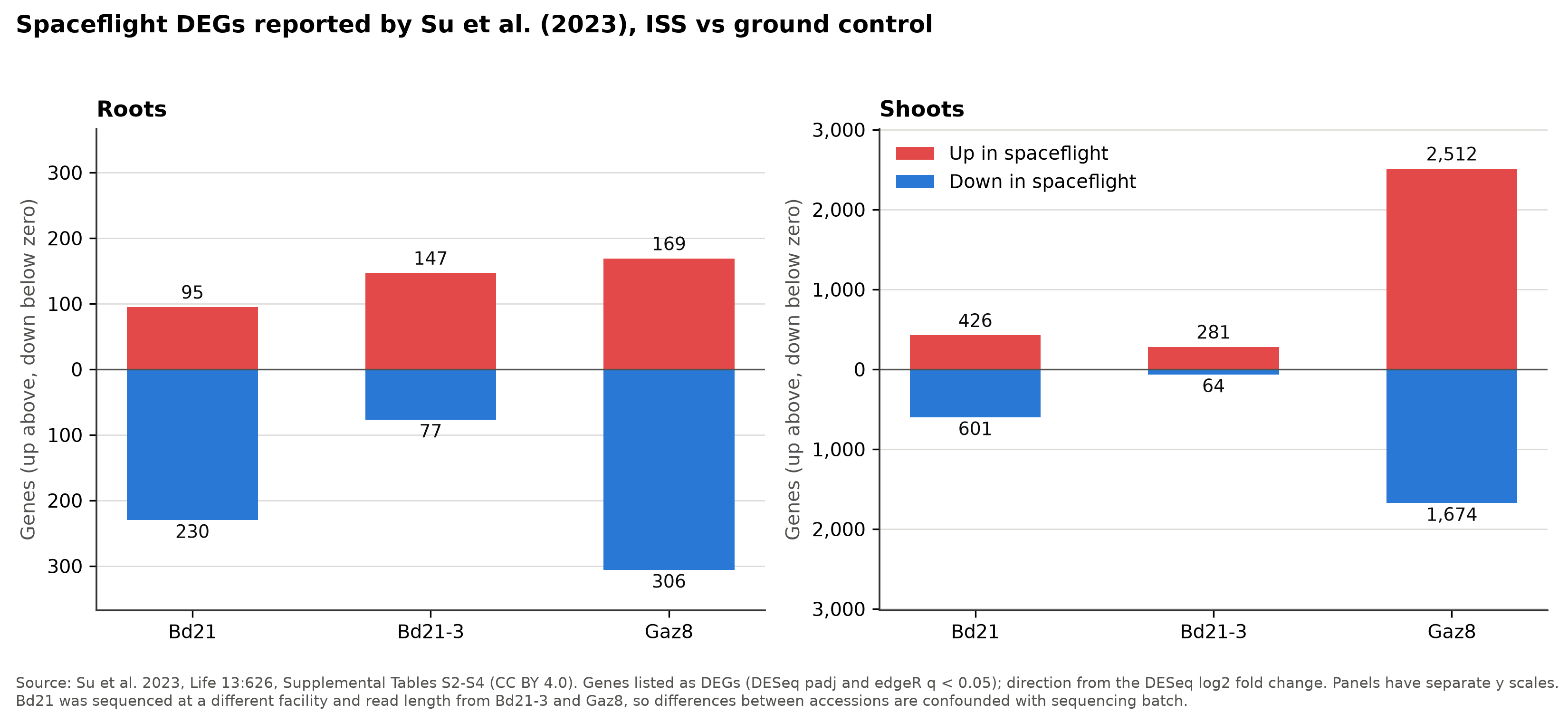
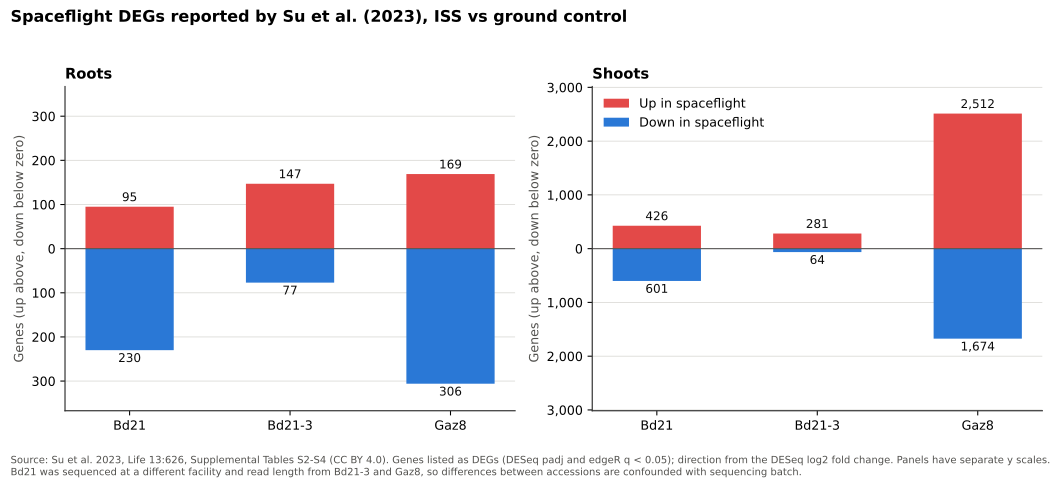
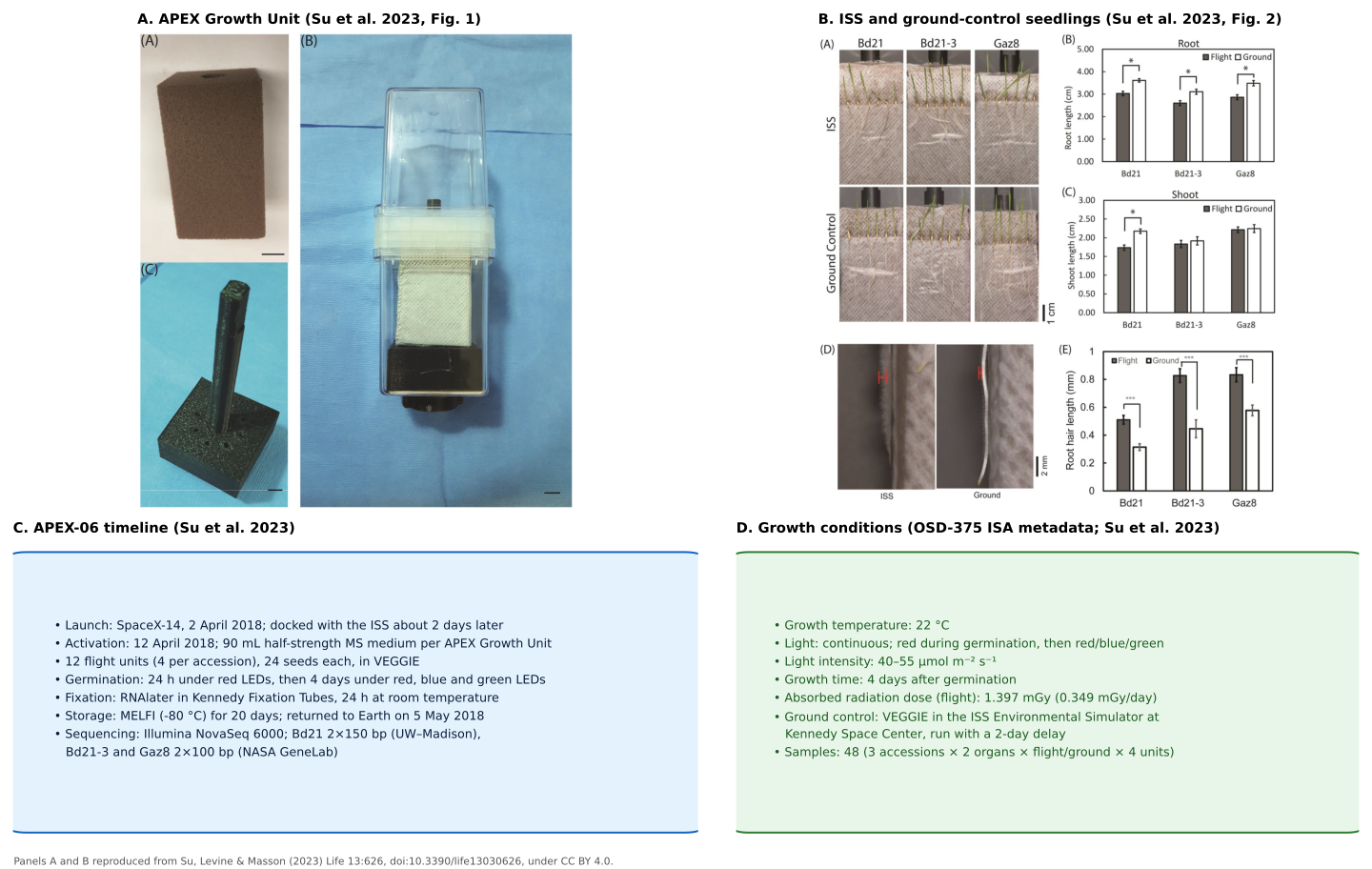
Su et al. (2023) reported that the roots of all three accessions grew more slowly and had longer root hairs in microgravity, and that the number of differentially expressed genes differed widely between accessions: 4,527 in Gaz8, 1,353 in Bd21 and 570 in Bd21-3 (abstract), with only 47 shoot and 6 root DEGs shared between accessions. Their supplementary tables list 475 root and 4,186 shoot DEGs for Gaz8, 325 and 1,027 for Bd21, and 224 and 345 for Bd21-3. Bd21 was sequenced at a different facility and read length from Bd21-3 and Gaz8, so differences between accessions cannot be separated from sequencing batch.
Source: Su, Levine & Masson (2023) Life 13(3):626, doi:10.3390/life13030626.
📚 What's Here
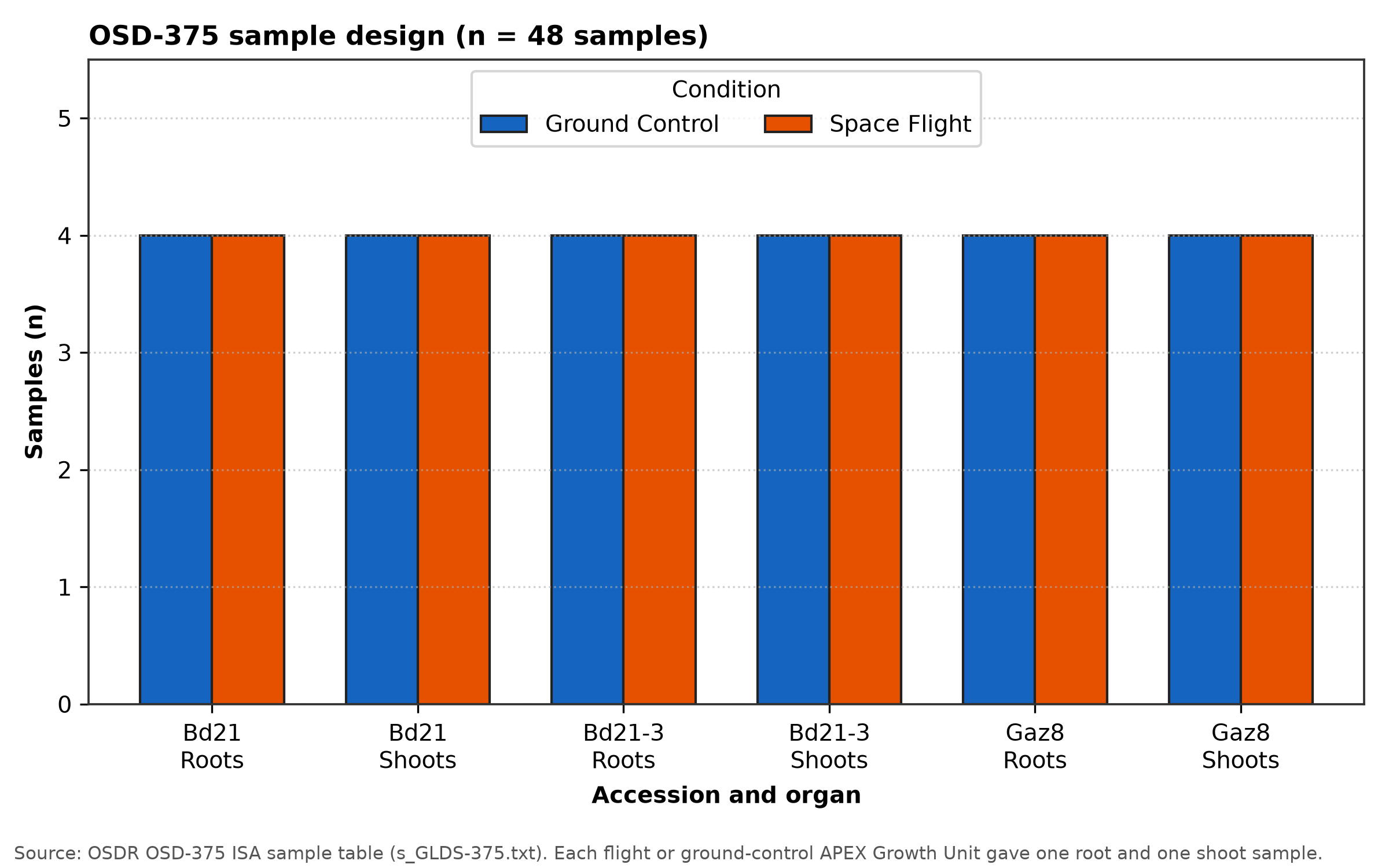
48 Samples from 24 Growth Units
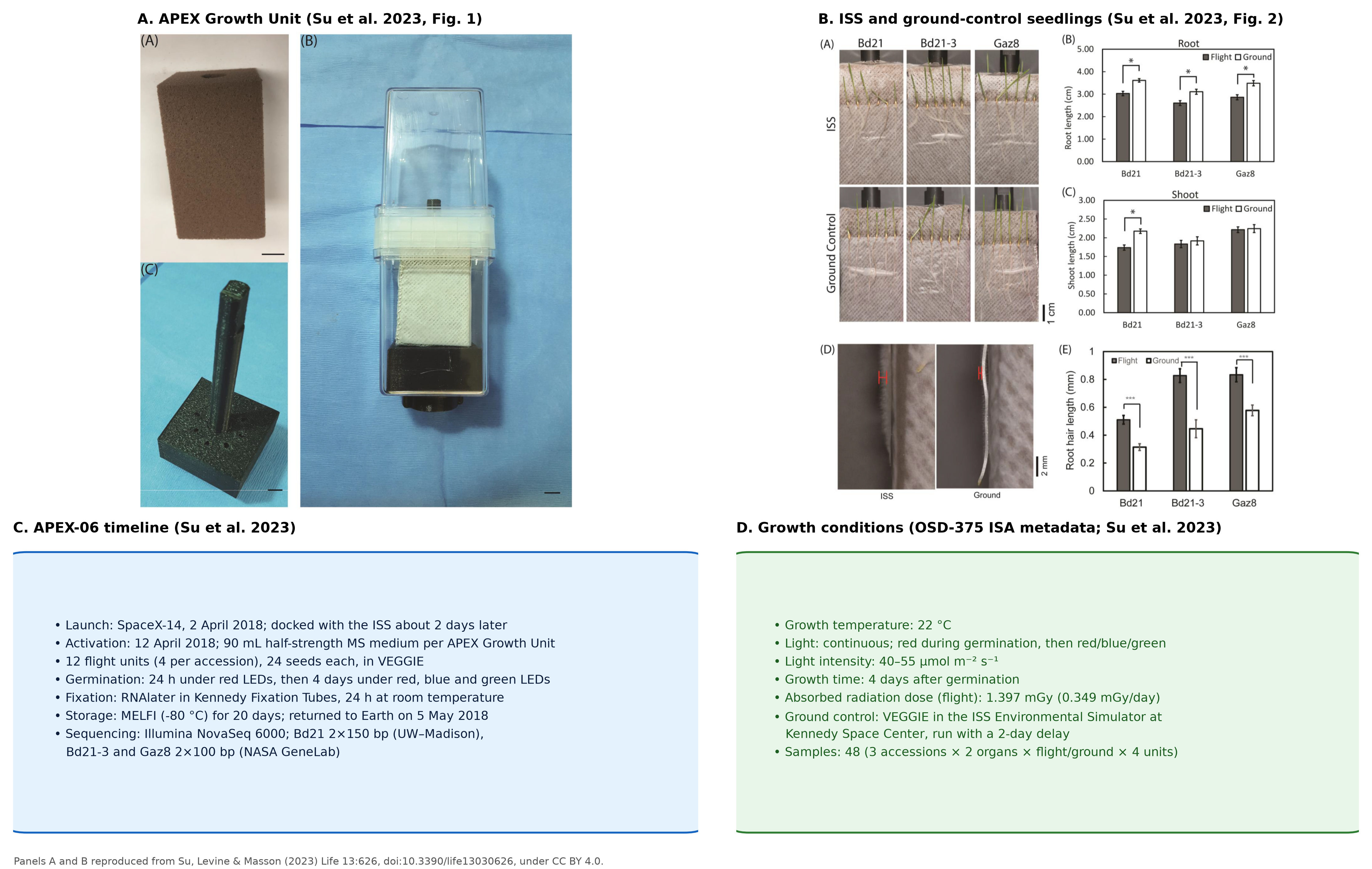
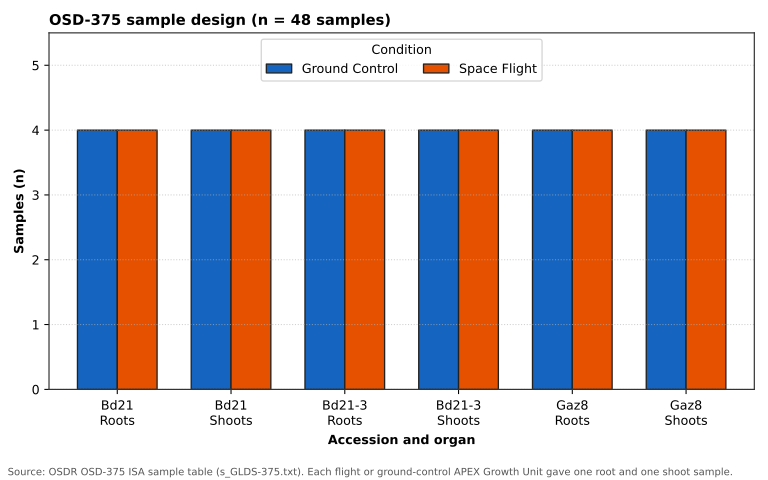
The OSDR sample table lists 48 RNA-seq samples: three accessions, roots and shoots, flight and ground control, and four APEX Growth Units per accession and condition. Each growth unit gave one root and one shoot sample. Growth conditions, the absorbed radiation dose (1.397 mGy) and the mission timeline are summarised in Figure S1.
Study Catalogue and Candidate Genes
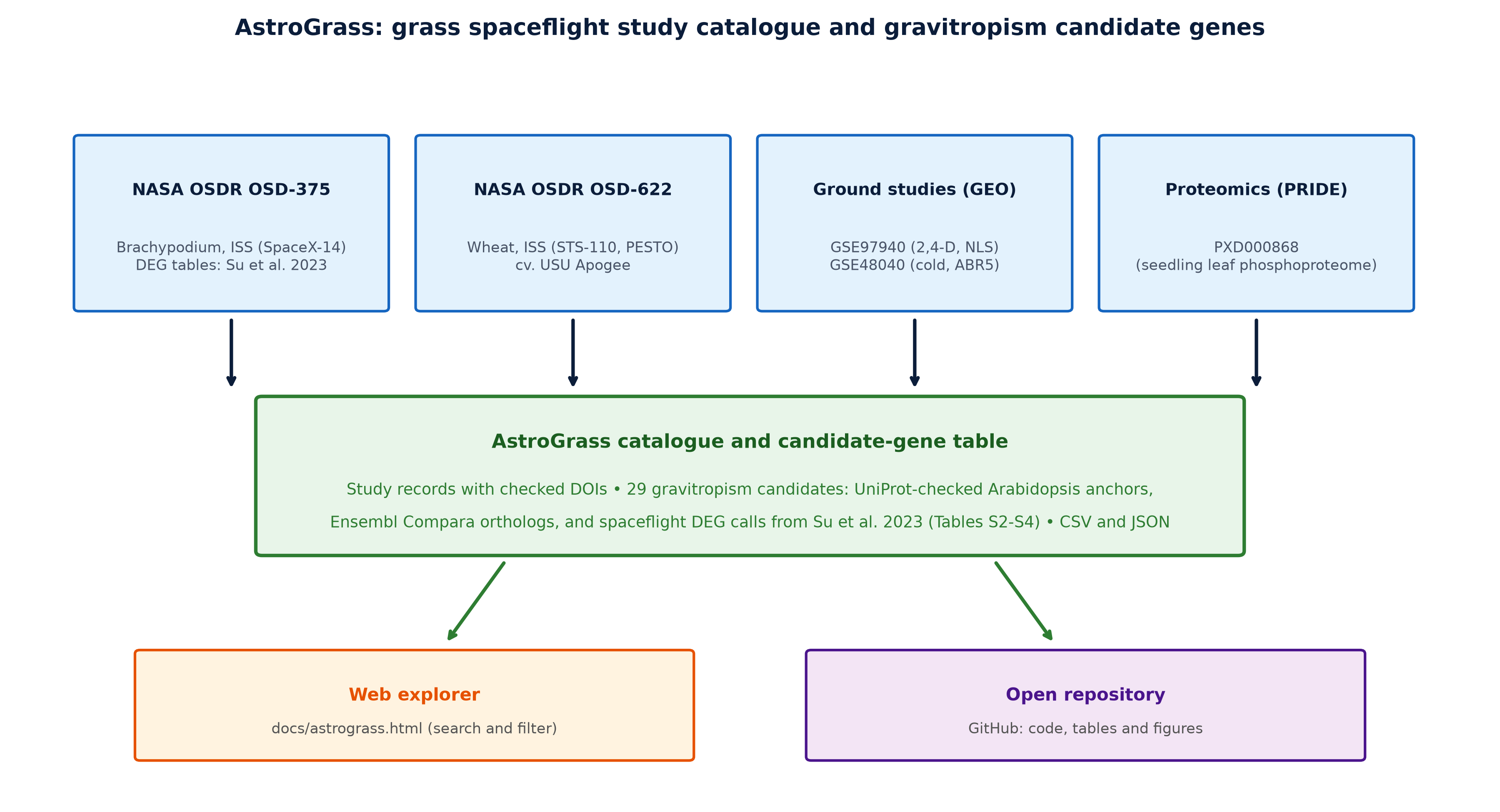
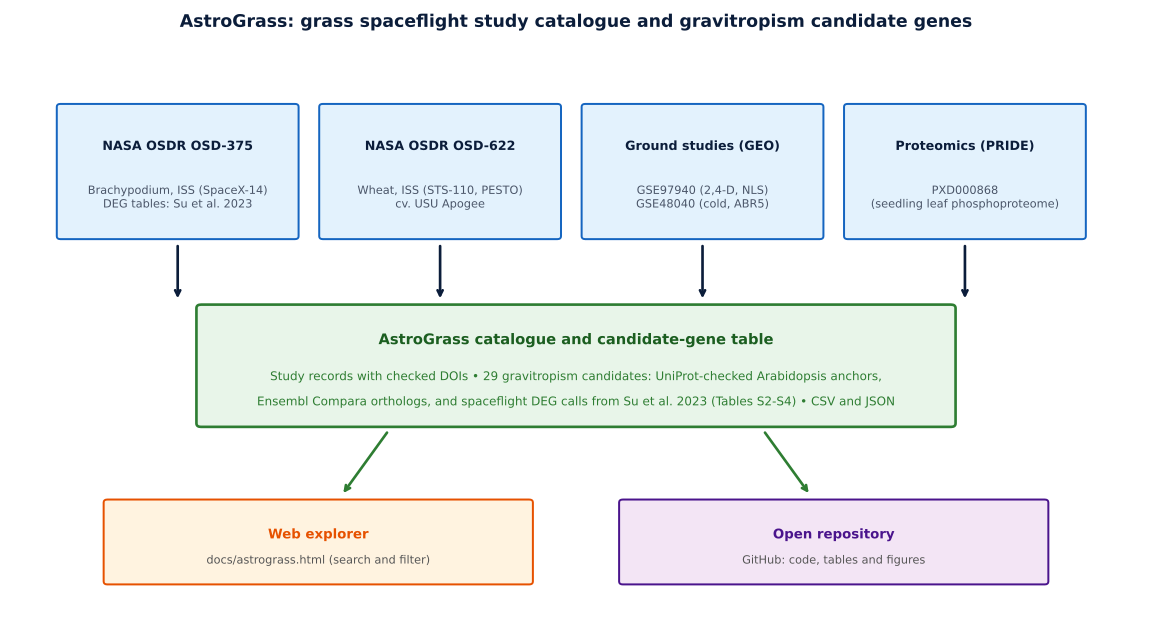
The catalogue lists five studies: OSD-375 (Brachypodium, ISS), OSD-622 (dwarf wheat, ISS), two ground RNA-seq studies of Brachypodium (GSE97940, GSE48040) and a leaf phosphoproteome (PXD000868). Each entry was checked against its source record.
The candidate list holds 29 gravitropism genes defined by Arabidopsis anchors: PIN AUX/LAX LAZY/DRO SGR TIR1/AFB ARF/IAA and starch, calcium and cell-wall genes. All 29 anchors are checked in UniProt (12 were corrected). Ensembl Compara gives Brachypodium, rice and wheat orthologs for 21; eight have none there and are marked TODO.
Candidate Genes in the Spaceflight DEG Lists
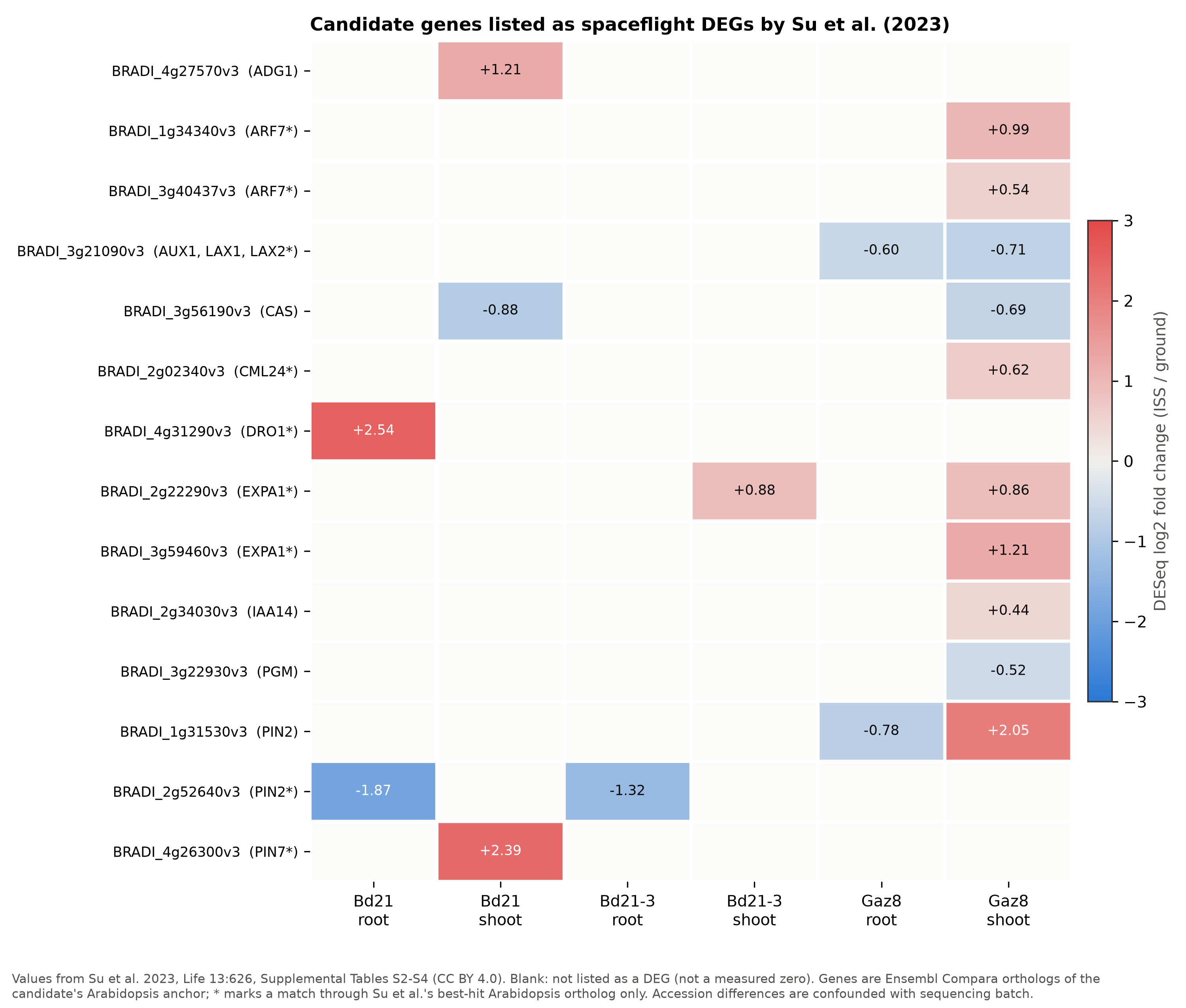
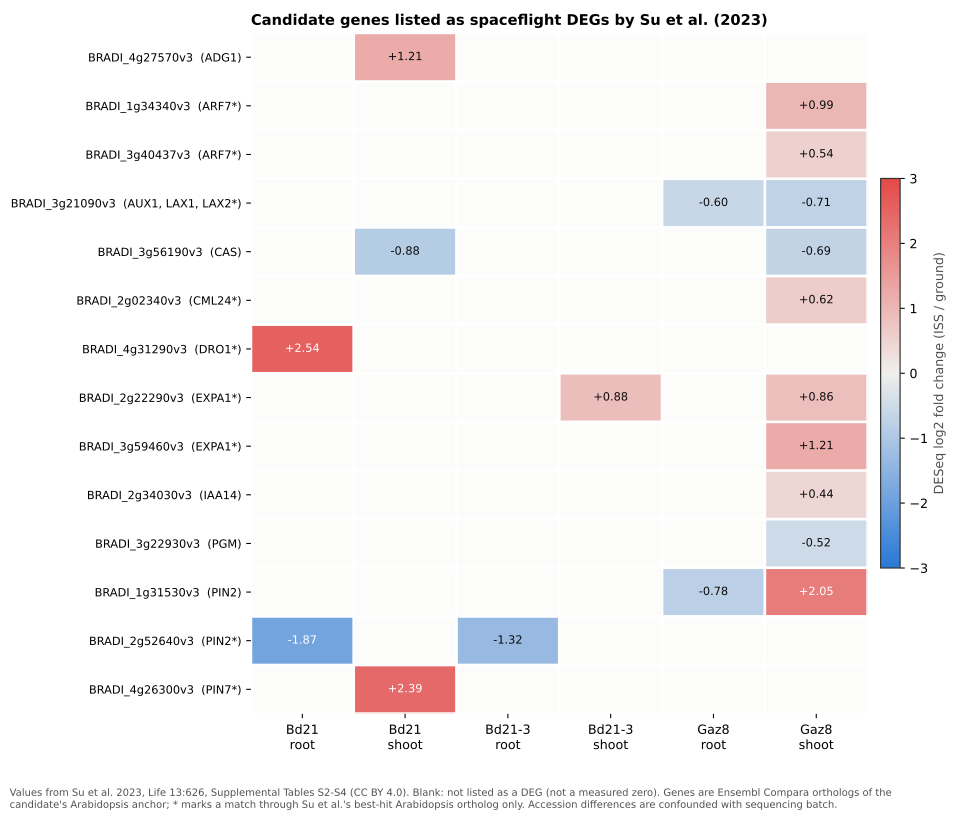
Su et al. list their spaceflight DEGs per accession and organ (CC BY 4.0). Thirteen of the 29 candidates have a Brachypodium gene in those lists: seven through an Ensembl Compara ortholog of the anchor (PIN2, AUX1, LAX1, IAA14, PGM, ADG1, CAS), the others only through Su et al.'s best-hit annotation. No gene matched to LAZY1 or CPK28 is listed.
All values are Su et al.'s. A gene missing from the lists is not evidence of no change, and differences between accessions are confounded with sequencing batch.
Root Gravitropism Time-Lapses
Time-lapse series of Brachypodium roots of accessions Per1 and BdTR7a after a 90° rotation, from the CyVerse Data Store, can be streamed and downloaded. The Gravitropism page also shows per-accession plots of root orientation and tip displacement over time; the numbers behind those plots are not in this repository.
📊 Figures (Figs 1–4 + Fig S1)
Click a figure to enlarge it, or download the 300 DPI PNG or the SVG:
🌱 Root Bending After Reorientation (Illustration)
An animated drawing of a root bending downwards after a 90° rotation. It illustrates the idea only: the curve is not fitted to measured data. Press Play to run it:
📥 Downloads
Draft describing the resource as it stands, with the planned analyses listed.
Open PDF on GitHub29 candidates with Arabidopsis anchors, Compara orthologs and Su et al.'s DEG calls.
Download CSV@misc{Barker2026_AstroGrass,
author = {Barker, Richard},
title = {AstroGrass: a curated resource for the \textit{Brachypodium distachyon} ISS transcriptome study OSD-375 and gravitropism candidate genes},
year = {2026},
howpublished = {GitHub repository},
url = {https://github.com/dr-richard-barker/brachypodium-gwas-spaceflight}
}
🌐 Data Sources
- NASA Open Science Data Repository: OSD-375 (APEX-06) study page ↗ (DOI: 10.26030/2x6b-3v89)
- Primary spaceflight paper: Su et al. (2023) Life 13(3):626 ↗
- UniProt: Arabidopsis anchor checks ↗
- Ensembl Plants: Brachypodium distachyon genome browser ↗
- CyVerse Data Store (iRODS):
/iplant/home/dr_richard_barker/timelapse_extract/ - GitHub repository: dr-richard-barker/brachypodium-gwas-spaceflight ↗