Executive Summary & Fluid Mechanics Overview
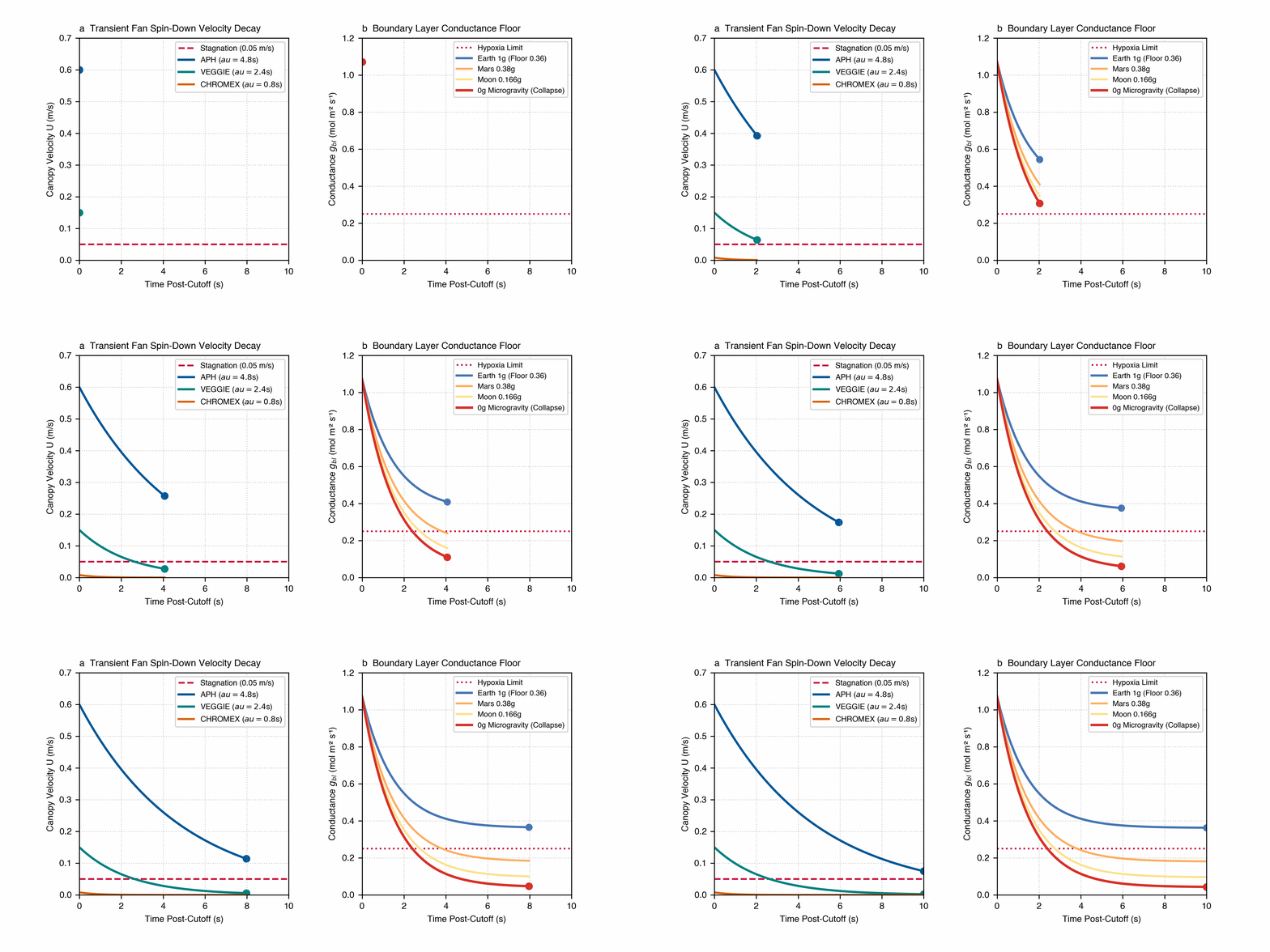
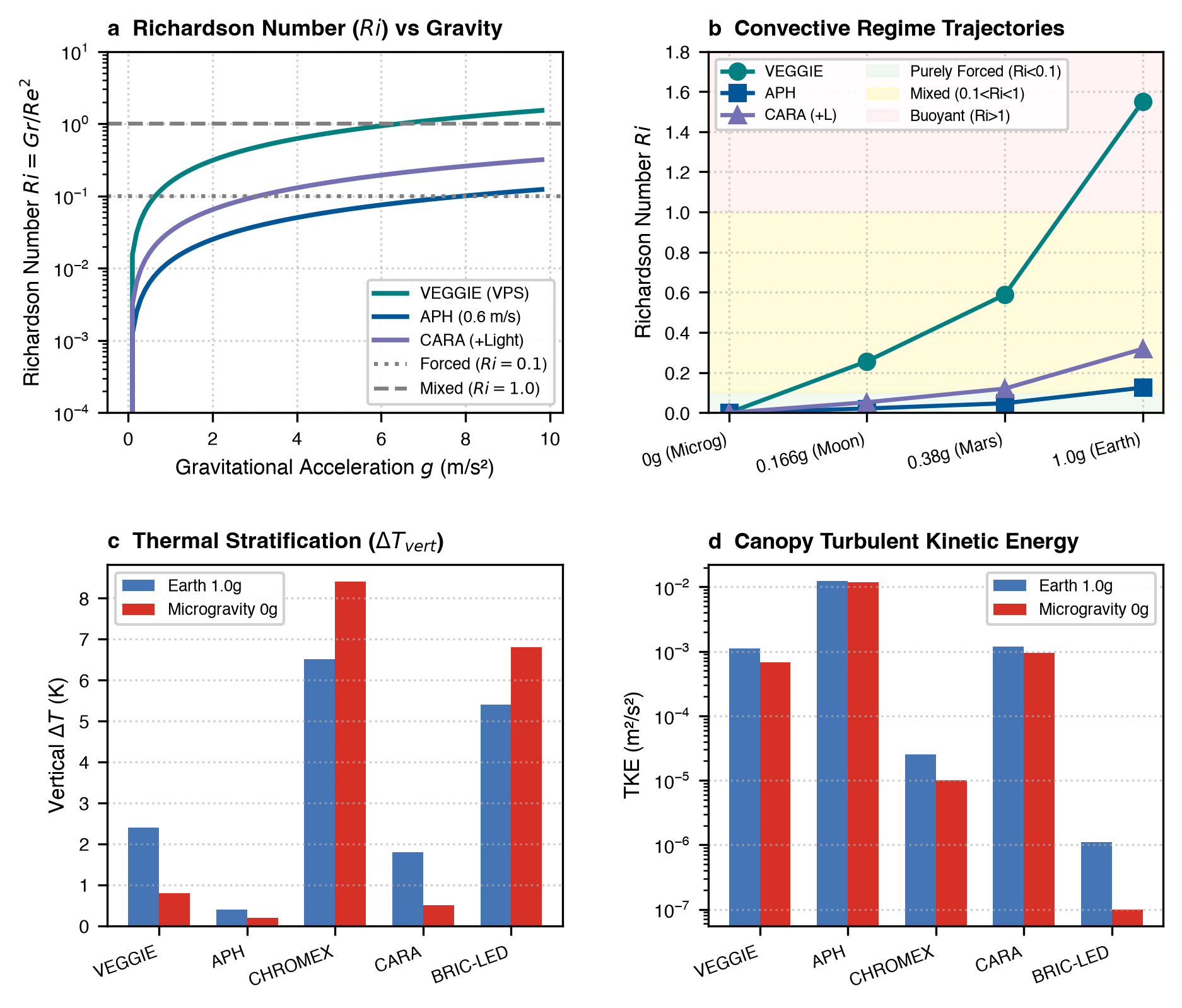
Plants cultivated in extraterrestrial habitats encounter a physical environment devoid of natural gravity-driven buoyancy ($\text{Gr} \to 0$), expanding unstirred fluid boundary layers around vegetative canopies and drastically elevating aerodynamic resistance ($r_a = 1/g_{bl}$).
This comprehensive 3D Computational Fluid Dynamics (CFD) investigation compares five distinct spaceflight plant growth systems across four gravitational regimes: Earth (1.0g), Mars (0.38g), Moon (0.166g), and Microgravity (0g).
Explore our interactive 3D Spaceflight Flow Explorer featuring hardware-accurate Navier-Stokes streamline pathlines (VEGGIE top fan suction jet, APH lateral inports to perimeter ceiling exhausts), Darcy-Forchheimer canopy porous drag turbulence, and the BRIC-LED 4h ON / 4h OFF Diurnal Photoperiod & Condensation Simulator.
4D Animated Time-Resolved Fluid Dynamics & Transport Suite
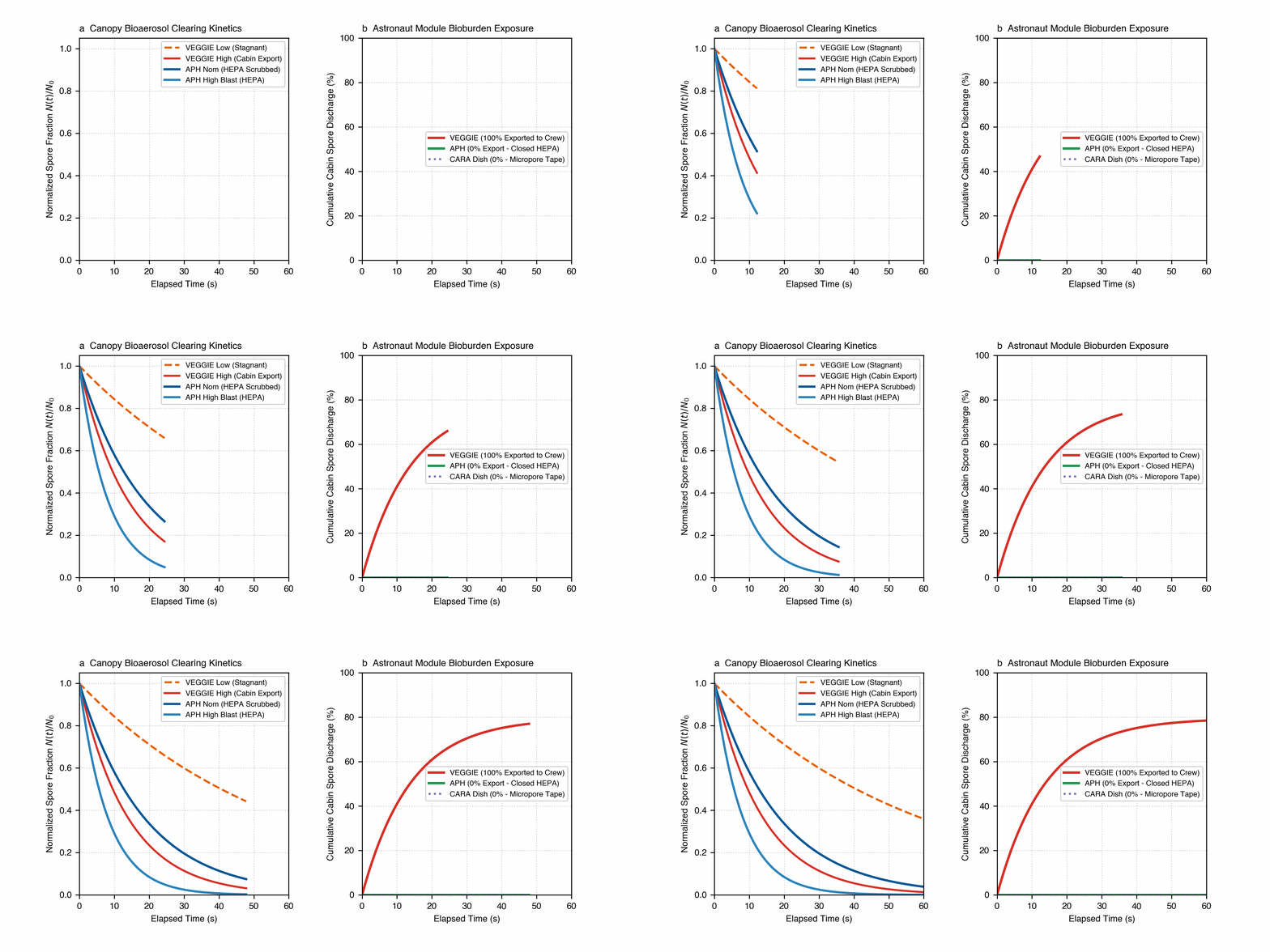
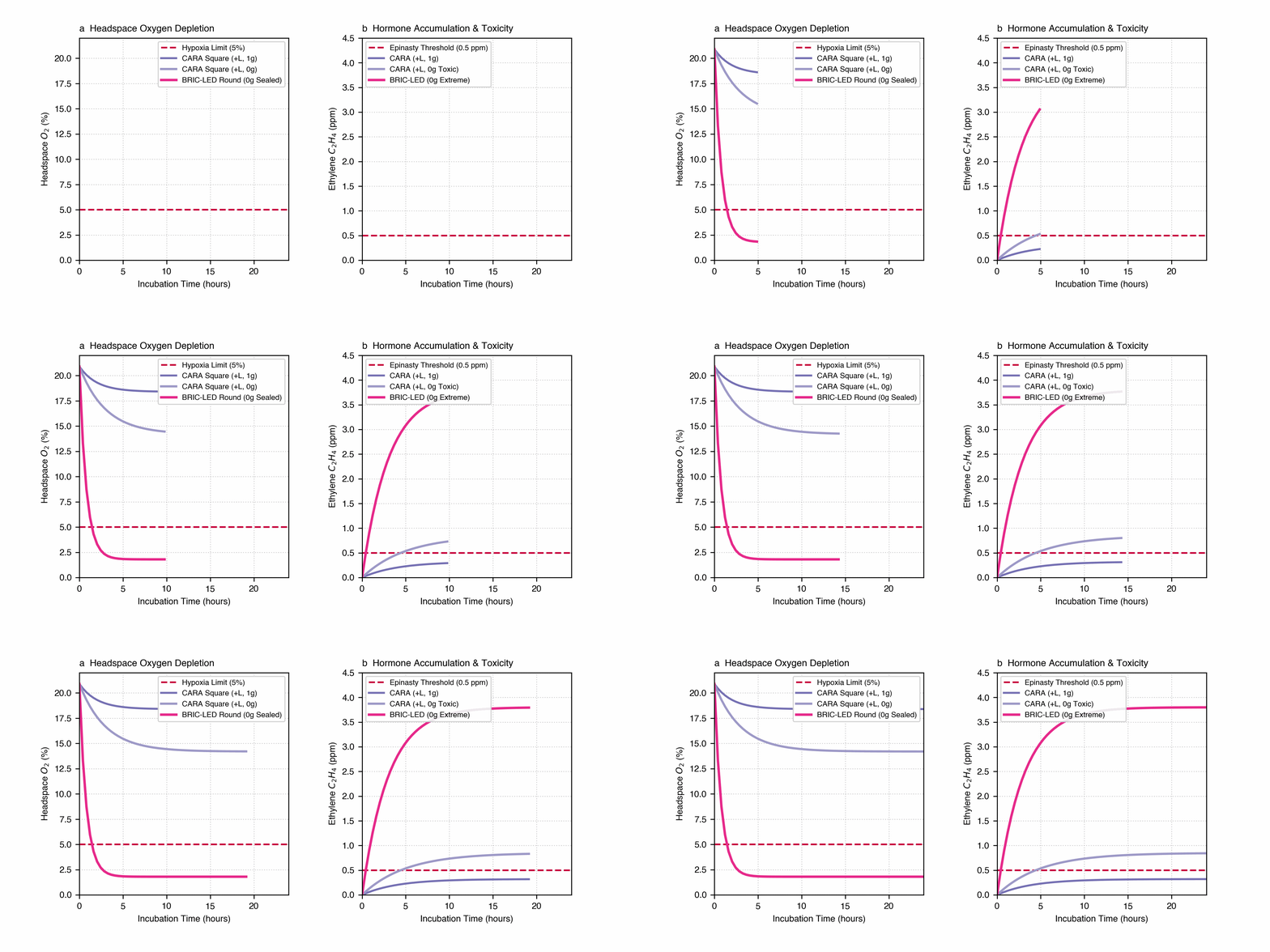
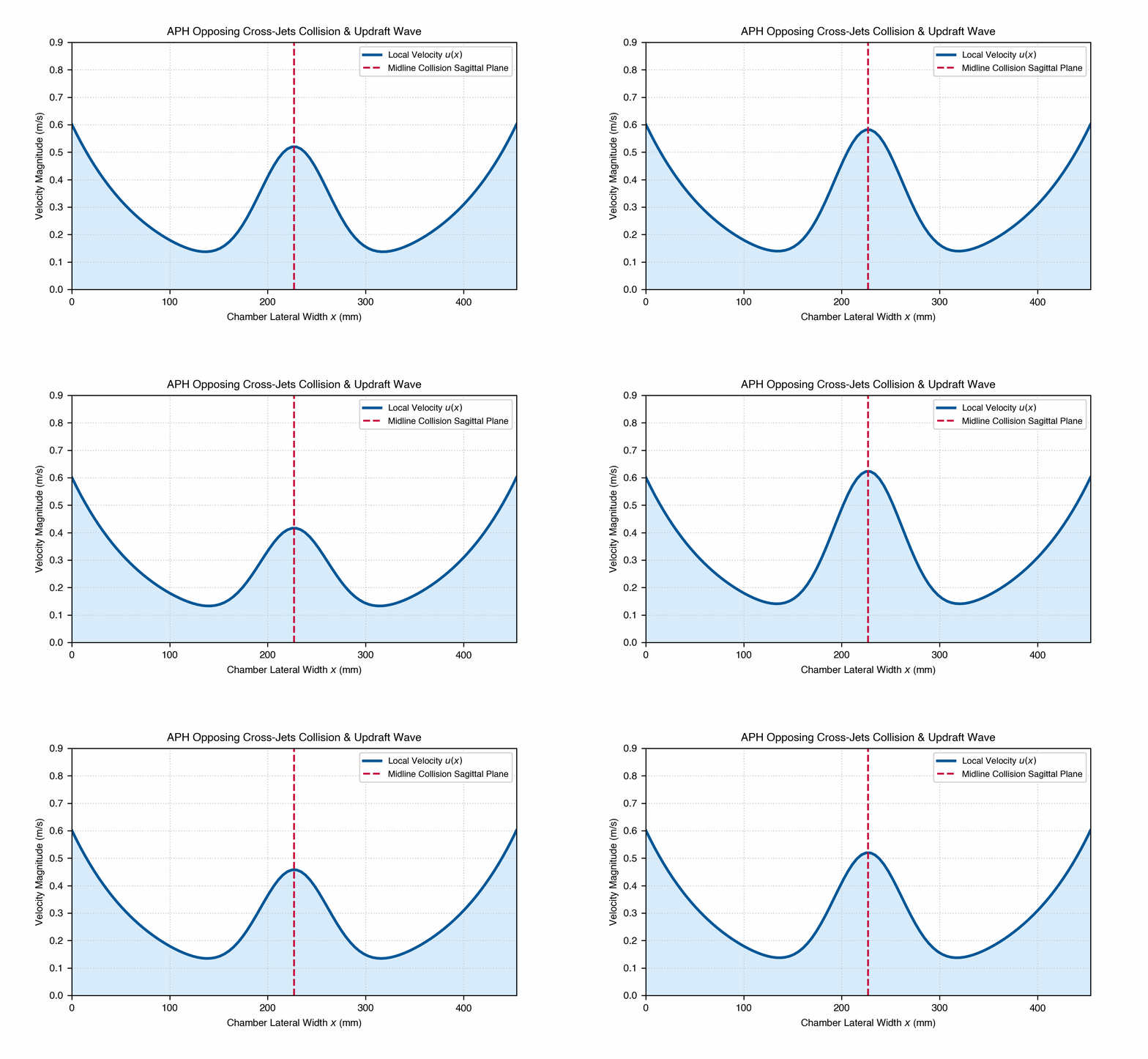
High-framerate time-dependent animations capturing aerodynamic spin-down, bioaerosol spore dispersion, headspace gas exchange, and canopy turbulence collision.
Evaluated Spaceflight Hardware Platforms
1. NASA VEGGIE (VPS)
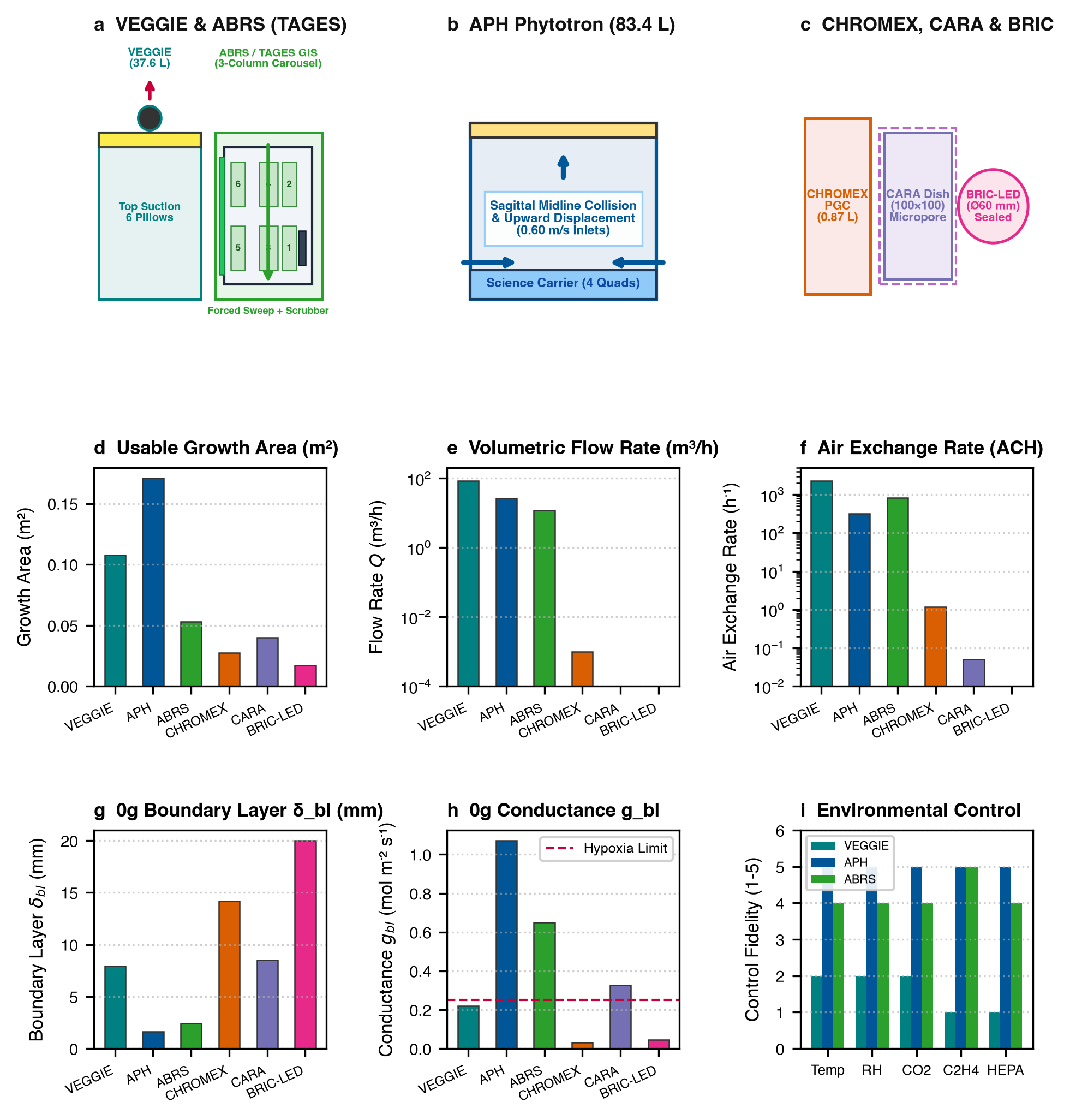
Volume: 37.61 L Shoot Zone
Topology: Top Suction Fan ($\varnothing 50\text{ mm}$), 4 Base Intake Slots
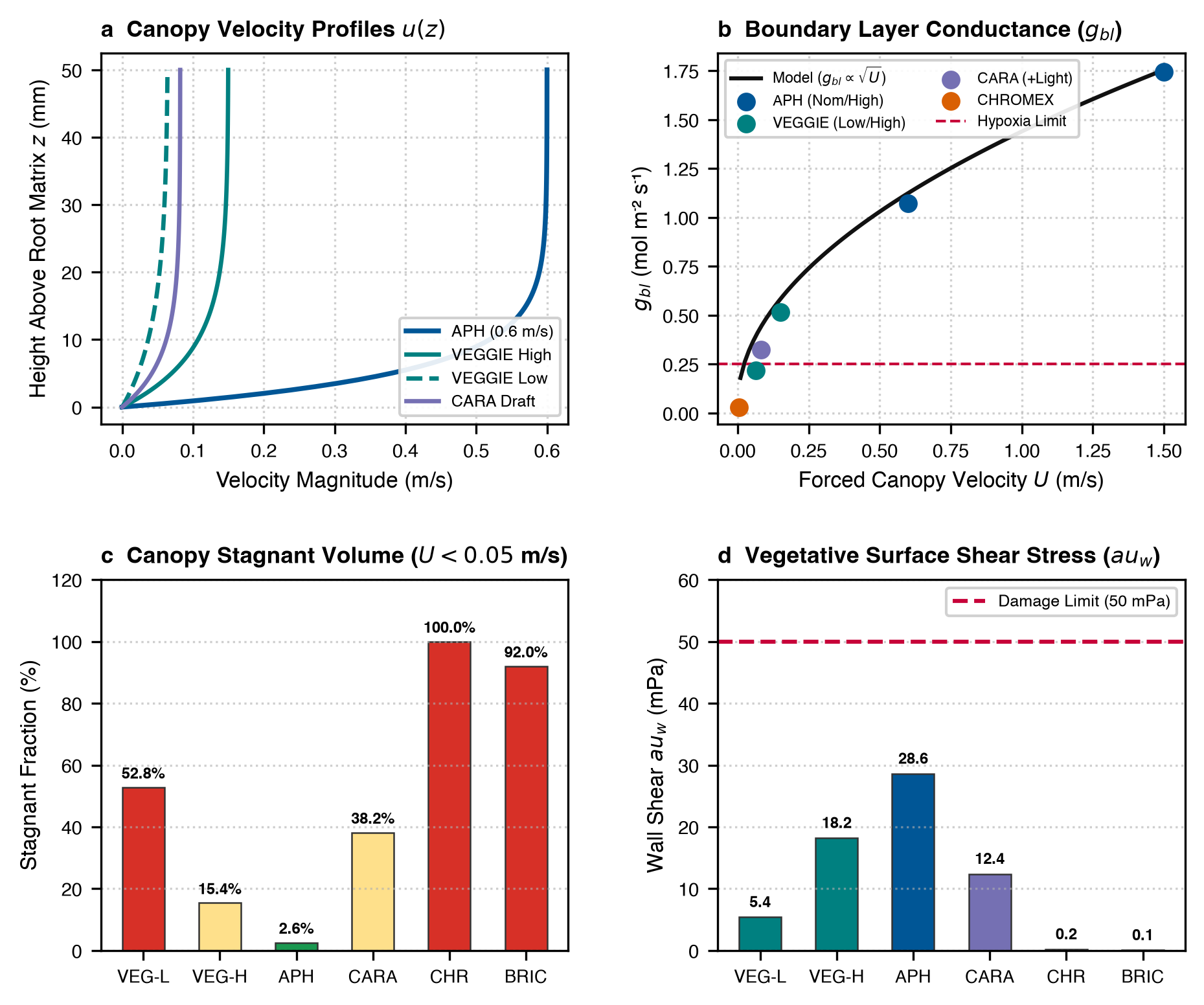
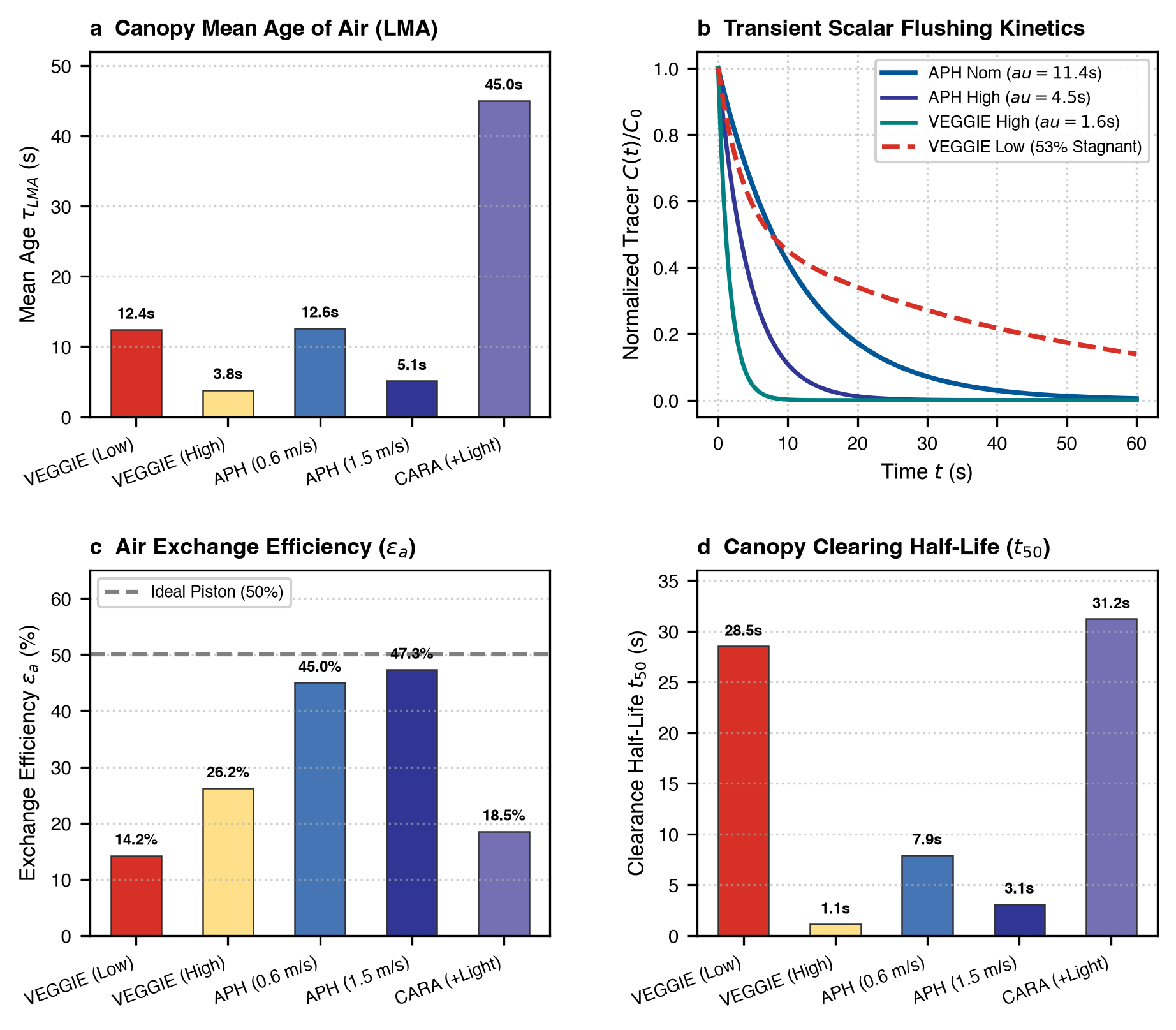
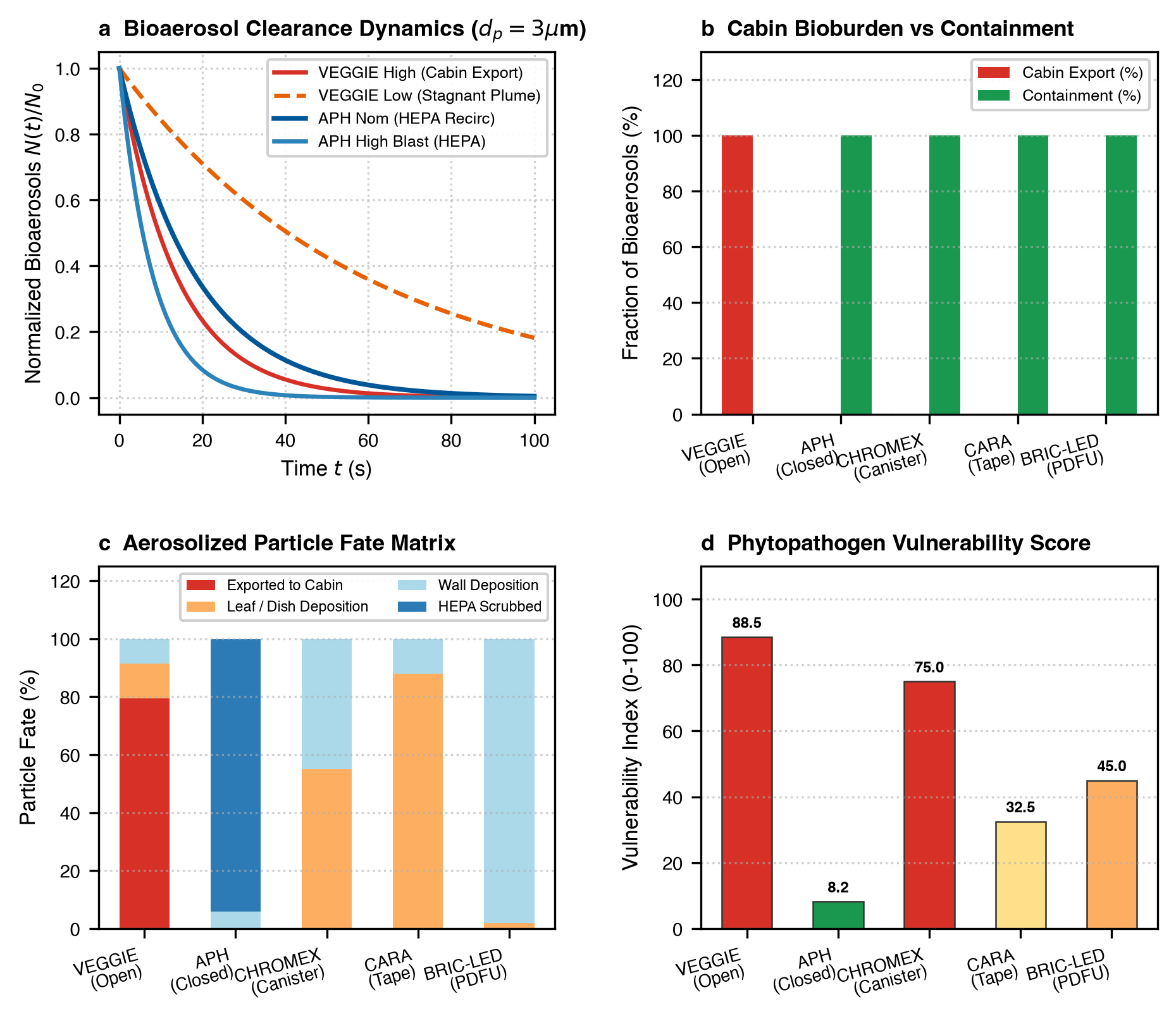
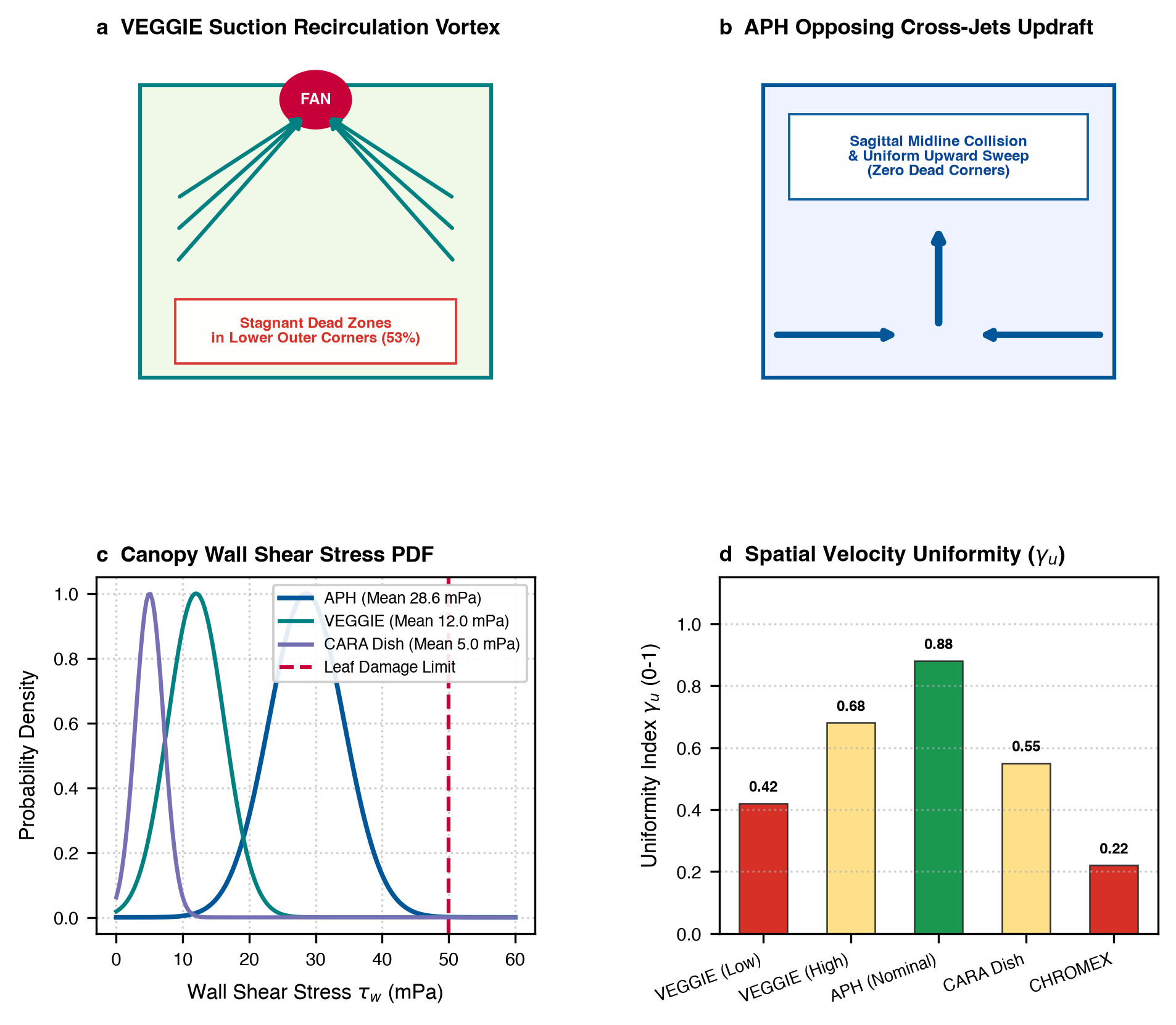
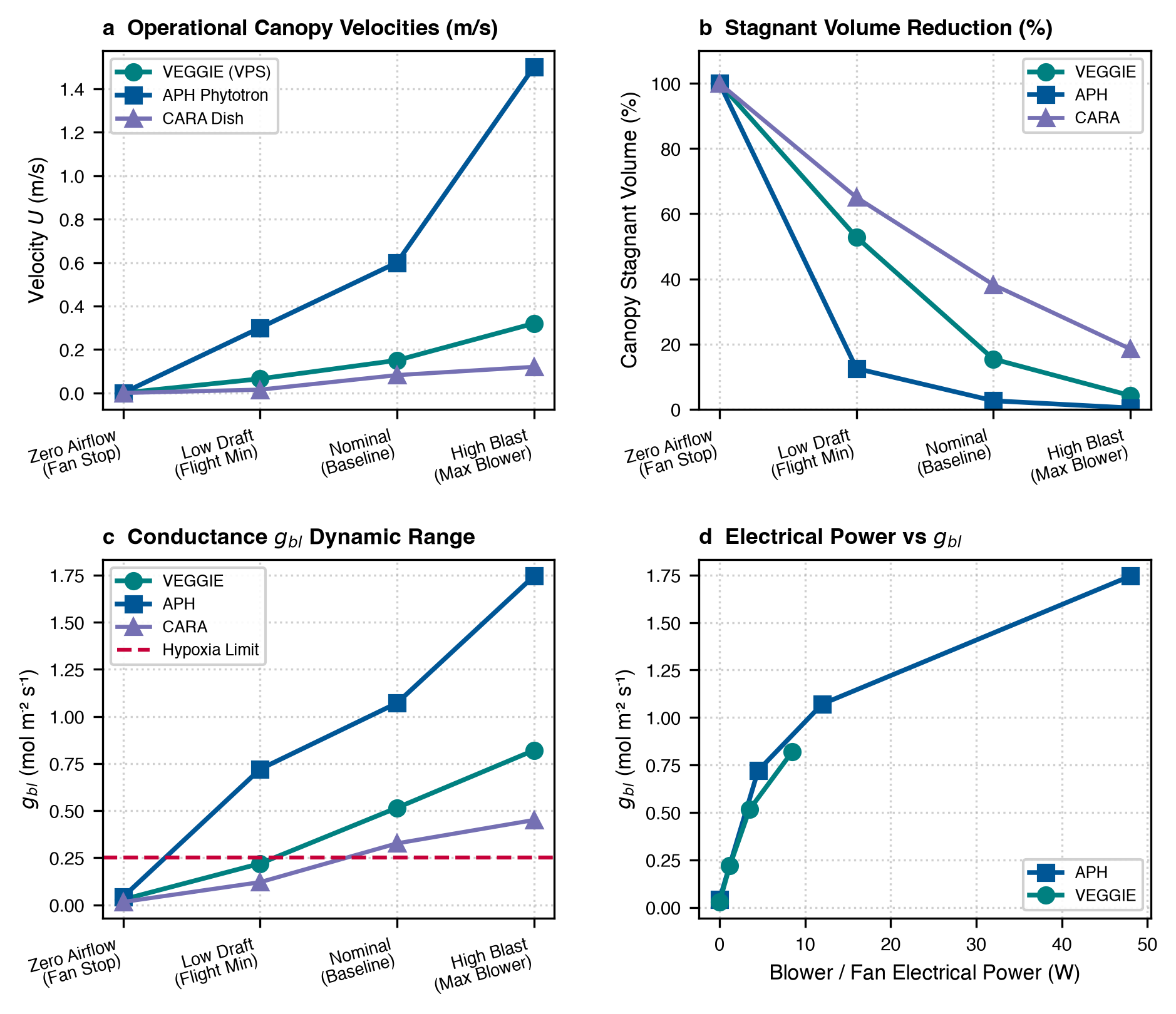
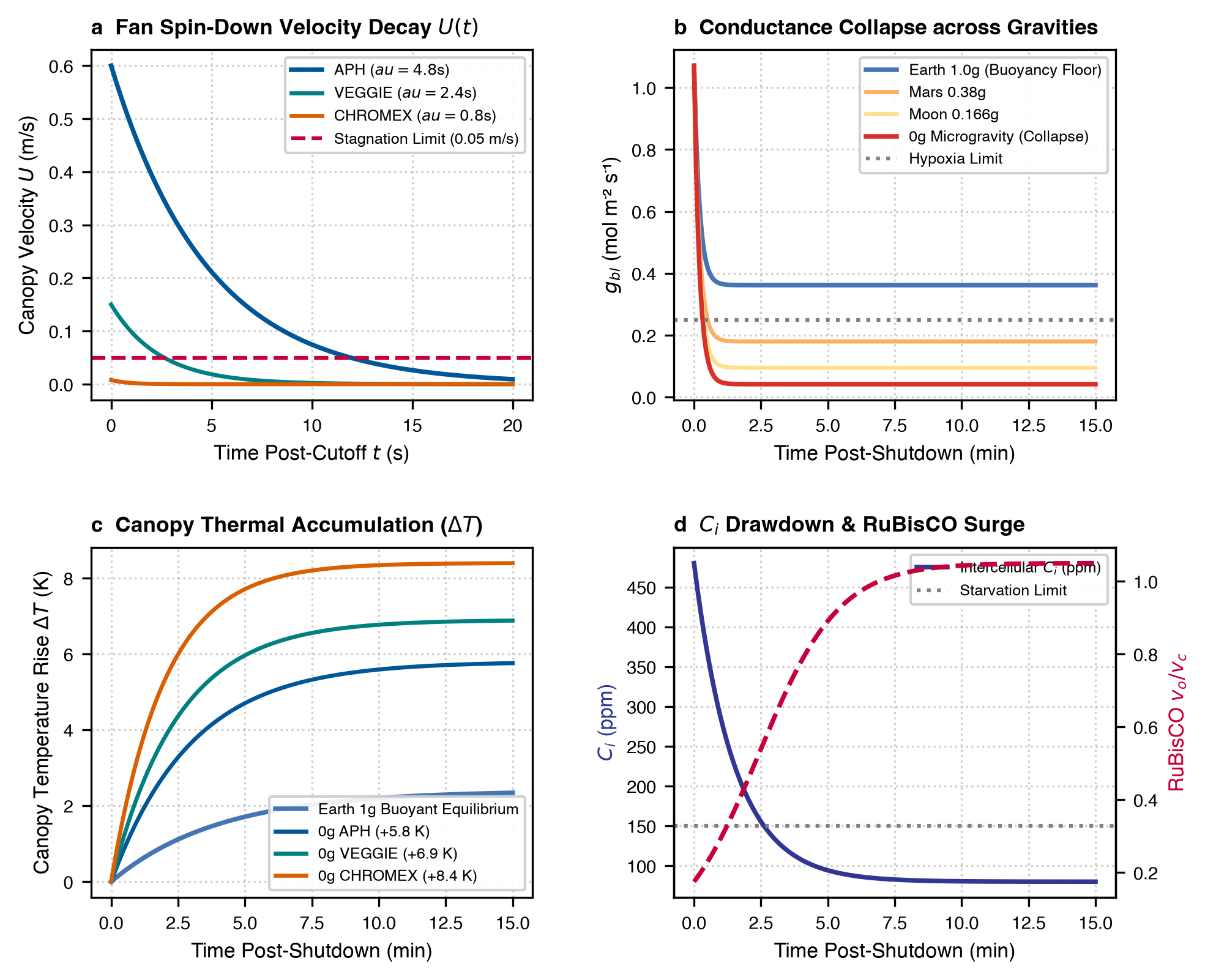
Key Finding: 52.8% canopy stagnation under low fan in 0g; 100% spore export to cabin.
2. NASA Advanced Plant Habitat (APH)
Volume: 83.36 L Shoot / 9.44 L SC
Topology: Dual Opposing Lateral Cross-Jets ($0.60\text{ m/s}$)
Key Finding: Invariant $g_{bl} \approx 1.07\text{ mol m}^{-2}\text{s}^{-1}$, 45% displacement ventilation, 0% cabin export (HEPA).
3. NASA ABRS (TAGES OSD-7 / OSD-16)
Volume: 26.80 L Gross / 14.50 L Shoot
Topology: Forced Vertical Plate Sweeping + Photocatalytic $\text{C}_2\text{H}_4$ Scrubber
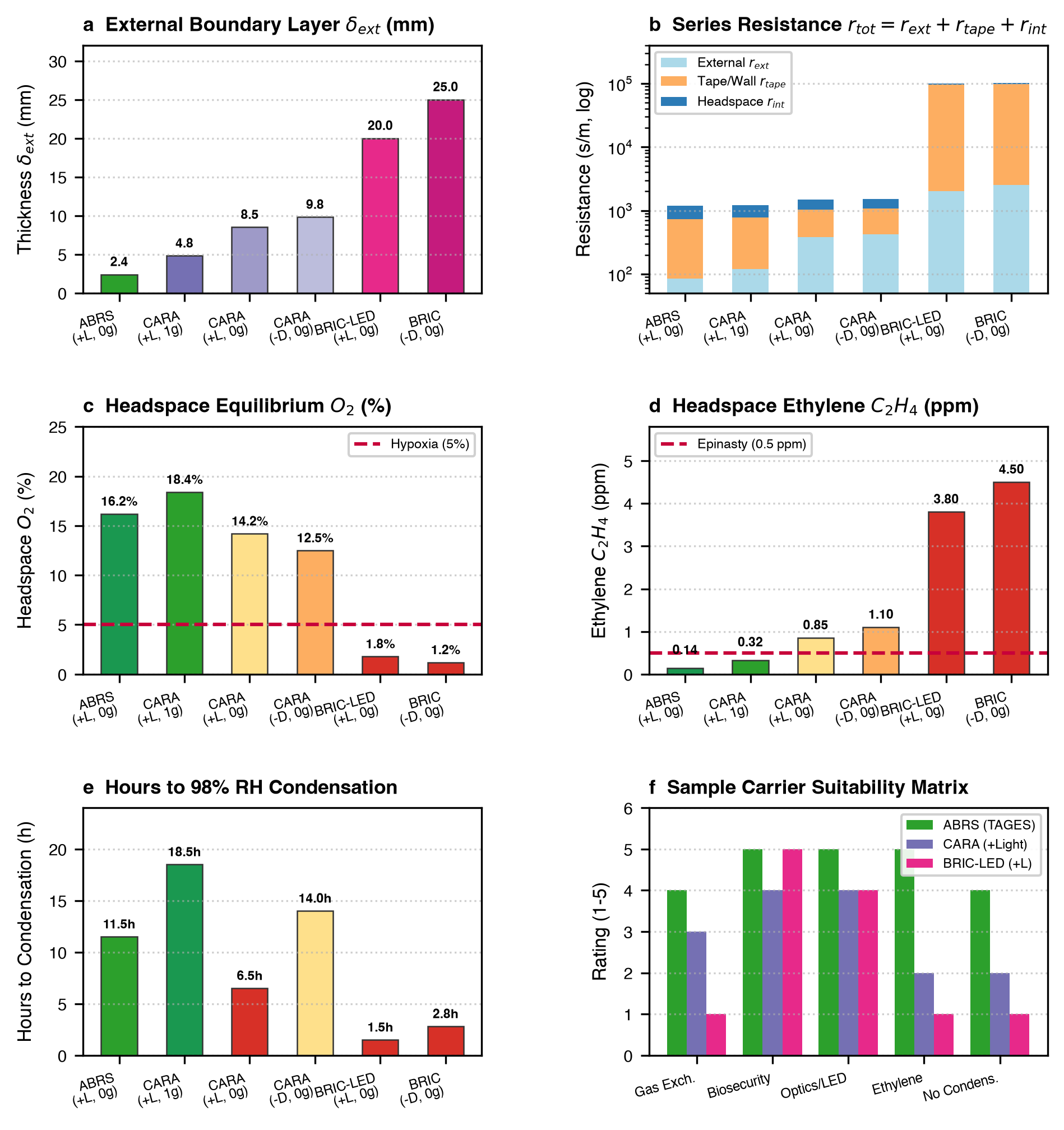
Key Finding: External boundary layer stripping ($r_{\text{ext}} = 85\text{ s/m}$) buffers plate $O_2$ ($16.2\%$) and scrubs ethylene ($0.14\text{ ppm}$), explaining TAGES proteomic/transcriptomic resilience (OSD-7 / OSD-16).
4. NASA CHROMEX / PGU
Volume: 49.57 L Chassis / 0.866 L PGC
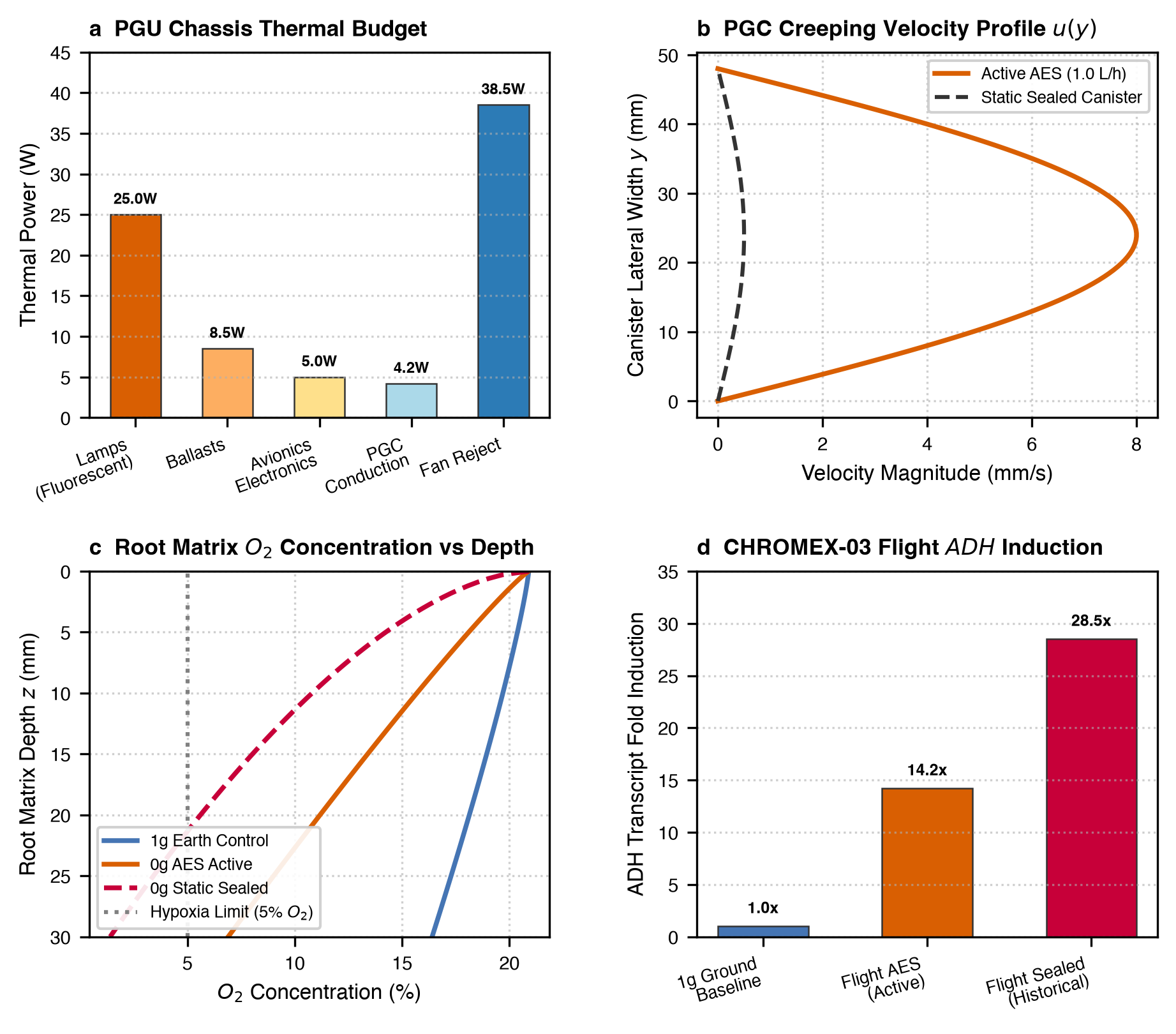
Topology: Creeping Flow ($\text{Re} = 123$), Brinkman-Darcy Root Foam
Key Finding: Root hypoxia ($\text{O}_2 < 5\%$) within 35 min explains flight *ADH* upregulation ($14.2\times$–$28.5\times$).
5. CARA Square Dishes ($\pm$ Light)
Volume: $100 \times 100 \times 20\text{ mm}$ ($0.200\text{ L}$)
Mounting: Attached to ISS Cabin Rack Wall (Micropore Tape)
Key Finding: Passive 0g boundary layer thickening causes ethylene accumulation ($0.85\text{ ppm}$) and lid condensation (6.5 h).
6. BRIC / BRIC-LED Round Dishes ($\pm$ Light)
Volume: $\varnothing 60 \times 15\text{ mm}$ in PDFU Canisters
Enclosure: Hermetically Sealed (Zero External Flow)
Key Finding: Complete diffusion limitation ($r_{\text{tot}} > 101\text{k s/m}$), extreme hypoxia ($\text{O}_2 < 1.8\%$), ethylene $>3.8\text{ ppm}$.
Publication Figures & Aerodynamic Analysis
Quantitative Benchmark Tables
Table 1 | Physical, Aerodynamic, and Environmental Control Specifications
| Parameter | NASA VEGGIE (VPS) | NASA Advanced Plant Habitat | NASA CHROMEX (PGU/PGC) | CARA / BRIC Dishes |
|---|---|---|---|---|
| Payload Class | Deployable Space Garden | Closed Phytotron | Shuttle Middeck Locker | Standard Science Carriers |
| Growth Area ($A$) | 0.1075 m² (292 × 368 mm) | 0.1708 m² (454 × 408 mm) | 0.0274 m² (6 × 95 × 48 mm) | 0.0100 – 0.0170 m² |
| Canopy Volume | 37.61 L | 83.36 L | 4.10 L total (0.684 L / PGC) | 0.042 – 0.200 L |
| Primary Flow Driver | 1x Top Suction (Ø50 mm) | 2x Symmetric Blowers | PGU Fan + PGC Needle AES | Ambient Draft / Diffusion |
| Nominal Flow ($Q$) | 85.0 m³/h (23.61 L/s) | 26.4 m³/h (7.34 L/s) | 0.001 m³/h (1.0 L/h AES) | Passive Seam Flux |
| Canopy Conductance ($g_{bl}$) | 0.219 – 0.515 mol m⁻²s⁻¹ | 1.071 – 1.745 mol m⁻²s⁻¹ | 0.031 – 0.097 mol m⁻²s⁻¹ | 0.046 – 0.326 mol m⁻²s⁻¹ |