Martian Crustal Magnetic Field Heterogeneity & Biological Implications
A FAIR-compliant planetary geophysics and space biology investigation evaluating hypomagnetic field (HMF) environments across active, historical, and candidate human landing sites on Mars.
>1500 nT
Southern Highlands Max Surface Field
<20 nT
Northern Lowlands Surface Field
>2,500×
Field Reduction vs Earth GMF (50 µT)
13 Sites
Classified Missions & Habitats
Research Overview
Unlike Earth, which maintains an active global dipole dynamo generating a continuous ~50 µT geomagnetic field (GMF), Mars underwent core dynamo extinction approximately 4.1 to 3.9 billion years ago. However, Mars preserves intense localized remnant crustal magnetic fields within its ancient southern cratered crust, creating a profound hemispheric dichotomy:
- Southern Highlands (Terra Sirenum & Terra Cimmeria): Harbor intense crustal magnetic lineations (>200 nT at 400 km orbital altitude; >1500 nT at ground level) that form mini-magnetospheres capable of deflecting solar wind ions.
- Northern Lowlands & Human Exploration Candidates (Arcadia Planitia, Deuteronilus Mensae, Jezero Crater): Display extensive impact, thermal, and volcanic demagnetization, exposing surface payloads and habitats to near-null hypomagnetic field (HMF) conditions (<20 nT).
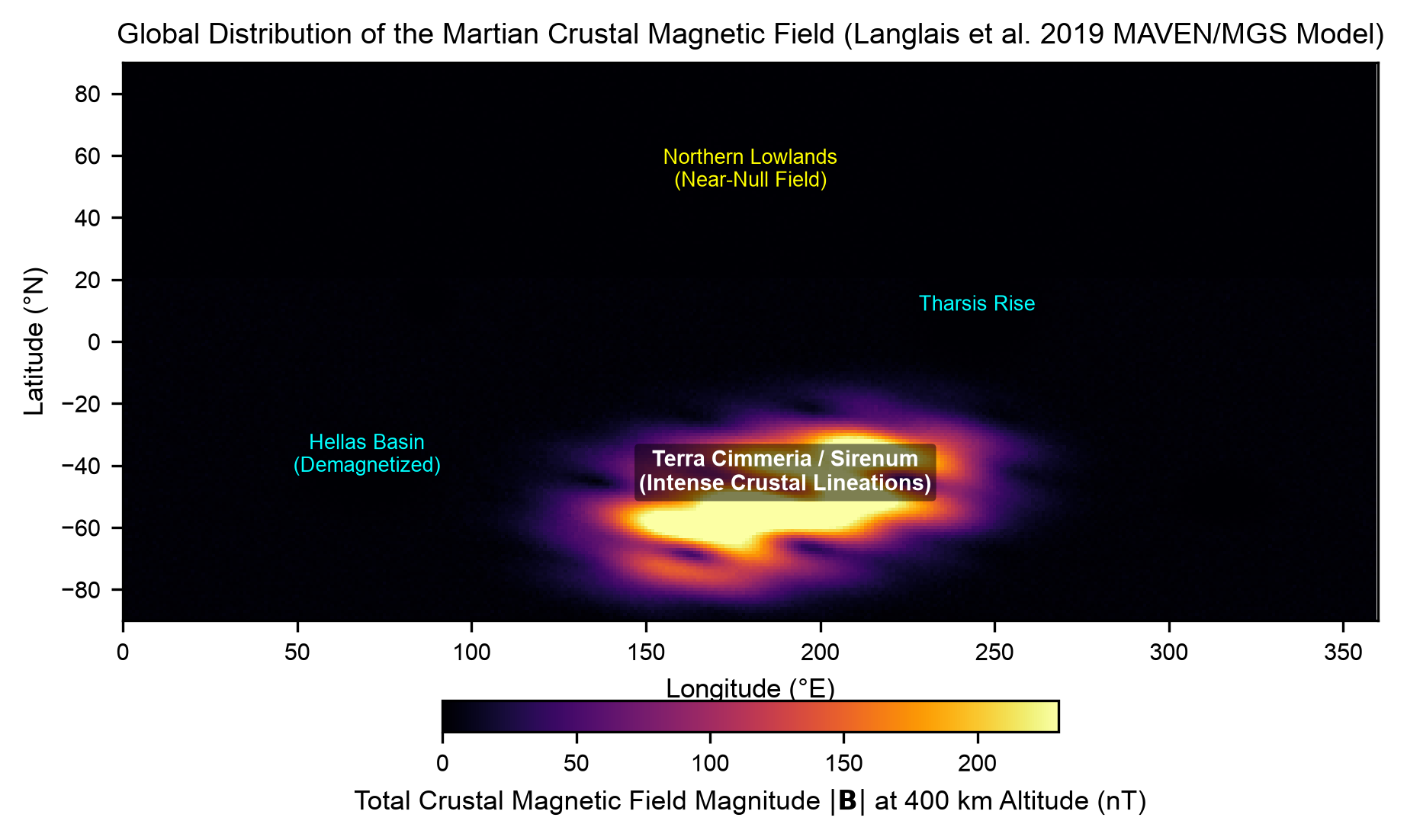
Figure 1 | Global distribution of the Martian crustal magnetic field magnitude. Total field intensity |B| at 400 km altitude derived from the Langlais et al. (2019) model based on MAVEN and Mars Global Surveyor (MGS) observations.
Biological Risks of Martian Hypomagnetic Environments
Terrestrial organisms evolved within Earth's geomagnetic field. Our systematic review reveals that prolonged exposure to hypomagnetic field conditions (<5 µT) induces notable physiological stress:
| Target System | Observed Phenotypic & Molecular Effect | Biological Mechanism |
|---|---|---|
| Crop Plants (Arabidopsis) | Delayed floral transition; aberrant root gravitropism; reduced iron uptake | Cryptochrome (CRY1/2) signaling; PIN2 polar auxin redistribution; FIT/IRT1 downregulation |
| Microbiome & Biofilms | Altered cell division rates; shifts in gut taxonomic community ratios | Membrane potential changes; loss of magnetotactic directional motility |
| Mammalian Musculoskeletal | Accelerated trabecular bone loss and osteopenia | Synergistic suppression of osteoblasts and elevation of osteoclastic bone resorption |
| Cellular DNA & Redox | Elevated ROS generation; altered cell cycle transcriptomes | Radical pair singlet-triplet spin-state interconversion dynamics |
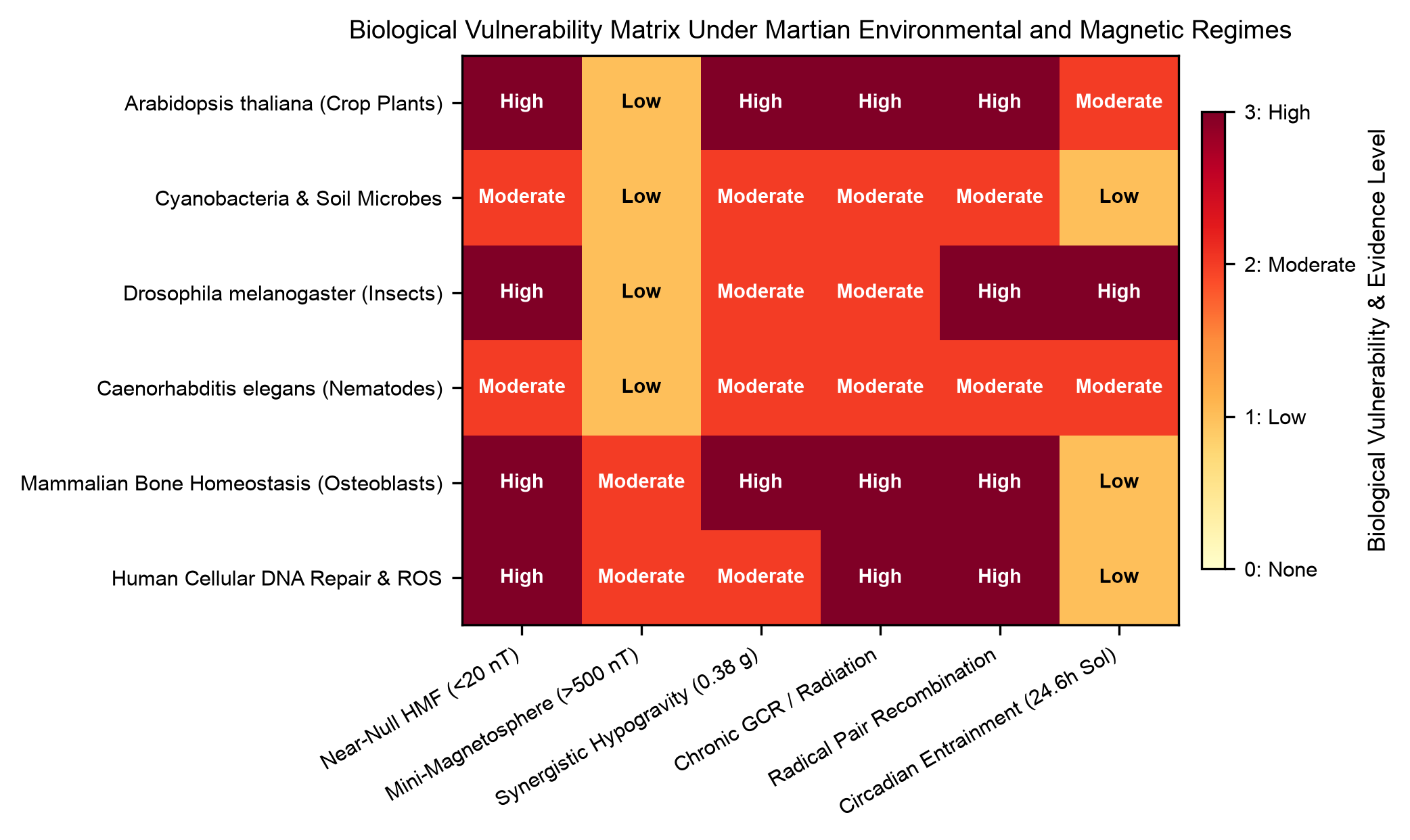
Figure 5 | Biological vulnerability matrix across Martian environmental stressors.