🌱🚀 Grow Plants in Space
The AstroBotany Investigation Resource (AIR)
How do plants grow when there is no "up"? Astronauts need plants for food, oxygen, and a little piece of home — but space is a strange place to be a seed. AIR is a free, hands-on program that lets your classroom join the real science of growing plants beyond Earth. Grow microgreens, measure how their roots respond to gravity, collect real data on your phone, and share it with student scientists around the world.
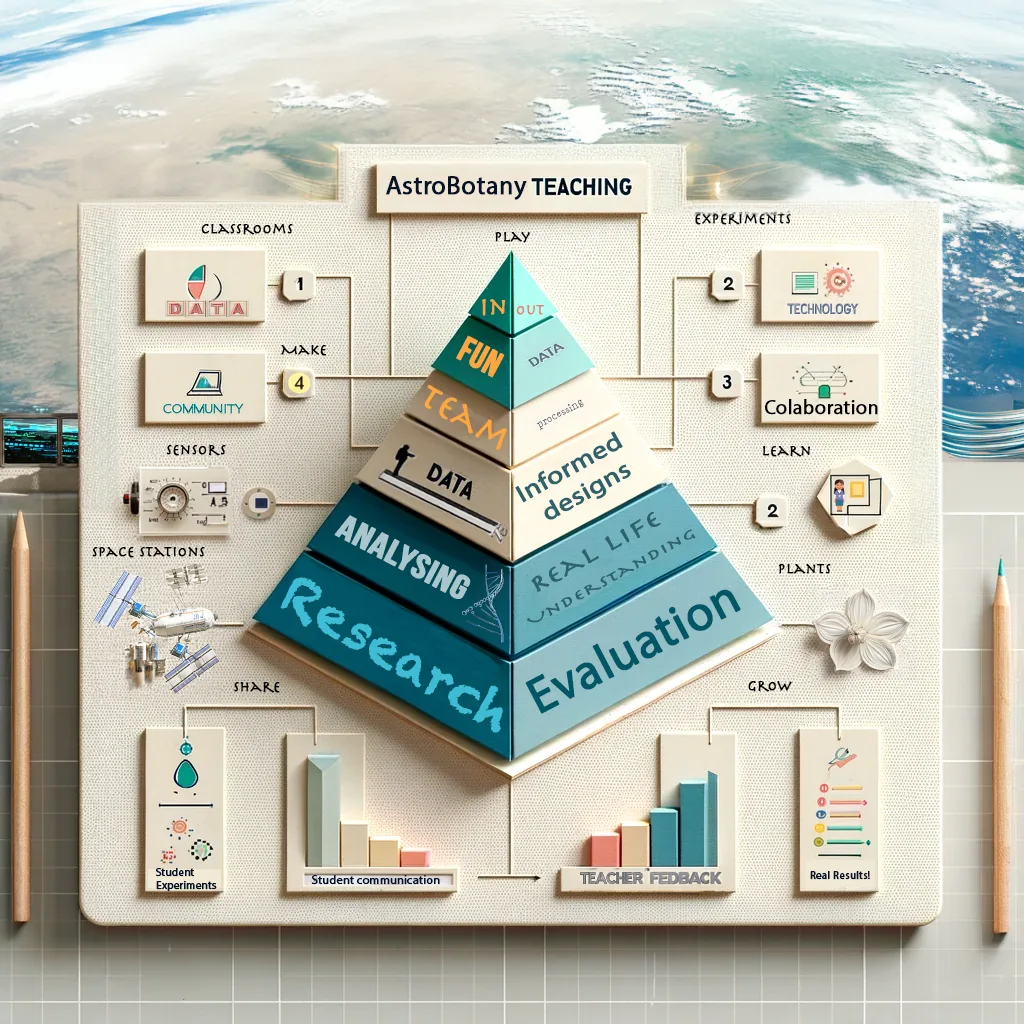
New here? Start with the path that fits you.
-
For Teachers
Project-based lessons mapped to Next Generation Science Standards, with materials lists, low-cost setups, and data tools your students will love.
-
For Students
Grow your own microgreens, run real experiments, and measure plants like a scientist — then add your data to a worldwide project.
-
For Researchers
A training pathway toward running simulated-microgravity experiments on the CoSE SciSpinner Max RPM — imaging, gravitropism, analysis, and modelling.
-
For Citizen Scientists
No classroom or lab needed. Grow at home, measure with your phone, and contribute real data to a global, open astrobotany project.
The AIR journey
The program is built as a series of stages. You don't have to do them all — start anywhere that fits your classroom and your budget. The first stages need little more than seeds, water, and a smartphone.
| Stage | What you'll do | You'll need |
|---|---|---|
| I — Scientific Photography | Learn to photograph plants like a scientist so they can be measured and compared. | A camera or smartphone |
| II — Favorite Microgreen | Pick a crop and vote with the world. Explore real nutrition and yield data. | Internet access |
| III — Growing Microgreens | Grow microgreens in soil, photograph them daily, and measure growth. | Seeds, trays, a phone camera |
| IV — Gravity & Roots | Grow roots on agar, then rotate gravity 90° and watch them respond. | Seeds, agar or filter paper |
| Stage | What you'll do |
|---|---|
| V — Auxin & Plant Cloning | Explore plant hormones and make plant clones from cell cultures. |
| VI — Micro-Gravi-tropism Assays | Quantify how roots and shoots reorient to gravity. |
| VII — Hormone Transport Modelling | Simulate how auxin moves between plant cells. |
| VIII — Root Modelling | Model water movement and hydropatterning in roots. |
| IX — Plant Modelling | Explore whole-plant and photosynthesis models. |
| X — Mining RNA-seq | Use real spaceflight gene-expression data to model metabolism. |
| XI — Membrane Interactome | Investigate the proteins plants use to sense their environment. |
See the full program overview Browse all stages
Why this is real science
AIR follows an open, FAIR approach — the data you collect is Findable, Accessible, Interoperable, and Reusable. We're brand-agnostic but recommend proven free tools like Epicollect5 for sharing data globally. Everything on this site is released to the public domain (CC0 1.0), so you are free to use, remix, and translate it for your own classroom.
Equity lies at the roots of education. Whether you're a university professor or a curious kid with a windowsill, there's a place for you in AIR.
A program of the SKG Astrobotany Research and Education Program (Osaka, Japan) and the Gilroy Lab, University of Wisconsin–Madison.