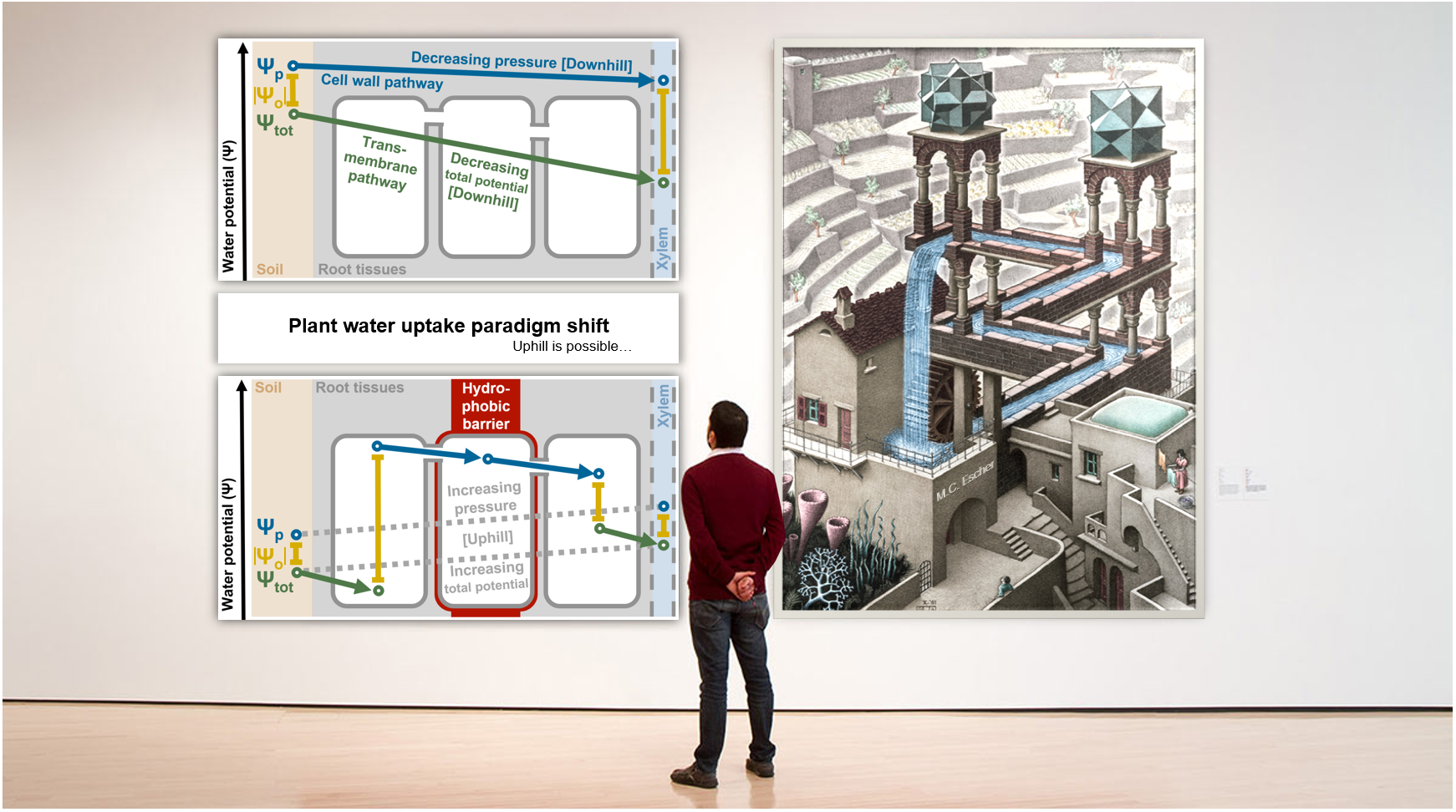
Modelling water movement in roots
Check out this review article
📄 Read the paper (Plant Direct)
.png)
Check out the shiny application to identify most important facters affect the soil-plant-atmopshere continuum
🖥️ Root hydraulic properties database (Shiny app)
Now try MECHA!
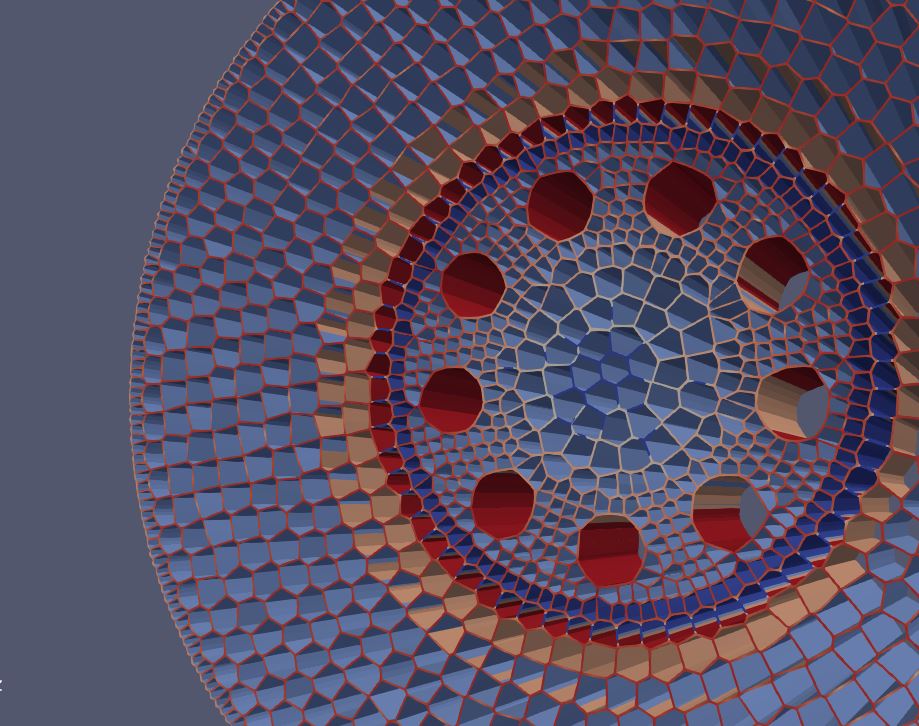
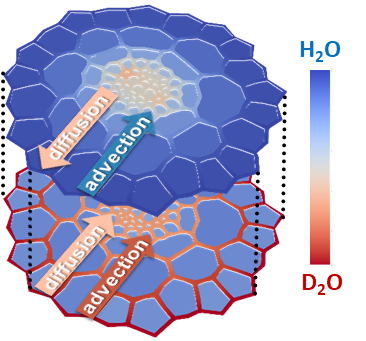
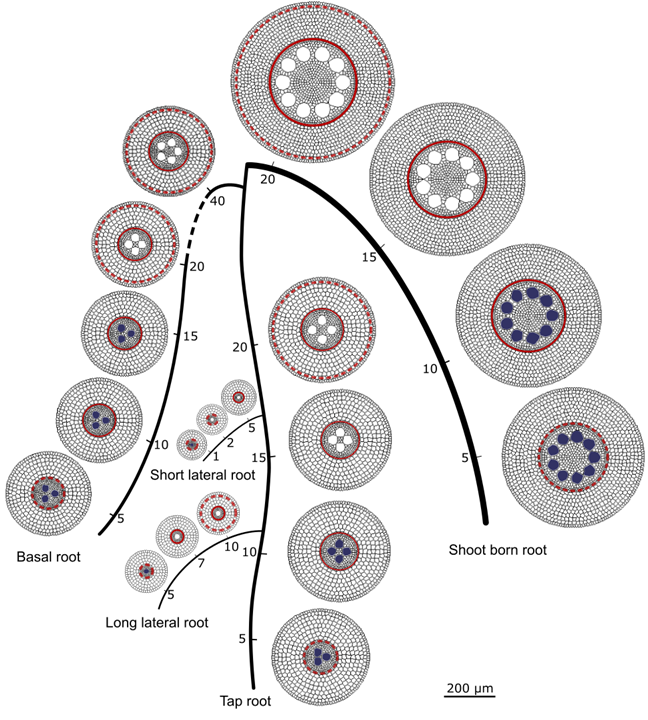
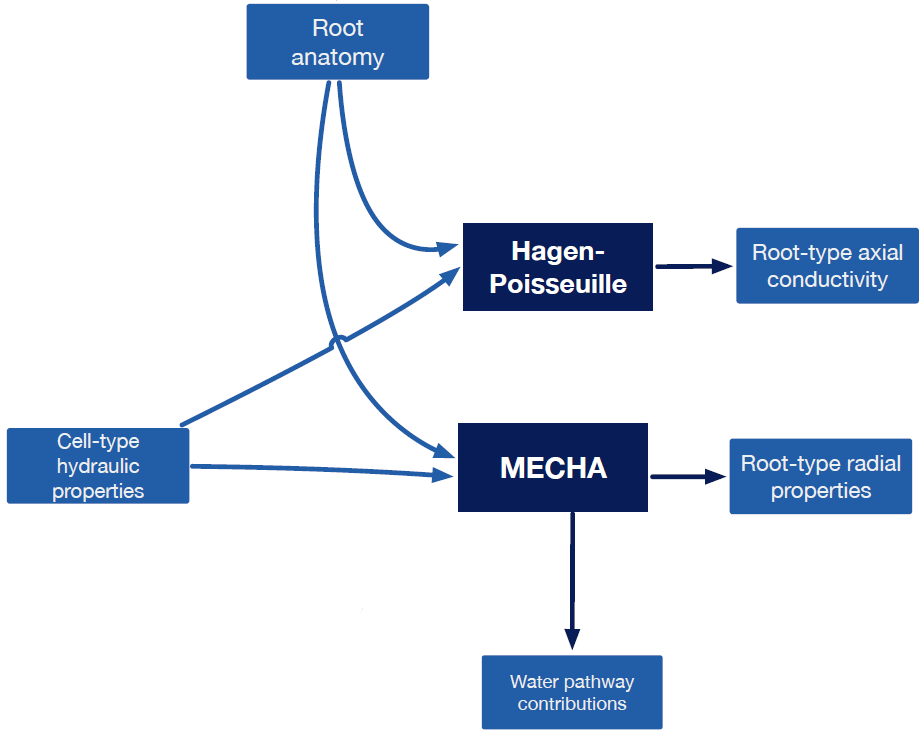
MECHA is an explicit cross-section model of the root hydraulic anatomy which connects hydraulic concepts across scales.
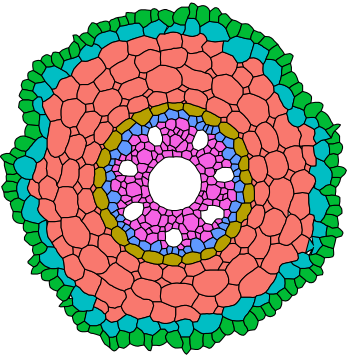
The model computes horizontal water flow at the level of individual cells, quantifies the contribution of water composite pathways, and predicts root radial permeability (kr), using detailed anatomical descriptions and experimental data on the permeability of cell walls (kw), membranes (Lp) and the conductance of individual plasmodesmata (KPD).
.webp)
.png)
Using MECHA
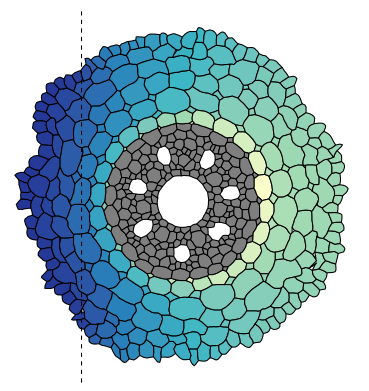
Input files
MECHA uses four parameters files as input, stored in the /in folder in the main MECHA directory:
General.xml: General simulation parametersBC.xml: Boundary conditions for the simulation. This is where you choose wether the soil is dry, wet, or only partially touch the root.Geometry.xml: Parameters for the root section geometry. This is where you define which root section to use in the simulation.Hydraulics.xml: Hydraulic parameters of the different variables in the simulation
Ouput files
MECHA output files in a folder defined in the General.xml input file, under the Output tag. Different type of files are generated:
*.PVTK files: These are geometry files that can be open in ParaviewMacro_prop_i.txt files: Theses files contain synthetic informations about the simulation results. They contain the radial data.
About us
MECHA was developed at the Université catholique de Louvain, in the Earth and Life Insititute, in the lab of Xavier Draye.\ \ The primary developpers of the model are Valentin Couvreur and Marc Faget.\ \
MECHA what first used here:
Source code on GitHub View paper
MECHA was then re-use in other research study, such as: